

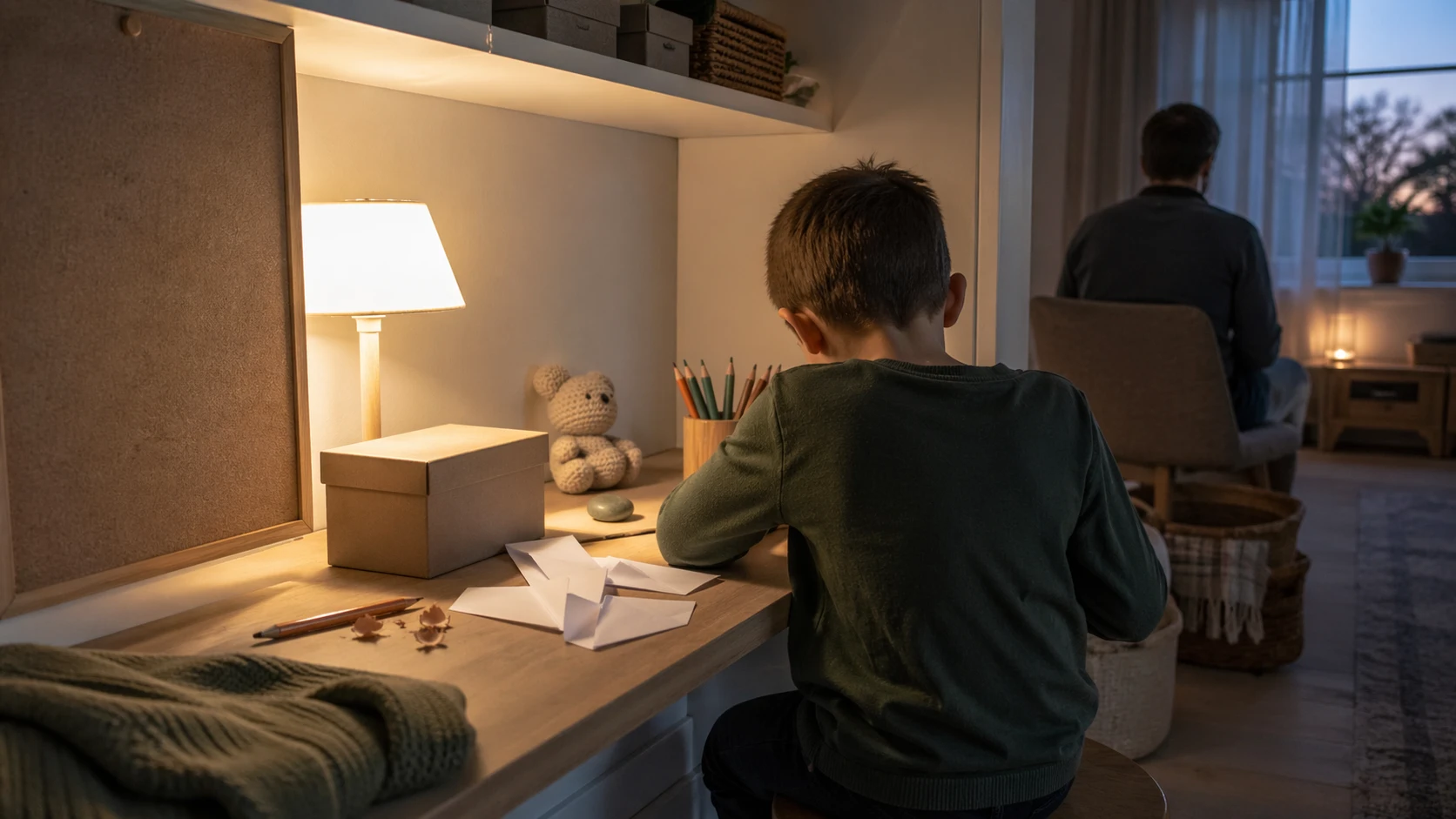
Why anxiety gets louder at bedtime
Bedtime is quiet. There are fewer distractions. For anxious children, that can mean worries finally have space to show up.
You might notice:
- worry questions start the moment lights go down
- your child becomes clingy or tearful
- they ask for repeated reassurance
- they complain of tummy aches, headaches, or feeling unwell
NHS guidance notes anxiety in children can show up through sleep problems and physical symptoms, and can affect how children cope day to day.
What bedtime anxiety can look like
Bedtime anxiety can look different from child to child. Common patterns include:
- fear of the dark or being alone
- worries about school or friendships
- separation anxiety at night
- needing repeated checking and reassurance
- nightmares or frequent night waking
- refusing to go upstairs or stay in bed
YoungMinds explains sleep problems and mental health can affect each other in a cycle, and suggests practical sleep habit steps for young people.
The bedtime worry cycle: why it keeps repeating
A simple way to understand bedtime anxiety is the relief cycle:
- Your child worries.
- They seek reassurance or closeness.
- They feel relief.
- The brain learns: “Reassurance is the way to cope.”
- The worry returns, often stronger next time.
This is why your goal is not endless reassurance. Your goal is a predictable plan that builds coping skills.
Sleep solutions for children with anxiety: your step by step plan
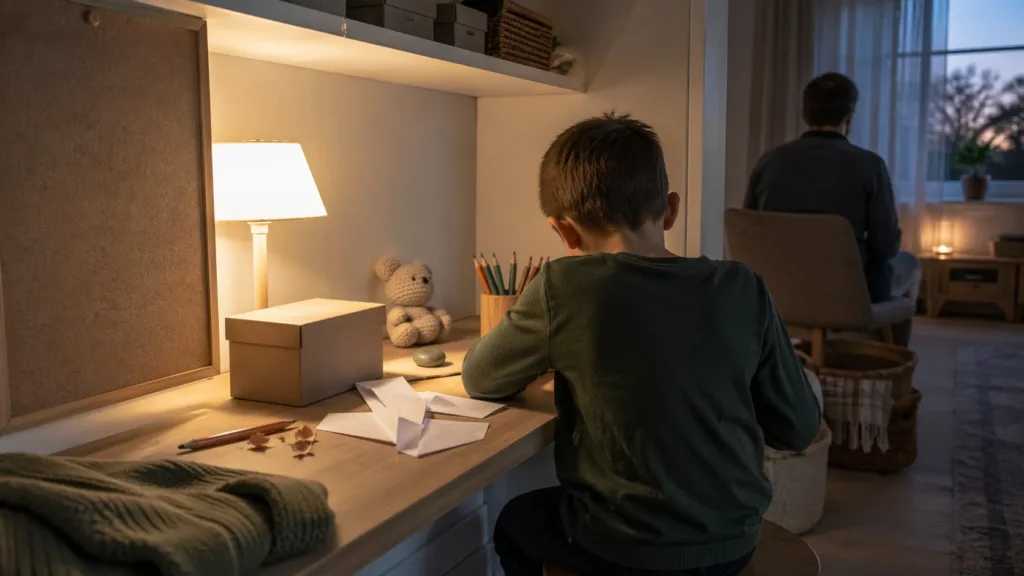
Use this as your core routine for sleep solutions for children with anxiety. Start small and stick with it for two weeks.
Step 1: Set a steady sleep schedule
Aim for consistent bedtime and wake time. Regular times support body clocks and help sleep settle. (www.rcpsych.ac.uk)
Step 2: Start the routine earlier than you think
The Sleep Charity advises planning a routine and starting it ideally an hour before your child goes to sleep.
A simple hour before bed could look like:
- wash or bath
- pyjamas
- teeth
- quiet activity
- story or calm audio
- lights down
Step 3: Move worry talk earlier in the day
The Sleep Charity suggests setting aside time earlier in the day for your child to share worries, and sharing what is planned for the next day.
Try:
- 10 minutes of “worry time” after tea
- write worries down
- make one small plan
- then close worry time and move on
Step 4: Screens off about an hour before bed
The Sleep Charity advises turning off screens an hour before bedtime because screens can be mentally stimulating and may inhibit melatonin production.
If switching off screens causes distress, use:
- a visible timer
- 10 minute, 5 minute warnings
- a replacement activity ready (colouring, Lego, puzzle, audio story)
Step 5: Make the bedroom feel safe and boring
Aim for:
- dim lighting
- comfortable bedding
- minimal clutter near the bed
- predictable items in the same place
YoungMinds suggests making the bedroom calm and comfortable, and avoiding stressful activities before bed.
Calming tools that help children switch off
Choose one or two tools only. Too many options can become a new battle.
A) Relaxation routine
The Sleep Charity suggests dimming lights in the hour before bed and using calming activities such as colouring or jigsaws, and that massage can help some children unwind.
Simple options:
quiet colouring
A short stretch
Gentle hand or shoulder massage
Calm music at low volume
B) Breathing you do together
The key is doing it with your child, not telling them to do it.
Try:
Breathe in for a count of 3
Breathe out for a count of 4
Repeat five times
C) Worry writing
YoungMinds suggests writing thoughts down before sleep can help calm racing thoughts.
For younger children, you can draw the worry and put it in a “worry box”.
D) A “safe phrase” you repeat consistently
Pick one phrase, such as:
“You are safe.”
“We have a plan.”
“Your worry is loud, and you can handle it.”
Consistency helps the brain stop searching for new answers.
Night wakings and nightmares: what to do
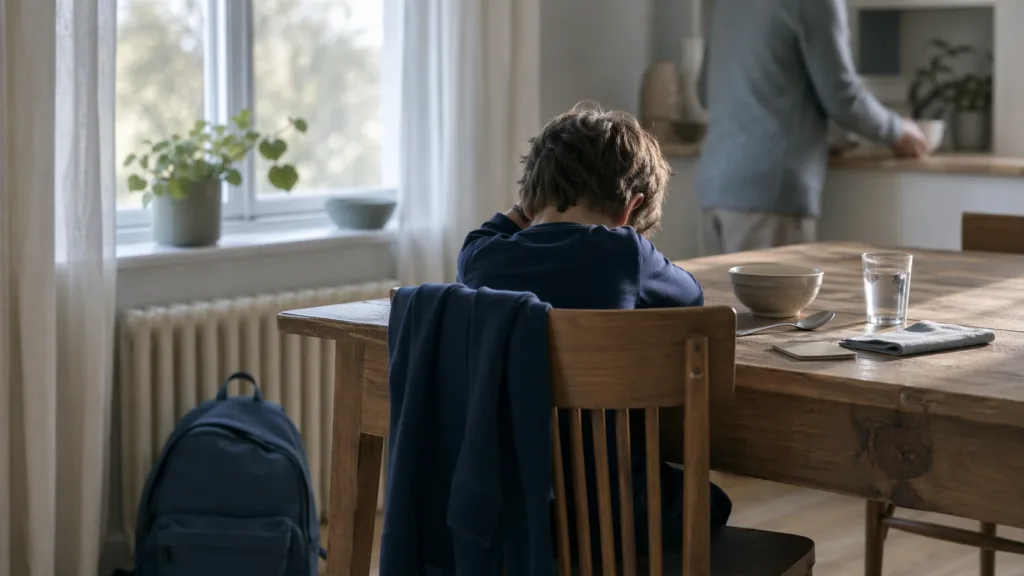
Night waking is common when anxiety is high. The goal is to keep responses calm and boring.
Night waking plan
- keep lights low
- keep your voice low
- use minimal words
- guide back to bed
- repeat the same phrase each time
YoungMinds suggests speaking to a GP if nightmares or night terrors are regular and affecting sleep and everyday life.
Nightmares
If nightmares are frequent:
- avoid scary or stressful content before bed
- make sure worry time is earlier
- consider a comfort routine after a nightmare, then back to bed
School mornings and tiredness: protecting the day after
Poor sleep often worsens anxiety and can make mornings harder.
Practical steps:
- keep mornings simple and predictable
- prepare clothes, bag, and lunch the night before
- allow extra time so you are not rushing
- build in a short calming moment before leaving
Even small improvements in sleep consistency can reduce morning pressure over time.
When to seek help in the UK
Consider extra support if:
- bedtime anxiety happens most nights for weeks
- sleep loss affects school, mood, or family life
- your child is avoiding bedtime entirely
- you are seeing panic symptoms, severe distress, or persistent nightmares
Who to speak to
Start with:
- school pastoral team or SENCO
- your GP
NHS guidance explains anxiety disorders can be treated, and talking therapies such as CBT can help.
NICE guidance for social anxiety disorder says children and young people should be offered CBT, sometimes with parent involvement so you can support them.
If you believe your child is at immediate risk of harm, seek urgent help through emergency services.
FAQs: sleep solutions for children with anxiety
Bedtime is quieter and gives worries space. Anxiety and sleep can affect each other in a cycle. (YoungMinds)
Many families do best with 30 to 60 minutes. The Sleep Charity suggests starting the routine ideally an hour before sleep. (The Sleep harity)
Some children need gradual steps towards sleeping independently. If your child relies on you to fall asleep, try tiny changes, such as moving your chair further away over time. Keep it gentle and consistent.
Screens can be stimulating and can interfere with winding down. The Sleep Charity advises turning off screens an hour before bedtime. (The Sleep Charity)
If sleep anxiety continues for weeks and affects daily life, or nightmares are frequent and distressing, speak to your GP. YoungMinds suggests speaking to a GP if nightmares or night terrors are affecting everyday life. (YoungMinds)