

What positive parenting means for anxiety
Positive parenting for anxious children is warm, firm, and practical. It focuses on:
- connection and safety
- clear, predictable routines
- teaching coping skills
- building confidence through small wins
It is not about forcing bravery. It is about showing your child, over time, that worry feelings are real but manageable.
How anxiety shows up at home
Many children do not say “I’m anxious”. They show it through behaviour and body symptoms.
NHS guidance explains that anxiety in children can look like irritability or being tearful or clingy, along with sleep problems and physical symptoms like tummy aches or headaches.
You might notice:
- bedtime fears, repeated questions, or needing you close
- school morning tummy aches
- perfectionism and fear of getting it wrong
- avoiding clubs, parties, or new places
- anger that seems out of proportion
A helpful reframe is: anxiety is an alarm system. When it becomes too sensitive, it rings too often.
The confidence cycle: why avoidance grows worry
Avoidance is one of the biggest drivers of anxious patterns.
When a child avoids something scary:
- they feel relief
- their brain learns “avoidance keeps me safe”
- next time, the fear feels bigger
That is why positive parenting for anxious children aims for gradual, supported steps towards fears, not sudden pressure.
NHS guidance for parents encourages helping children face fears rather than avoiding them completely, in a safe and supportive way.
In the moment: calm strategies that work
When anxiety is high, thinking skills drop. Your aim is to calm the body first.
A) Stay close and steady
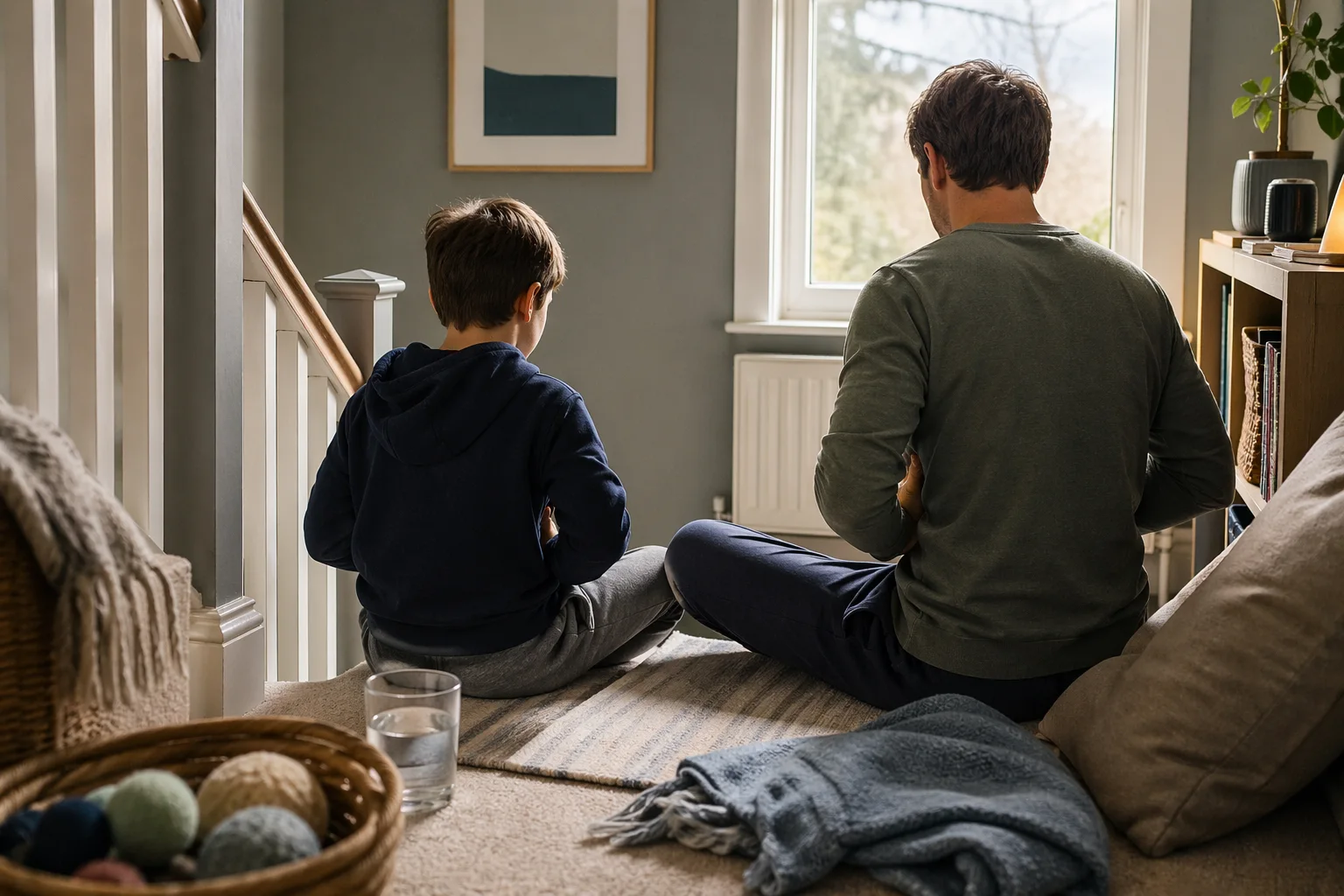
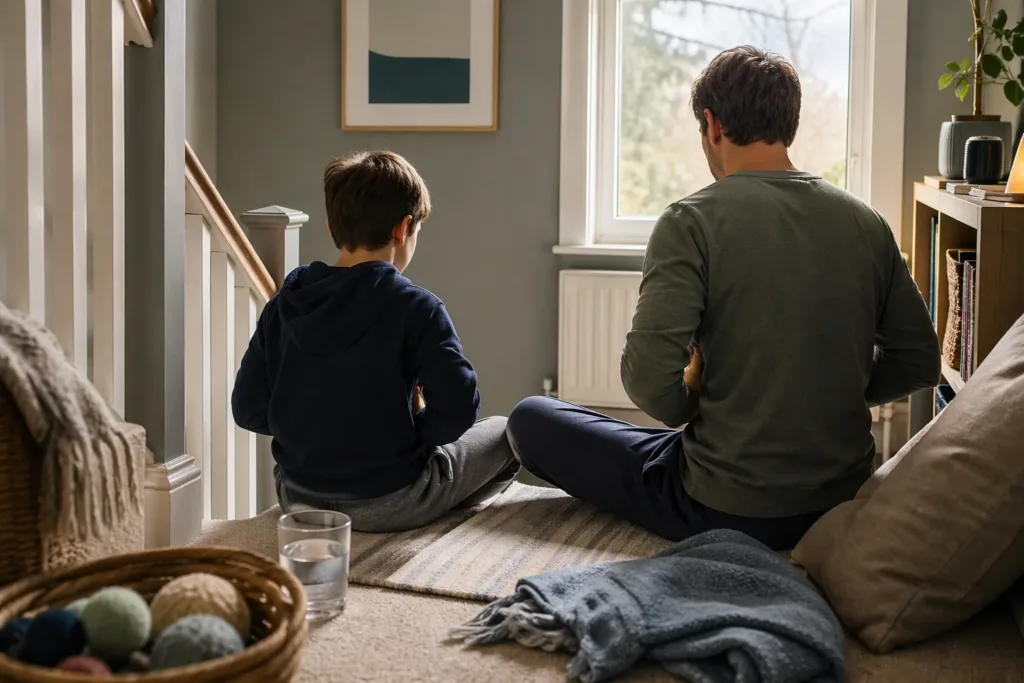
YoungMinds suggests sitting with your child and offering calm reassurance, describing anxiety as something that will pass.
Try:
- “I’m here.”
- “This will pass.”
- “We can handle it together.”
B) Use one simple breathing tool
NHS breathing exercises for stress suggest breathing in gently through the nose and out through the mouth, counting steadily for a few minutes.
Parent script
- “In through your nose.”
- “Out slowly.”
- “Let’s do five together.”
C) Grounding for spiralling thoughts
Grounding brings the brain back to the present. Many services use the 5, 4, 3, 2, 1 senses method, and YoungMinds shares it in resources. (YoungMinds)
D) Reduce language and demands
In a panic moment, long explanations feel like noise. Use fewer words and a clear next step:
- “Drink of water.”
- “Sit on the sofa.”
- “Hand on your tummy. Slow breath.”
Everyday parenting habits that reduce anxiety over time
These are the foundations of positive parenting for anxious children.
A) Predictable routines
Morning routine
Bedtime routine
After school decompression
Keep routines short and repeatable.
B) Name feelings without feeding them
Naming helps children feel understood:
“That sounds worrying.”
“Your body feels shaky.”
Then add:
“We’ve handled this before.”
C) Praise brave effort, not only outcomes
Confidence grows when you notice effort:
“You went in even though you felt nervous.”
“You stayed for five minutes. That’s a win.”
YoungMinds encourages recognising small achievements, especially around school anxiety.
D) Build daily “connection time”
Ten minutes of child led play, a short walk, or reading together helps children feel safe. When children feel safe, worry often settles faster.
How to handle reassurance loops kindly
Reassurance is soothing. The trouble is when it becomes constant checking.
Newcastle Hospitals NHS guidance on managing anxiety highlights helping children manage worries and building their ability to cope, including problem solving together.
Try this approach:
- Answer once: “Yes, you’re safe.”
- Name the pattern: “That’s the worry asking again.”
- Use the plan: breathing, grounding, or worry tree
- Praise effort: “Good job using your tool.”
This keeps you kind but prevents anxiety from running the home.
Helping your child face fears in small steps
This is where positive parenting for anxious children becomes powerful.
Use a “fear ladder”
Pick one fear and break it into steps.
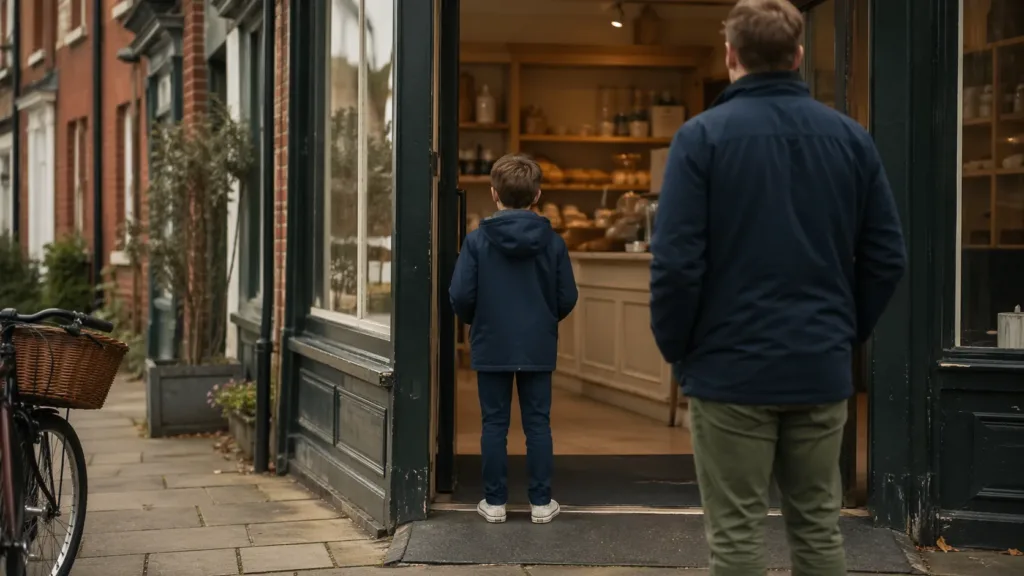
Example: anxiety about going into school
- walk to the gate
- stand at the gate for 1 minute
- walk to reception
- go in for 5 minutes
- stay for one lesson
Each step should feel challenging but doable. Praise every attempt.
Problem solve together
Newcastle Hospitals NHS suggests planning and small steps, and problem solving with your child rather than forcing big leaps.
School worries and morning battles
If mornings are hard:
- prepare the night before
- keep the routine visual and simple
- reduce talking during the most anxious minutes
- agree a school plan: safe adult, calm space, first task
If school refusal is building, involve school early. YoungMinds provides guidance on school anxiety and refusal and encourages support and small steps.
When to seek help in the UK
Seek support if:
Anxiety lasts weeks to months
Sleep, eating, or attendance is affected
Avoidance is increasing
Your child seems constantly distressed
Who to speak to
School pastoral lead or SENCO
Your GP
NHS guidance explains that talking therapies like CBT can help children with anxiety disorders by changing how they think and behave.
NICE patient information for social anxiety disorder says children and young people should be offered CBT, sometimes involving parents so they can help.
If you think your child is not safe, seek urgent help via emergency services.
FAQs: positive parenting for anxious children
Not usually. Anxiety is a real stress response. Children may seek closeness or reassurance because they feel unsafe inside their body. NHS describes physical and emotional signs that can come with anxiety. (nhs.uk)
Some reassurance is helpful. If reassurance becomes repetitive, answer once and return to the coping plan. (Newcastle Hospitals NHS Foundation Trust)
Pick one tool your child will use. Breathing is a good start, and NHS provides a simple method. (nhs.uk)
When it affects daily life, such as sleep, school, friendships, or family routines, and continues over time. NHS has guidance for parents and explains treatment options. (nhs.uk)
Many children do. They may feel ashamed of their thoughts or rituals. A calm, non-judgmental approach and keeping communication open matters most. A school counsellor or GP may also be a useful first point of contact. (ocduk.org)
NICE guidance explains that CBT with ERP is effective for many children and that significant improvement is possible with the right treatment. (nice.org.uk)