

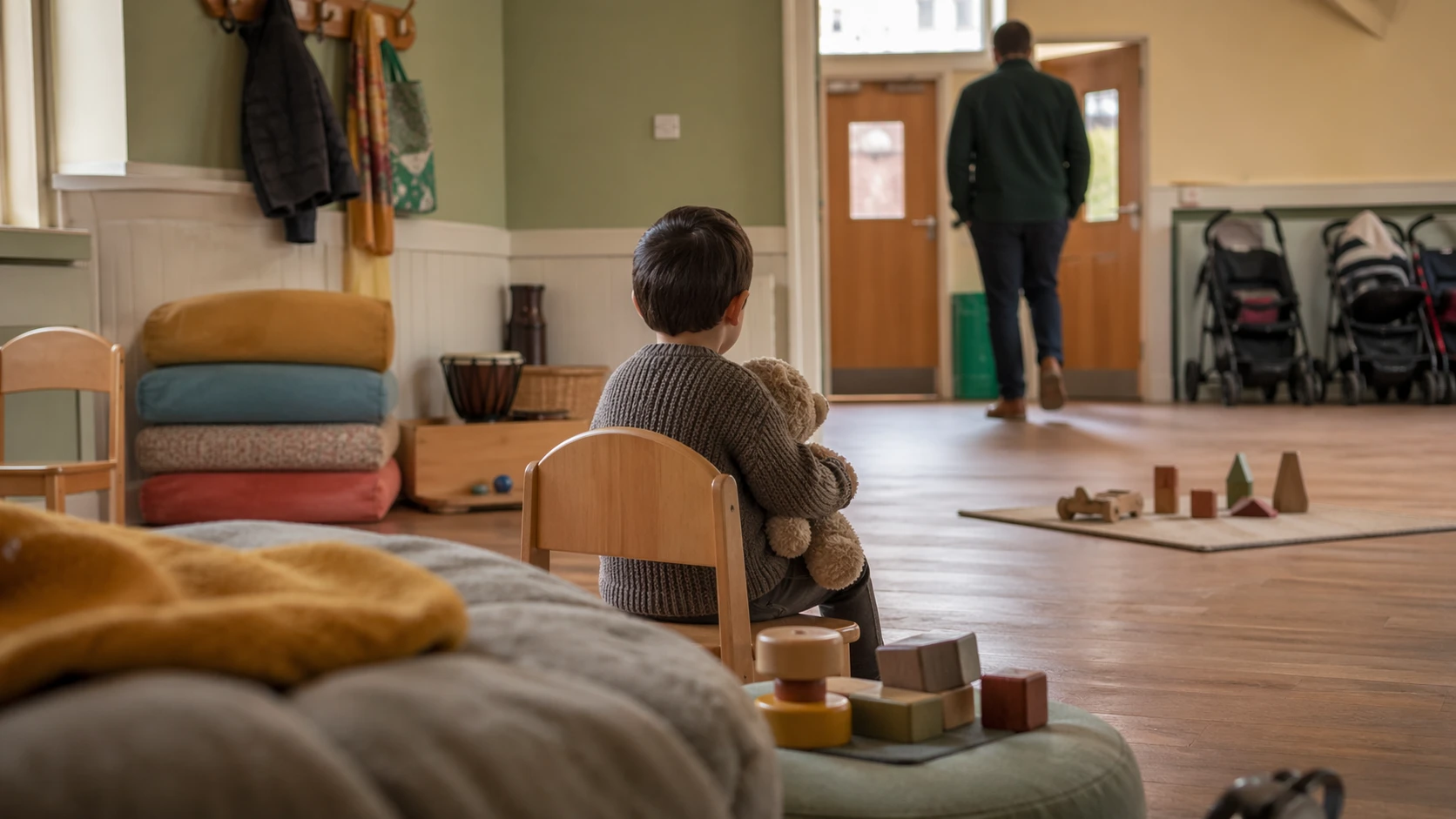
What separation anxiety is
Separation anxiety in children is the distress some children feel when they are apart from the people who make them feel safest, often a parent or main carer. (Just One Norfolk)
It can look like:
- crying, clinging, or panic when you leave the room
- refusing to go to nursery or school
- wanting you close at bedtime
- fear that something bad will happen to you or to them
For babies and toddlers, this is often a normal part of development and attachment. The NHS describes separation anxiety as common and natural.
What is normal and when it becomes a concern
Many children go through phases of separation anxiety. Healthier Together NHS resources explain it is common and normal, and often happens between 6 months and 3 years, but can also show up at other times in response to stress and change.
It may become more of a concern if:
Fears are intense and do not ease over time
Your child is regularly unable to attend nursery or school
Sleep is heavily affected (waking to check you are there)
Anxiety affects daily family life most days
NHS guidance notes anxiety becomes a problem when it affects a child’s behaviour and thoughts every day and interferes with school, home, and social life.
Common triggers that make separation anxiety worse
If separation anxiety has spiked recently, there is often a reason. Common triggers include:
- starting nursery or school
- moving house or changing carers
- a new sibling
- illness or hospital visits
- family stress, conflict, or bereavement
- big routine changes
Some children are naturally more sensitive, and they need more gradual steps.
Tips for easing separation anxiety in toddlers and preschoolers
These strategies support separation anxiety in children without making your child feel pushed or shamed.
A) Practise separation in tiny steps
Healthier Together guidance suggests practising separation by leaving for short periods, explaining what is happening, and returning.
Start very small:
step into another room for 30 seconds
return calmly
praise effort, not bravery
B) Use a short, predictable goodbye routine
Healthier Together also suggests having a short and predictable goodbye routine and leaving after you have said goodbye.
A simple script:
“One cuddle.”
“One kiss.”
“I’ll be back after snack time.”
“Goodbye. See you soon.”
Then go. Repeated returns “just in case” can reinforce fear.
C) Keep your own emotions steady
It is okay to feel upset. But if your child sees panic in your face, their alarm system grows.
Try:
Warm voice
Confident posture
The same goodbye phrase each time
D) Use a comfort object
A familiar item can help, such as a cuddly toy or blanket. (South West London Healthier Together)
If allowed, send it to nursery or school in a small bag.
E) Prepare for nursery or school
Anna Freud suggests helping children become familiar with new places and people before separations where possible.
Ideas:
Short visits to the setting
Walk past the building and talk about what happens there
Meet the key person if possible
Practise the morning routine at home
Tips for older children
Older children can still experience separation anxiety in children, especially during change or stress.
School drop off anxiety
If your child is anxious about school:
- create a predictable morning routine
- prepare the night before (clothes, bag, lunch)
- keep talk minimal in the hardest moments
- agree a plan with school: safe adult, calm space, first task
If anxiety is affecting attendance, YoungMinds has guidance on school anxiety and refusal that can help parents take early action with school support.
Sleepovers and staying with carers
Start with a ladder:
- one hour with a relative
- a full afternoon
- tea time plus bedtime routine
- one overnight
Make sure the child knows:
- who is in charge
- what the routine will be
- when you will return
What to do during a separation meltdown
If your child is overwhelmed, focus on calm and safety, not “convincing”.
Try:
- fewer words
- gentle reassurance: “You are safe.”
- remind them of the plan: “I come back after story time.”
- hand over to the key person calmly if at nursery or school
- leave once the handover is done
NHS guidance on anxiety in children highlights that young children may become tearful or clingy and have sleep difficulties when anxious.
Your calm response is part of the treatment.
Building confidence over time: a simple separation ladder

A separation ladder helps children build confidence through small, repeatable steps.
Step 1: Choose one situation
Examples:
- nursery drop off
- staying with grandparents
- bedtime
Step 2: Create 5 small steps
Example for staying with a carer:
- 10 minutes in the room with you nearby
- 10 minutes while you are in the kitchen
- 20 minutes while you take a short walk
- 1 to 2 hours with a clear return time
- half day with routine and comfort item
Step 3: Repeat each step until it feels easier
Praise:
- trying
- calming down
- recovery after crying
When to seek help in the UK
Consider extra support if:
- separation anxiety is severe and persistent
- your child is avoiding nursery or school regularly
- sleep is heavily affected
- anxiety is affecting daily family life
Start with:
- nursery or school staff, including the SENCO or pastoral team
- your GP if anxiety is ongoing or complex
NHS guidance explains anxiety becomes a concern when it interferes with daily life, and professional support may be needed.
FAQs: separation anxiety in children
It is common and normal in babies and toddlers, often between 6 months and 3 years, and can happen again during stress or change. (healthiertogether.westlondon.nhs.uk)
Usually no. A short, predictable goodbye is better than disappearing, because disappearing can make anxiety worse. (South West London Healthier Together)
It varies. Many children improve as they gain confidence with repeated safe separations. If it persists and affects daily life, seek support. (nhs.uk)
That is common. Your child may find the transition hardest. Focus on a predictable routine and short goodbye. Share what helps with the key person.
If anxiety affects daily life for weeks or months, or if school attendance and sleep are being disrupted, speak to your GP and school. (nhs.uk)
NICE guidance explains that CBT with ERP is effective for many children and that significant improvement is possible with the right treatment. (nice.org.uk)