

What autism is, in everyday terms
Autism is a lifelong difference in how a person communicates, interacts, and experiences the world. (nhs.uk)
It is not a parenting failure. It is not a behaviour problem.
Many autistic children have strong interests, honest communication, and unique ways of thinking. Some also find change, noise, social rules, or sensory input overwhelming.
This page focuses on supporting an autistic child at home with practical, calm steps that reduce daily pressure.
A helpful mindset shift for home life
When things feel hard, many parents get stuck in “Why won’t they?”
A more useful question is: “What is making this hard right now?”
At home, difficulties often come from:
Sensory overload
Uncertainty and change
Tiredness, hunger, or anxiety
Communication misunderstandings
Demands that feel too big or too fast
The goal is not to remove every challenge. The goal is to make life more predictable and less overwhelming.
Communication tips that reduce stress
Good communication support is often the biggest win for supporting an autistic child at home.
Use short, clear language
Noise can be the biggest trigger for overwhelm.
Try one idea at a time. Give extra processing time. NHS linked local guidance also recommends short, clear sentences and one idea at a time. (Leicestershire Partnership NHS Trust)
Say what you want, not only what you do not want
Instead of: “Don’t run.”Try: “Walking feet.”
Offer two acceptable choices
Choices reduce power struggles:
- “Do you want the blue cup or the green cup?”
- “Do you want a bath or a wash at the sink?”
Use visuals to support speech
Visuals reduce confusion and repeated reminders:
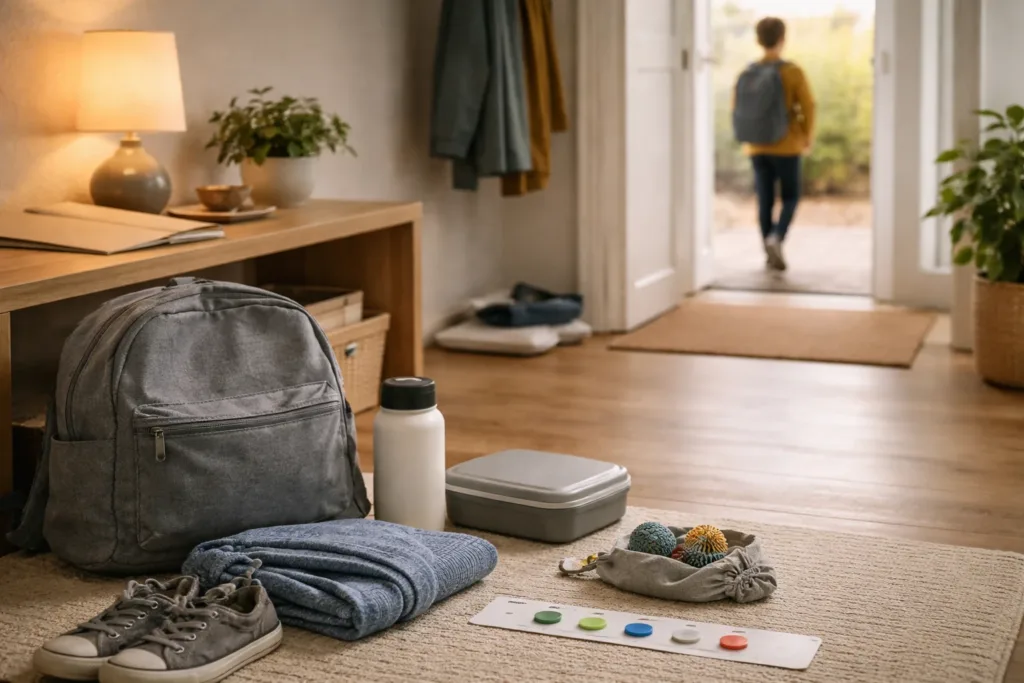
- picture routines
- first then cards
- a simple choice board
Routines and predictability
Predictability helps many autistic children feel safe. NHS advice for autism and everyday life includes support with day to day challenges and suggests seeking practical help for routines, eating, sleep, and friendships.
Build one routine at a time
Start with the routine that causes the most stress:
- mornings
- after school
- bedtime
Keep it short. Aim for 4 to 6 steps.
Prepare for changes
If plans must change:
- warn early if possible
- show the change visually
- offer one small choice within the change
Example: “Plan changed. No park. We can choose a short walk or bubbles at home.”
Sensory needs: making home feel safer
Many autistic children have sensory differences. The National Autistic Society shares practical sensory information and strategies for supporting autistic children.
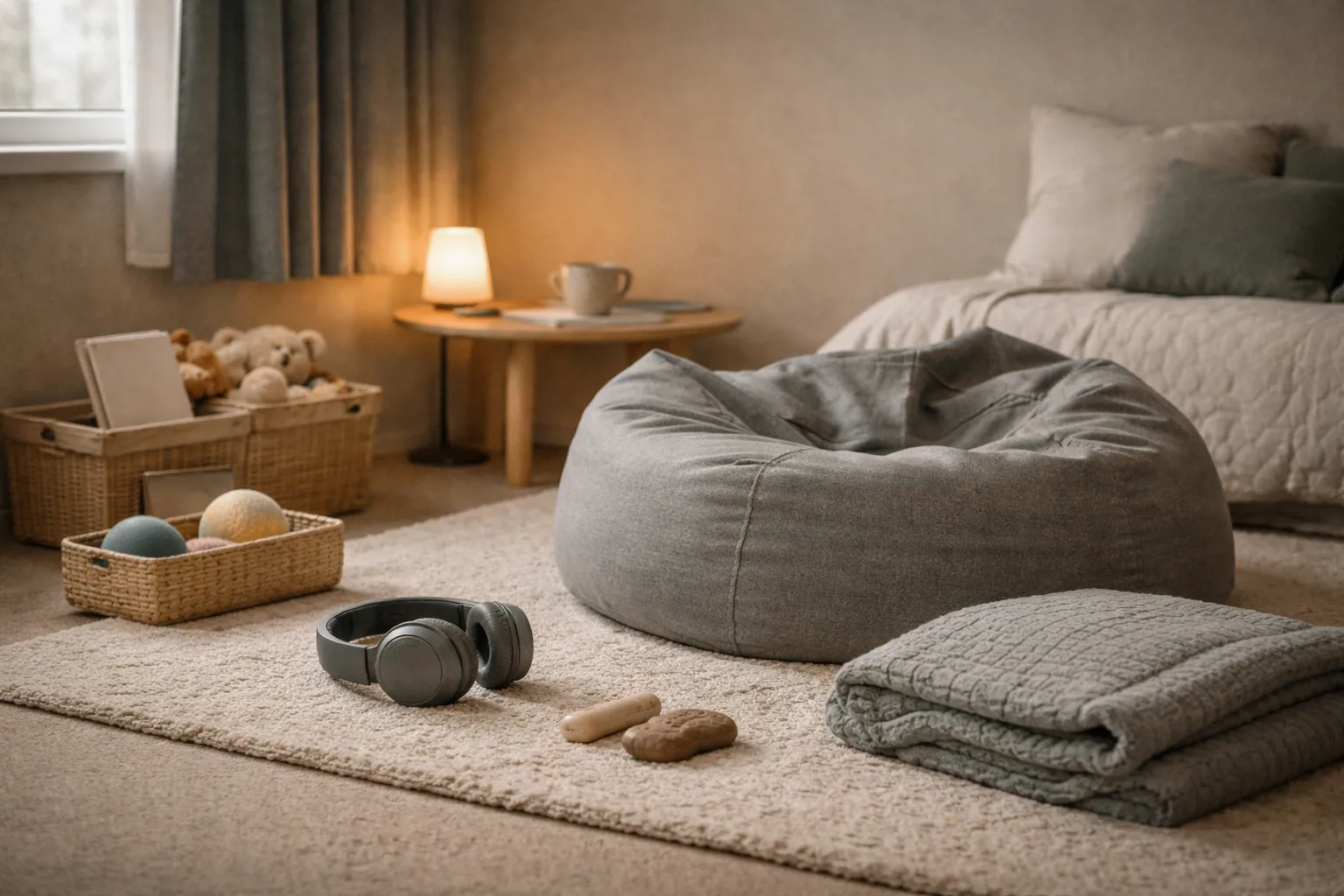
Create a calm space
A calm corner is not a punishment. It is a reset space.
Soft lighting
Cushions or beanbag
Favourite comfort item
Headphones or ear defenders if helpful
Local NHS guidance also suggests creating a calm space and noticing triggers for meltdowns. (Leicestershire Partnership NHS Trust)
Reduce “background noise” where you can
If noise is a trigger, try:
turning off the TV that is on “for company”
quieter times for shopping
A predictable after school decompression routine
Try sensory tools thoughtfully
Tools can help, but keep it simple so it does not become overwhelming:
A small fidget
Chewable jewellery if safe and appropriate
A weighted blanket if your child finds it calming
Ambitious about Autism also highlights sensory friendly spaces and sensory tools as part of managing sensory overload.
Meltdowns and shutdowns: what to do in the moment
Meltdowns and shutdowns are often signs of overwhelm, not “attention seeking”.
In the moment, focus on safety and calm
- lower your voice
- use fewer words
- reduce demands
- move to a quieter space if possible
NHS linked local guidance recommends a calm space, identifying triggers, and using calming strategies like sensory play or movement breaks. (Leicestershire Partnership NHS Trust)
After the storm, do a short repair
When calm returns:
- name what happened simply
- validate feelings
- teach one alternative for next time
Example: “It got too loud. Next time we can use headphones or take a break.”
Sleep, eating, and daily living
Daily living skills are often part of supporting an autistic child at home.
Sleep
Many autistic children struggle to settle. Helpful steps:
- consistent routine
- lower light in the evening
- screen free wind down
- calming sensory input if it helps
If sleep problems persist for weeks and affect daytime wellbeing, talk to your GP.
Eating
Food challenges can relate to sensory preferences, routine, or anxiety.
Try:
- predictable mealtimes
- one safe food always available
- “learning bites” without pressure
NHS autism everyday life guidance includes advice on eating and sleeping support.
Building confidence and friendships
Friendships can be tricky, but support helps.
NHS advice suggests getting ideas from other parents, asking school for help, and exploring autism friendly groups, including through directories from autism organisations. (nhs.uk)
At home, try:
- practising social scripts through play
- role play for greetings and turn taking
- short, predictable meet ups with one child rather than large parties
Getting help in the UK: nursery, school, GP, and EHCP
A sensory friendly home is also about rhythm.
Nursery and school support
Ask for a meeting with the teacher or SENCO. Share:
What helps at home
What triggers overwhelm
Which routines are hardest
What adjustments might help
NHS school advice explains you can ask your local council for an EHC assessment for SEND.
GOV.UK also explains SEN support and the route to an EHC plan if more help is needed.
Health support and reasonable adjustments
Quieter appointment times
Longer appointments
Reduced waiting
Clear written instructions
NICE guidance
NICE guidance covers support for autistic children and young people, including support for families and carers.
FAQs: supporting an autistic child at home
Not always. Many schools and services can support based on need. SEN support and EHCP routes exist in England. (GOV.UK)
Predictability, clear communication, and a calm sensory environment are often the biggest wins. (nhs.uk)
You often cannot stop every meltdown. You can reduce triggers, build routines, and support regulation skills. A trigger diary and calm space are practical starting points. (Leicestershire Partnership NHS Trust)
Many families describe this pattern. Home can be the safest place to release stress. After school decompression and low demand time can help.
If your child’s sleep, eating, anxiety, behaviour, or school attendance is significantly affected, or you want a referral for assessment and support, speak to your GP. NHS guidance explains routes to help and family support. (nhs.uk)