

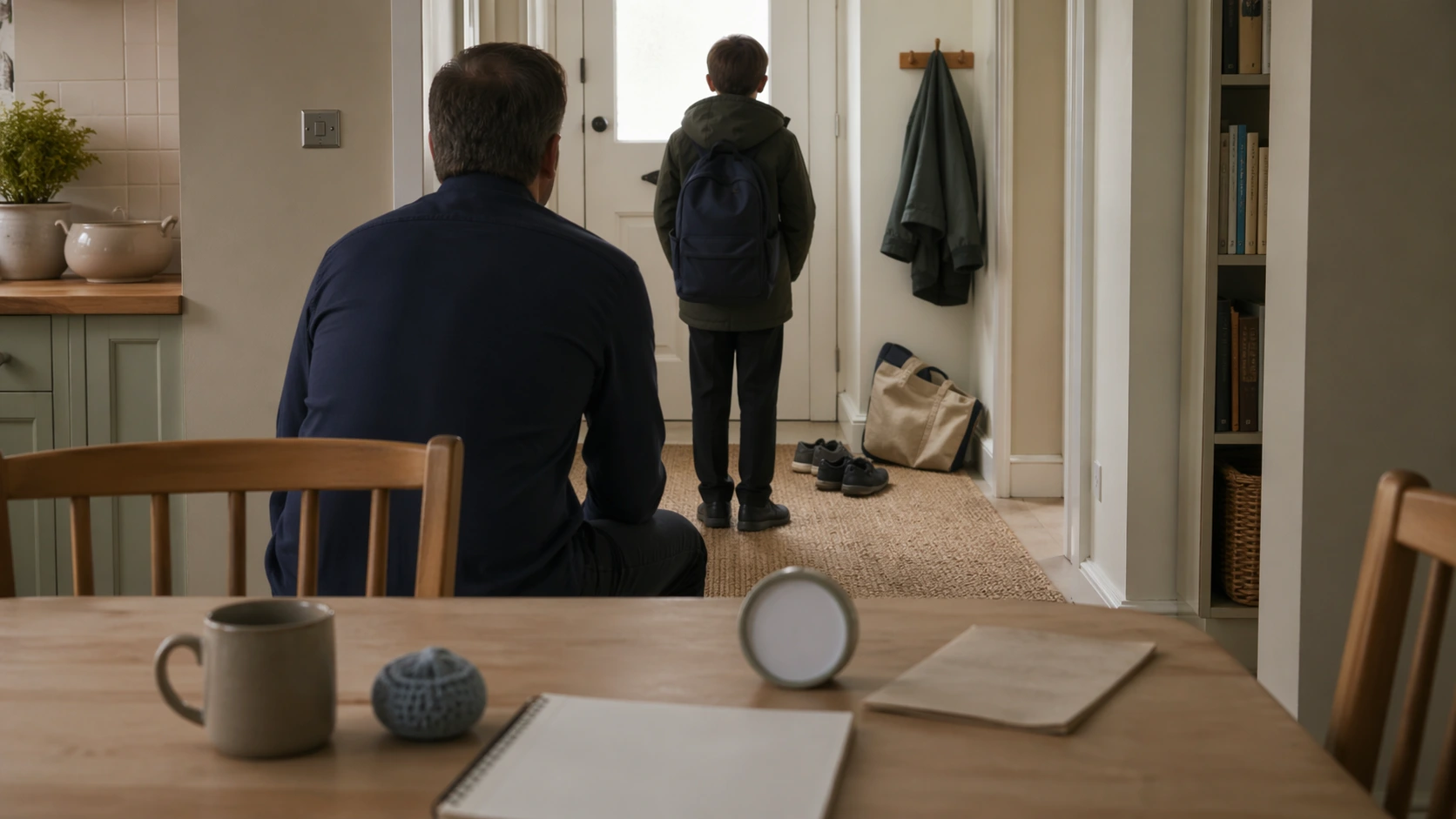
What OCD in children is
OCD in children (obsessive compulsive disorder) is an anxiety condition involving two connected parts:
Obsessions
unwanted, intrusive, and distressing thoughts, images, or urges that repeatedly enter a child's mind
Compulsions
repetitive behaviours or mental rituals performed to reduce the distress caused by obsessions, or to prevent something bad from happening
The NHS describes OCD as a condition where a person has unwanted thoughts, images or urges that repeatedly enter their mind and feels compelled to do things to reduce anxiety or prevent something bad from happening.
OCD can affect children of any age. The Royal College of Psychiatrists notes that OCD commonly begins in childhood or adolescence and that it can be treated effectively.
What OCD is not
Before looking at signs, it helps to understand what OCD in children is not.
OCD is commonly misunderstood. Children who like things tidy, enjoy collecting, have superstitions, or prefer predictable routines do not automatically have OCD.
OCD involves:
Distress that feels intense and difficult to control
Compulsions that take up significant time, often more than an hour a day
interference with daily life, friendships, school, or sleep
A child with OCD is not being dramatic or seeking attention. The anxiety and distress are very real.
OCD UK clarifies that OCD is not a personality quirk or lifestyle choice, and that it can cause significant suffering when untreated.
Signs of OCD in children
OCD in children can look very different depending on the child’s age and the content of the obsessions. Common signs include:
Behavioural signs
- repeating actions many times, such as touching, checking, or counting
- asking for reassurance repeatedly about the same worry
- insisting on certain routines and becoming very distressed if they change
- spending a long time in the bathroom due to repeated washing
- re-reading or re-writing schoolwork repeatedly
- difficulty leaving the house because rituals feel incomplete
Emotional signs
- visible anxiety or distress before, during, or after rituals
- anger or panic when rituals are interrupted by others
- feeling personally responsible for preventing bad things from happening
- expressing extreme guilt, disgust, or shame
At school
- difficulty completing work on time because of repeated checking
- arriving at school anxious due to rituals at home
- avoiding touching certain surfaces, objects, or people
YoungMinds notes that OCD in young people often involves feeling they must carry out certain actions to prevent something terrible from happening, and that compulsions can take up a lot of time.
Common OCD themes in children
Obsessions in OCD in children often cluster around common themes.
Contamination
Fear of germs, illness, or dirt. This often leads to excessive handwashing, avoiding surfaces, or refusing to touch certain objects or people.
Checking
Fear that something bad will happen if an action is not checked. For example, checking locks, switches, taps, or homework repeatedly.
Harm
Intrusive thoughts of accidentally harming others or themselves, or fear that something they do (or fail to do) will cause harm to someone they love.
Symmetry and exactness
Things must feel “just right”. Items must be arranged in a certain way, tasks must be repeated until they feel correct, or words must be read or spoken a certain number of times.
Scrupulosity
Excessive worry about doing something morally wrong, or distressing intrusive religious thoughts.
Unwanted intrusive thoughts
Distressing thoughts about violence, sex, or other content that feel disgusting or shameful to the child. These thoughts are not wanted and cause distress, not pleasure. This distinction is important and does not mean the child is dangerous or bad.
RCPSYCH notes that OCD in children can involve very different obsessive themes, and that many children hide their OCD out of shame.
How compulsions work and why they make things worse
Understanding the OCD cycle is important for supporting OCD in children at home.
The cycle works like this:
- An obsessive thought arrives
- Anxiety spikes quickly
- The child carries out a compulsion
- Anxiety temporarily drops
- The brain learns: “The compulsion reduced the danger”
- Next time, the compulsion feels even more necessary
Over time, compulsions become more frequent and more elaborate. The anxiety about what happens if the compulsion is skipped grows and grows.
This is why responding to reassurance seeking, or helping children avoid triggers, while it feels kind in the moment, can actually strengthen OCD over time.
The NHS explains that OCD becomes a vicious cycle because performing compulsions provides temporary relief, which reinforces the obsessive thoughts.
What helps at home: supporting without making OCD stronger
These strategies support children with OCD in children while waiting for or alongside professional treatment. They are based on not accommodating OCD, which is the approach used within CBT.
A) Learn about OCD together
Help your child understand the OCD cycle. Giving OCD a name or character, such as “OCD brain” or “the worry bully,” can help young children see it as something separate from themselves rather than part of who they are.
OCD UK has parent resources and explanations written for different ages.
B) Reduce accommodation gradually
Accommodation means the things you do to reduce your child’s anxiety in the short term, such as:
- providing repeated reassurance about the same worry
- helping your child avoid triggers
- carrying out rituals with them
- changing family routines to fit around OCD
These feel helpful but strengthen OCD. Reducing accommodation gradually, ideally with professional guidance, is part of the treatment approach.
C) Avoid criticising compulsions
Children with OCD are not choosing this. Criticism and frustration increase shame, which can worsen OCD. Aim for warm, calm neutrality.
Try: “I can see this is really hard for you right now.”
D) Keep other routines predictable
While you work to reduce OCD accommodation, keep other routines stable. Predictability in general reduces anxiety, which can lower the overall burden on your child.
E) Focus on what they can still do
OCD can shrink a child’s world over time. Encourage engagement with activities that do not involve OCD triggers, and celebrate participation and effort whenever you can.
Scripts for parents: what to say and what to avoid
When a child is asking for reassurance
Avoid: “Yes, the door is definitely locked.” This feeds the obsession and reinforces the cycle.
Try instead:
- “I hear that you are worried. We are not going to check again today.”
- “That is the OCD asking. I know it feels hard.”
When a ritual is taking a long time
Avoid: “Just stop it” or “hurry up.”
Try:
- “I know this feels urgent. I am going to wait for you and then we will carry on with the plan.”
When your child is in distress
- “That sounds really scary.”
- “I am with you.”
- “The feeling will pass.”
When you have given reassurance by accident
It is very common for parents to inadvertently provide reassurance. If you do, gently step back:
- “I answered that to help, but I think I made the OCD stronger. Can we try a different approach next time?”
NICE guidance on OCD includes family involvement in treatment and reducing family accommodation as part of CBT-based approaches.
When and how to seek help in the UK

Speak to your GP if:
- compulsions are taking more than an hour a day
- OCD is affecting school, sleep, friendships, or family life
- your child is very distressed by their thoughts
- rituals are intensifying or expanding into new areas
- your child is avoiding more and more situations
What treatment looks like
NICE guideline CG31 recommends CBT, including exposure and response prevention (ERP), as the main treatment for OCD in children and young people.
ERP involves gradually facing feared situations without carrying out compulsions, so the child learns that anxiety reduces on its own and that they can cope without rituals. For severe OCD, medication may be considered alongside therapy with specialist input.
Support resources
- OCD UK: UK charity with a helpline, resources, and local support groups. Helpline: 0333 212 7890.
- YoungMinds: Parent helpline 0808 802 5544, Monday to Friday, 9:30am to 4pm.
- CAMHS: Your GP can refer to local Child and Adolescent Mental Health Services for assessment and treatment.
FAQs: OCD in children
RCPSYCH notes OCD is one of the more common mental health conditions in children and young people, and that it often begins in childhood or adolescence. (rcpsych.ac.uk)
Not necessarily. OCD involves distressing, unwanted thoughts and compulsions that take up significant time and interfere with daily life. Liking things neat or having strong preferences is not the same thing. (nhs.uk)
Reassurance temporarily reduces anxiety, which reinforces the OCD cycle. The brain learns that checking or reassuring prevents danger, so obsessions return more strongly next time. (nice.org.uk)
No. Children with OCD who have disturbing intrusive thoughts about harm, violence, or other upsetting content find these thoughts deeply distressing precisely because they are contrary to their values. The thoughts are not a sign of intent or character. (rcpsych.ac.uk)
Many children do. They may feel ashamed of their thoughts or rituals. A calm, non-judgmental approach and keeping communication open matters most. A school counsellor or GP may also be a useful first point of contact. (ocduk.org)
NICE guidance explains that CBT with ERP is effective for many children and that significant improvement is possible with the right treatment. (nice.org.uk)