

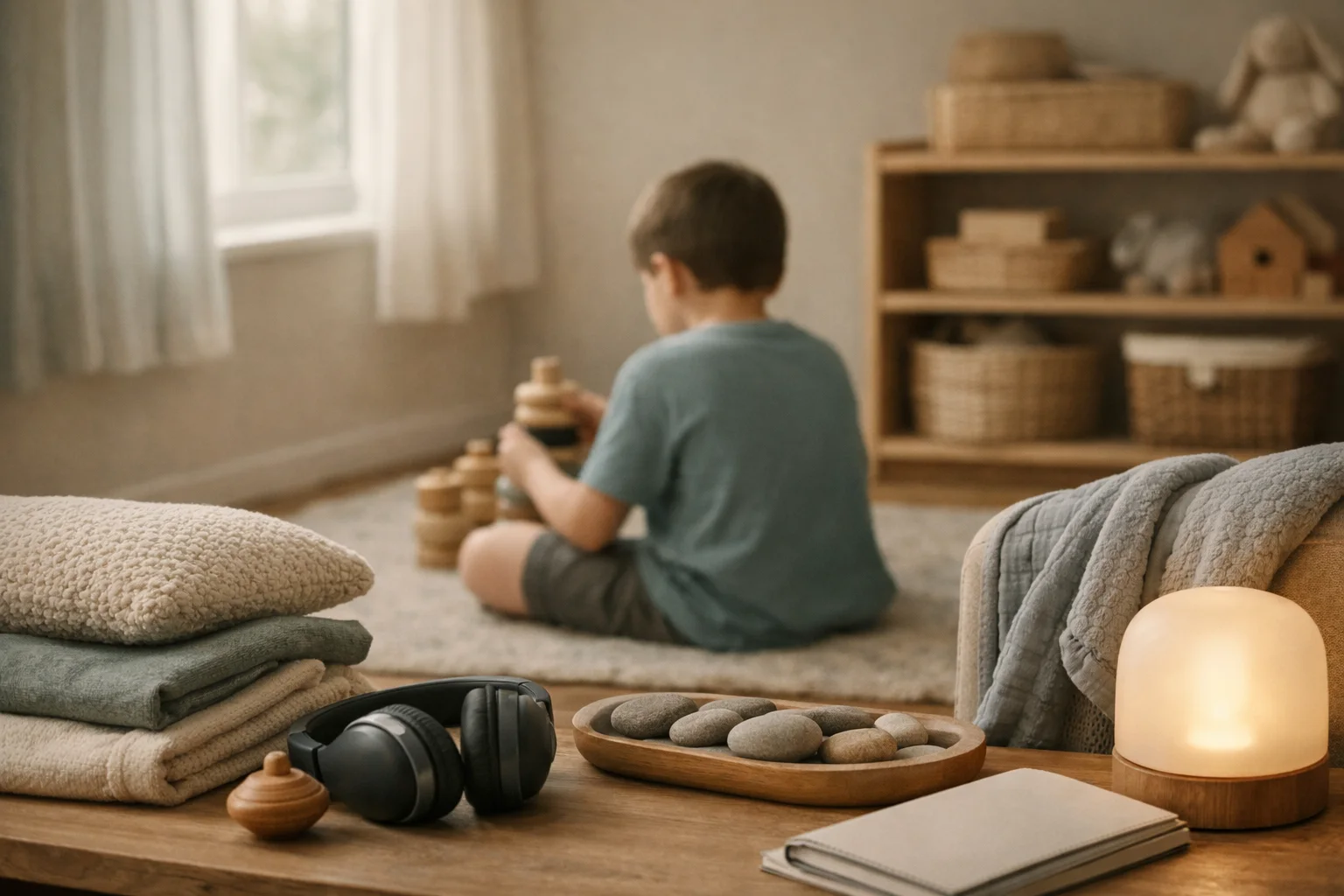
What autism is in simple terms
Autism is not a behaviour problem. It is a neurodevelopmental difference.
NHS guidance describes autistic people as often finding communication and social interaction harder, and being more likely to feel overwhelmed by things like bright lights or loud noises.
Many autistic children also have strengths such as deep interests, honesty, strong memory for topics they love, and unique ways of thinking. The goal is support, not changing who they are.
Early signs of autism in children: what parents often notice
The NHS lists signs of autism in young children that can include not responding to their name, avoiding eye contact, not smiling back, getting very upset by certain tastes, smells or sounds, repeating movements, talking less than other children, and doing less pretend play.
The National Autistic Society also shares common signs families notice before diagnosis, including differences in social communication, routines, sensory responses, and repetitive behaviours.
Some children show many signs early. Others show fewer signs, or signs become clearer when nursery or school demands increase. Great Ormond Street Hospital notes autistic characteristics are often noticed in the preschool years but may be recognised later in some children.
Signs by age
These are not checklists for diagnosis. They are prompts to seek advice if you see patterns over time.
Toddlers (1 to 3)
Common early signs families might notice include:
- not consistently responding to name
- reduced eye contact or shared attention (not looking back to share a moment)
- fewer gestures like pointing or showing you things
- speech delay or different speech development
- limited pretend play
- distress around certain sounds, textures, hair washing, or clothing
- repetitive movements such as hand flapping or rocking
(nhs.uk)
Preschoolers (3 to 5)
Signs may become clearer in nursery routines and peer play:
- preferring to play alone, or difficulty joining play
- difficulty with back and forth conversation (even with good vocabulary)
- strong need for sameness, distress with changes
- intense interests or repeating the same play themes
- sensory overwhelm in noisy, busy places
Primary school age (5 to 11)
School demands can highlight support needs:
- difficulty with social rules, group work, or friendships
- exhaustion after school from masking or coping in busy settings
- distress around unpredictability, homework, or transitions
- sensory overload in assemblies, lunch halls, or classrooms
Teenagers (12 plus)
Autistic traits may look different:
- anxiety around social expectations
- exhaustion, shutdowns, or meltdowns after holding it together
- intense interests that provide comfort and identity
- increased sensory sensitivities during stressful periods
If you are seeing these patterns, it is sensible to seek advice. You do not have to wait until your child is in crisis.
Sensory differences and “stimming”

Many autistic children have sensory differences. The National Autistic Society explains that autistic people can experience a mix of sensory sensitivity and reduced sensitivity across senses. (autism.org.uk)
You may also notice repeated movements or behaviours, sometimes called stimming. The National Autistic Society explains stimming can be used for sensory stimulation, to keep calm, or to express joy, and is often beneficial. (autism.org.uk)
A useful family reframe is this: stimming is often a regulation tool. The question is not “How do I stop it?” It is “Is my child safe, and do they need support in this moment?”
What to track for 2 weeks

If you are worried about early signs of autism in children, tracking makes it easier to explain your concerns and see patterns.
Keep notes on:
- communication: responding to name, gestures, pointing, back and forth interaction
- social: playing with others, eye contact comfort, sharing enjoyment
- sensory: distress with noise, clothing, food textures, smells, light
- routine: reactions to changes, transitions, unexpected events
- regulation: meltdowns, shutdowns, recovery time, what helps
Try to record:
- where it happens (home, nursery, school, shop)
- what happened just before
- what helped (quiet space, headphones, predictable routine, movement)
This information can be useful for a GP, health visitor, or school SENCO. (nhs.uk)
What helps at home while you seek advice
You can support your child without waiting for a diagnosis.
Keep routines predictable
Use short routines with pictures or simple lists:
- morning steps
- after school steps
- bedtime steps
Reduce language during stress
In overwhelmed moments, use fewer words and more calm structure:
- “First shoes, then outside.”
- “Quiet space now. I’m here.”
Make sensory needs easier
Small changes can reduce daily stress:
- tag free clothing where possible
- predictable hair wash routine
- quieter times for shopping
- ear defenders or noise reducing headphones if helpful
Support communication in the way your child can manage
- give processing time after questions
- offer two choices rather than open questions
- use visuals for routines and transitions
These supports help many children, autistic or not. They also reduce conflict and protect confidence.
When to seek help and how assessment works in the UK
When to seek advice
Many children cope all day then crash at home.
Try:
Nursery or school is seeing similar signs
Sleep, eating, or attending nursery or school is difficult
Patterns persist over time
Everyday life is regularly stressful for your child
Who can refer for an autism assessment
NHS guidance explains you can ask for an autism assessment referral via a GP, a health visitor for children under 5, or school SENCO staff. (nhs.uk)
What assessment involves
NHS guidance explains assessments are done by specialists and typically involve gathering information about development and behaviour across settings.
NICE guideline CG128 covers recognition, referral, and diagnosis for under 19s and supports a structured approach to assessment.
NHS England also provides guidance for improving autism assessment pathways across England.
FAQs: early signs of autism in children
Early signs can include differences in responding to name, eye contact, communication, pretend play, and sensory sensitivity. (nhs.uk)
Yes. Autism can look different in different children. Some children seek connection but find social rules confusing or tiring. (nhs.uk)
Many families describe meltdowns as an overwhelmed nervous system response, often linked to sensory overload or change. The key is that support focuses on calm and safety first.
Often yes. Support can be based on need. It is still helpful to speak to the SENCO or key person early. (nhs.uk)
Bring:
your two week notes
examples from nursery or school
what situations are hardest
what supports already help at home
Then ask directly about referral for an autism assessment. (nhs.uk)