

Why routines help autistic children
Many autistic children find uncertainty and sudden change stressful. A predictable routine can feel like comfort because the day becomes easier to understand and easier to trust.
The National Autistic Society highlights that preference for order, predictability, or routine is common for autistic people, and suggests supporting structure and preparing ahead for changes.
NHS guidance for autism and everyday life also focuses on practical ways families can support day to day life, including routines linked to sleep and wellbeing.
A simple way to put it is this: routines reduce the number of surprises the nervous system has to manage.
What “consistency” looks like in real family life
When parents hear “be consistent,” it can sound like you must run your home like a timetable. You do not.
Consistency for autistic children usually means:
- the same steps happen in the same order most days
- the words you use stay similar
- the expectations are clear
- there is a predictable way to cope when things change
This is not about controlling every minute. It is about creating a safe pattern your child can rely on.
Building a routine that your child can follow
If you are establishing routines for autistic children, start smaller than you think.
Step 1: Choose one routine only
Pick the routine causing the most daily stress:
- mornings
- after school
- bedtime
One routine done well beats five routines done badly.
Step 2: Keep it to 4 to 6 steps
Long routines often become overwhelming. For example, a morning routine might be:
- toilet
- get dressed
- breakfast
- teeth
- shoes and coat
Step 3: Make each step visible
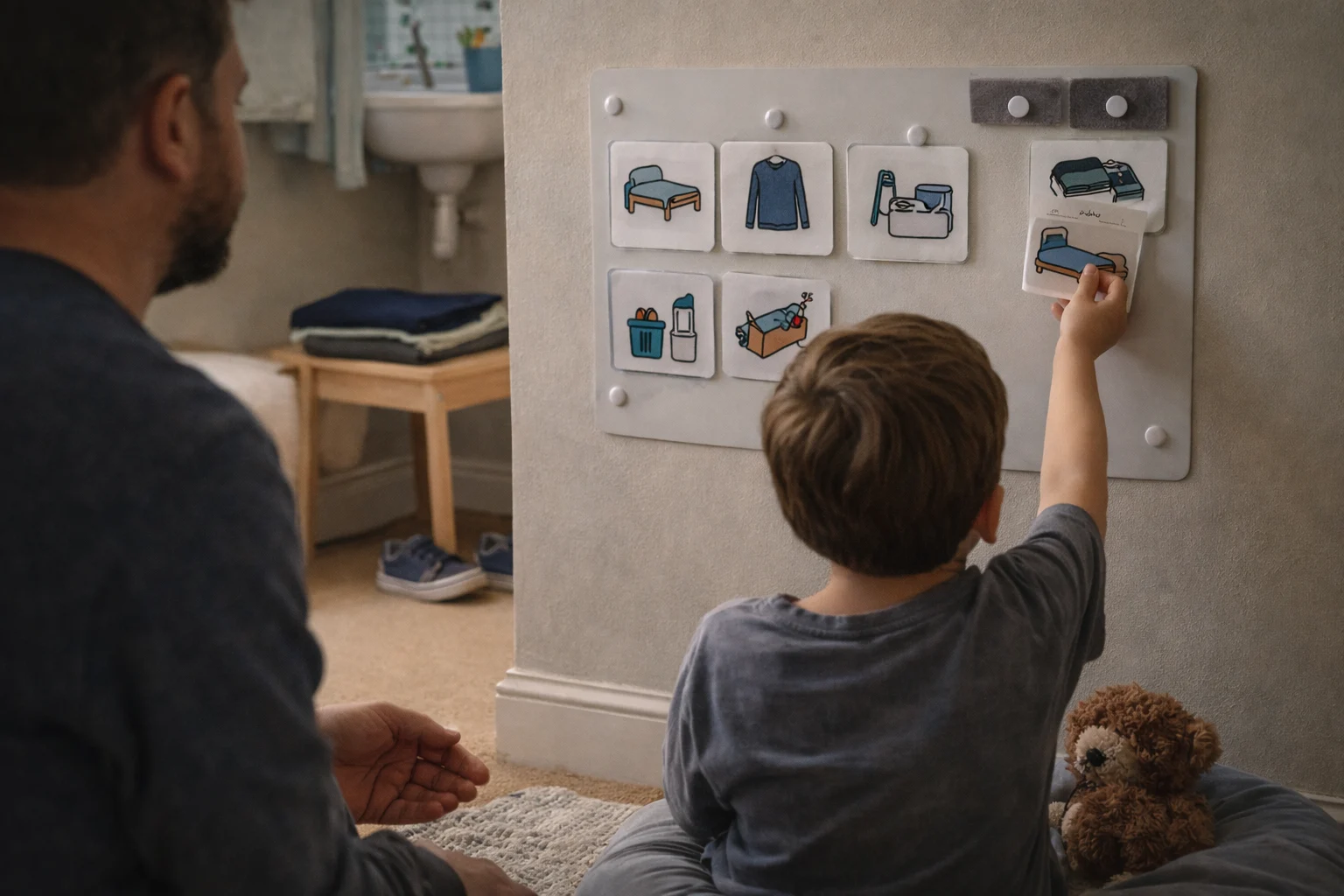
Many children cope better with routines when they can see what is happening next. Visual schedules are designed for exactly this purpose. (Leicestershire Partnership NHS Trust)
Step 4: Practise when calm
If you only introduce routines when everyone is stressed, the routine becomes part of the battle. Practise at a calm time first, even as a “pretend run”.
Visual schedules and routine charts

Visual schedules can reduce anxiety, improve understanding, and make communication more consistent than spoken words alone. (East Sussex Healthcare NHS Trust)
Leicestershire Partnership NHS explains that visual schedules list tasks in order, and can break activities into smaller tasks to make them more manageable.
What to use as visuals
Choose what fits your child:
Real objects for very young children
Photos of your child doing the steps
Simple symbols
Written words for confident readers
Where to put them
By the front door for mornings
On the fridge for after school routines
In the bedroom for bedtime
A simple “finished” system
Many families find it helps to:
Remove each picture as it is completed, or
Tick a box next to each step
This makes progress clear and reduces repeated reminders.
Transitions without tears
Transitions are often harder than the routine itself. Many autistic children find switching activities stressful, especially stopping something enjoyable.
The National Autistic Society suggests preparing ahead and counting down to changes.
Use the same countdown every time
Try:
- 10 minutes left
- 5 minutes left
- 2 minutes left
- then the next step starts
Use “first, then” language
- “First shoes, then outside.”
- “First wash, then story.”
Add a bridge
A bridge is a small activity that helps the brain switch:
- drink of water
- short stretch
- a favourite calm song
- walking to the next room together
Key routines to prioritise at home
Morning routine
Morning routines work best when they reduce decisions:
- lay clothes out the night before
- keep breakfast choices limited to two options
- keep “leaving the house” items in one place
After school decompression routine
Many children are overloaded after school. A predictable decompression routine can reduce meltdowns:
- snack and drink
- quiet time or calm corner
- movement break
- then homework or dinner routine
Bedtime routine
NHS advice includes following the same bedtime routine and keeping the bedroom dark and quiet.
A simple bedtime routine might be:
- wash or bath
- pyjamas
- teeth
- story or calm audio
- lights down
Keep the same order. Keep words low. Keep the room calm.
When routines change: plan B without panic

No family can avoid change. The goal is to make change predictable too.
The National Autistic Society suggests making a plan B and plan C to reduce the stress of unexpected changes.
A practical plan B method
Keep one part of the routine the same
Offer one small choice inside the change
Show the change visually if possible
Example:
“Plan changed. No park. We can choose a short walk or bubbles at home.”
This keeps control and comfort without pretending nothing changed.
Working with nursery and school in the UK
Consistency works best when home and school align.
Ask for routine supports at nursery or school
Helpful supports often include:
- visual timetables
- transition warnings
- predictable seating and expectations
- quiet spaces for regulation
- clear “help” and “break” options
SEND support in England
The SEND Code of Practice sets out how support should work in England. (GOV.UK)
Many education resources describe the graduated approach as assess, plan, do, review. (support-for-early-career-teachers.education.gov.uk)
Ask the SENCO or key person:
- What are the hardest times of day for my child?
- What routines help in setting?
- Can we use similar visuals at home and school?
- When will we review what is working?
FAQs: establishing routines for autistic children
Many autistic children benefit from routine and predictability, but routines should fit the child. Adjust and simplify if the routine increases stress. (National Autistic Society)
Choose the routine that causes the most daily conflict, often mornings or bedtime. Keep it short and visual.
Use countdowns, visual warnings, and plan B language. The National Autistic Society recommends preparing ahead and counting down to changes, plus having plan B and plan C options.
Often yes. Support can be based on need, and the SEND system provides routes to plan support. (GOV.UK)