

Why play and social skills can be harder for autistic children
Autism can affect communication and social interaction, and many autistic children find friendships harder. (nhs.uk)
That does not mean your child does not want friends. Some children want friends but do not know how to start. Others enjoy company but need it in small doses. Some prefer parallel play, where they play near others rather than with them.
A helpful home reframe is this: the goal is not to make your child act like everyone else. The goal is to help them feel safe, included, and understood.
What “social skills” really means for autism
When parents search encouraging social skills and play in children with autism, they are often looking for practical steps.
In everyday life, social skills can include:
- sharing attention with another person
- noticing body language and tone
- taking turns
- coping when the plan changes
- knowing how to start and end interactions
- repairing after conflict
For autistic children, these skills often need to be taught more clearly and practised more gently, with less pressure and more structure.
The building blocks: connection, joint attention, and turn taking
If you want to support encouraging social skills and play in children with autism, start with the smallest building blocks.
Joint attention
Joint attention is when two people focus on the same thing together, like a toy, a picture, or a shared joke. It is a key step in social connection.
NICE describes social communication interventions that include play based strategies to increase joint attention, engagement and reciprocal communication.
Engagement and reciprocity
This means back and forth interaction, such as:
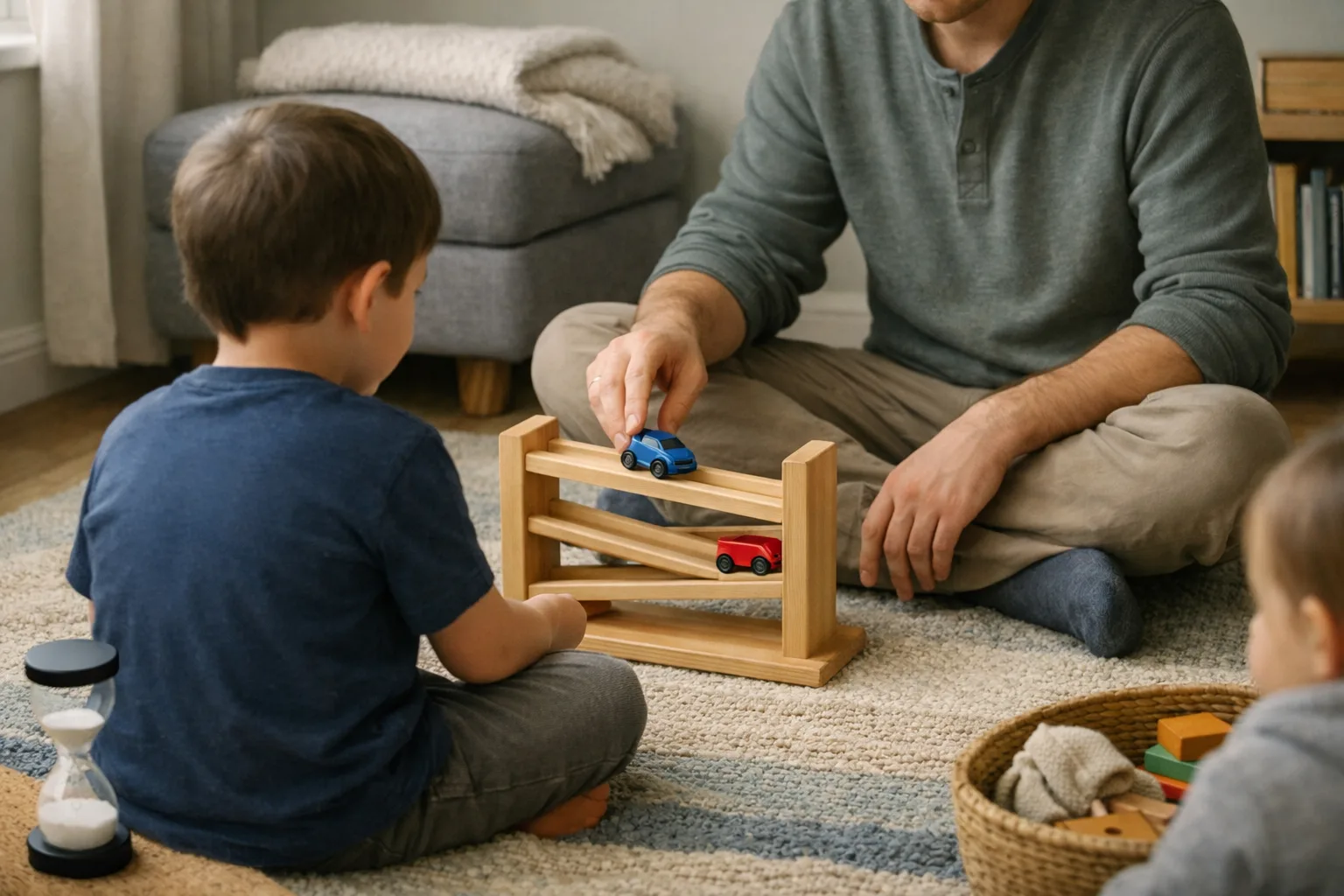
- you roll a ball, your child rolls it back
- you build a tower, your child adds a block
- you take turns making animal sounds
Turn taking
Turn taking can be practised in tiny moments, not only in games.
Play ideas that support social skills at home
These play ideas work best when they are short and fun. Stop before your child is exhausted.

A) Copy and lead play
You copy your child’s play for 30 seconds, then you add one small change.
your child lines up cars
then you add a “garage” box and drive one car in
you line up two cars too
This builds flexibility without forcing it.
B) Roll and return games
Simple, predictable games build back and forth:
rolling a ball
sliding a toy car between you
posting coins into a box one each
Use a short phrase:
“My turn. Your turn.”
C) Turn taking with a timer
Many children cope better when turns are visible.
Try:
30 seconds each
Timer changes the turn
Praise any waiting
D) Play with rules that never change
Some autistic children find open ended pretend play hard. Structured games can feel safer.
Examples:
Matching games
Simple card games
Picture bingo
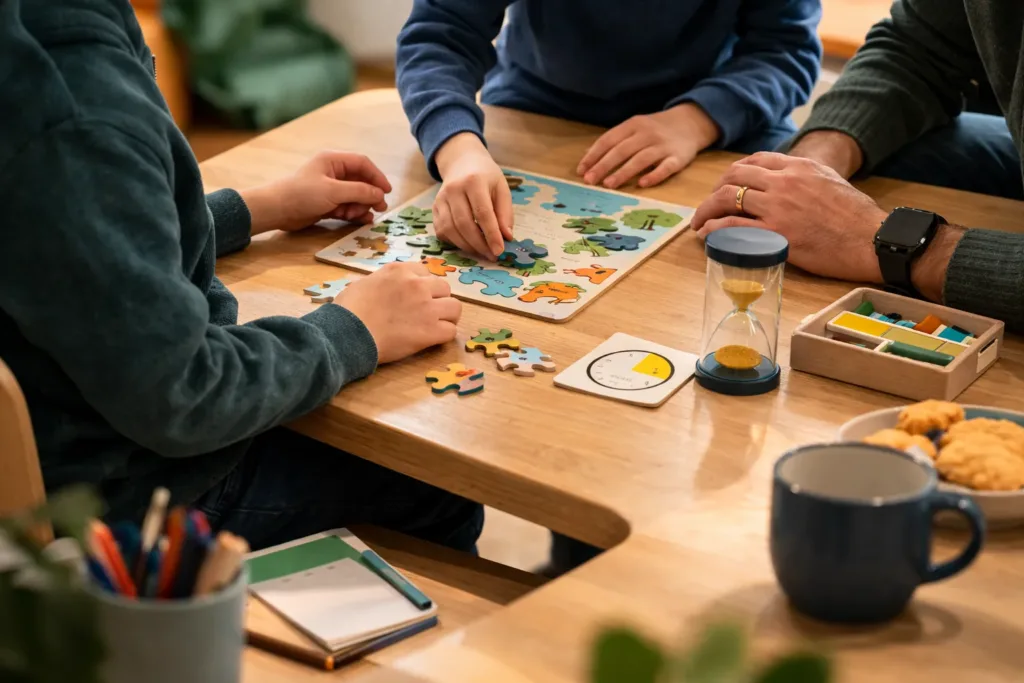
Building a puzzle together
E) Play that practises emotions safely
Use toys, pictures, or books:
“This character looks sad.”
“What could help?”
Keep it gentle. Do not quiz. Use short observations.
Supporting play with siblings and peers
Sibling play can be brilliant practice, but it can also trigger conflict.
Tips that often help:
- keep play short
- choose one shared activity with a clear goal
- adult stays nearby to coach turn taking
- use a visual “my turn your turn” card
Praise repairs, not perfection:
- “You gave it back.”
- “You asked for a turn.”
- “You used kind hands.”
Planning playdates without stress
Sensory tools can help, but too many can overstimulate or distract.
A common mistake is making the playdate too long, too unstructured, or too busy.
A simple playdate formula
- one familiar child
- 30 to 60 minutes
- one planned activity first
- snack break
- then free play if it is going well
- clear ending routine
NHS advice suggests asking school for help and looking for autism friendly social groups, including through the National Autistic Society directory.
Choose the right environment
Some children do better in:
- a quiet home
- a familiar park at a quiet time
- a shared interest club
Busy soft play can overwhelm sensory systems quickly.
Use a safe exit plan
Agree a simple phrase with your child:
“Break time”
“Quiet time”
Then step away briefly and return.
Social scripts and role play that feel natural
Social scripts can help children who want friends but do not know what to say.
Keep scripts short:
“Can I play?”
“Do you want to build?”
“My turn next?”
“Stop please.”
“I need a break.”
Practise in role play for 2 minutes. Then stop. Too much practice can feel like pressure.
Local parent resources also recommend social scripts and role play, especially during transitions like new schools, clubs, or activities. (Family Hub – Torbay online family hub)
Helping your child cope with rejection and friendship worries
Friendships can be painful when social rules feel confusing.
What helps:
- validate feelings first: “That hurt.”
- avoid forcing solutions in the moment
- focus on safe friendships built around shared interests
Ambitious about Autism suggests approaching people with similar interests and not trying to be friends with everyone.
If your child is anxious about social situations, reduce pressure and build skills through small wins.
Working with nursery and school in the UK
NHS advice says speaking to your child’s nursery or school staff is a good place to start, and you can talk to the teacher and SENCO about needs such as help with social skills.
You can ask for:
- supported play opportunities
- small group social activities
- clear buddy systems
- support at unstructured times like break and lunch
- predictable routines and transitions
NICE also describes social communication interventions that include play based strategies with parents, carers and teachers.
FAQs: encouraging social skills and play in children with autism
Not necessarily. Many children enjoy parallel play or shared interests rather than imaginative role play. Aim for connection and enjoyment.
Not always. Some children need more space and quiet. Offer gentle opportunities for shared play without forcing it. If school and family life are affected, ask for support. (nhs.uk)
Short, structured games that practise turn taking and joint attention are often effective. NICE describes play based social communication interventions. (NICE)
Often yes. Many schools support based on needs and can involve the SENCO to plan support. (nhs.uk)
Make them shorter, quieter, and more structured. Plan one shared activity and keep a clear exit plan. Review what sensory triggers might be involved.