

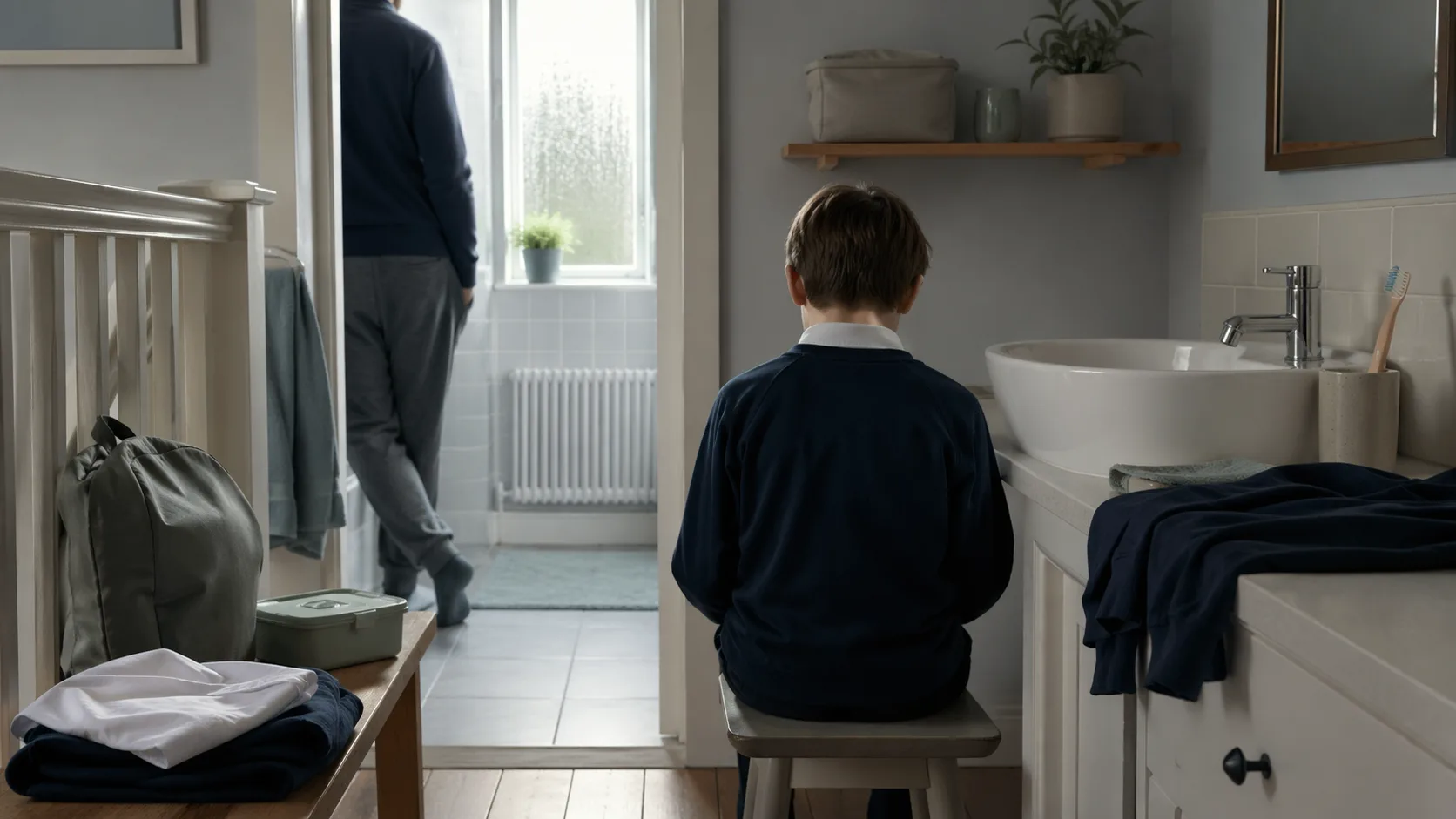
What anxiety looks like at home
Children do not always say “I’m anxious”. Anxiety often shows up through behaviour, sleep, and body complaints.
Common signs can include:
- tearfulness, irritability, clinginess (nhs.uk)
- problems sleeping, nightmares, waking in the night (nhs.uk)
- tummy aches or headaches (nhs.uk)
- avoidance of school, clubs, or new situations (Hampshire CAMHS)
- needing lots of reassurance (Newcastle Hospitals NHS Foundation Trust)
A helpful reframe for helping a child with anxiety at home is this: anxiety is an alarm system. The goal is not to switch it off completely. The goal is to help your child feel safe enough to cope.
Helping a child with anxiety at home: the calm first approach
When a child is anxious, their body can feel like it is in danger even when they are safe. In that state:
Logic often fails
Long explanations can increase stress
Shame makes anxiety worse
NHS advice for parents includes supporting children to recognise signs of anxiety in themselves and encouraging them to manage anxiety and ask for help when needed.
So your job becomes:
1- Calm the body
2- Name the feeling
3- Make a small plan
4- Praise effort
Calming strategies you can use in the moment
These are practical, low pressure tools for helping a child with anxiety at home. Pick one or two. Practise when calm so they are easier to use when stressed.
A) Breathing that lowers the alarm
NHS breathing exercises suggest breathing gently, in through the nose and out through the mouth, counting steadily for a few minutes.
Simple parent script
- “Let’s breathe together.”
- “In through your nose.”
- “Out slowly.”
Tip: breathing out slightly longer than breathing in can help the body relax. YoungMinds shares hand breathing where you trace your fingers and breathe slowly.
Grounding: 5, 4, 3, 2, 1
Grounding brings attention back to the present moment. NHS inform describes the 5, 4, 3, 2, 1 method using the senses.
YoungMinds also shares grounding techniques in a simple worksheet.
Try this
- 5 things you can see
- 4 things you can feel
- 3 things you can hear
- 2 things you can smell
- 1 thing you can taste
C) Name it to tame it
Try:
- “This sounds like worry.”
- “Your body is giving you an alarm.”
- “We can handle the alarm together.”
D) A safe object or “calm kit”
Create a small calm kit with:
- a comfort item
- a fidget
- a note with one calm phrase
- a picture of the breathing method
Keep it in the same place so it is predictable.
E) A short movement reset
Some children calm faster after movement:
- a short walk
- wall push ups
- stretching
- jumping on the spot for 20 seconds
Movement can reduce stress build up and makes it easier to think.
Everyday routines that reduce anxiety over time
This is the part of helping a child with anxiety at home that makes the biggest difference.
A) Predictable routines
NHS guidance notes that routines can be reassuring for children, so it can help to stick to regular daily routines where possible.
Start with:
- morning routine
- after school decompression routine
- bedtime routine
Keep routines short. Use a checklist or pictures if helpful.
B) Worry time, not worry all the time
Some children worry more at bedtime. Consider moving “worry talk” earlier in the day. West Yorkshire Healthier Together suggests talking about anxiety in a calm moment and avoiding worry talks just before bed.
Try:
- 10 minutes of worry time after tea
- then close the worry chat and move to calm activities
C) Sleep support
If sleep is slipping, anxiety usually grows. Keep bedtime consistent, reduce screens before bed, and build a wind down routine.
D) Reduce reassurance loops
Reassurance helps briefly, then anxiety asks for more. A gentle limit can help children build confidence.
Try:
- “I’ve answered that once. Now we use our plan.”
- “You can handle this. I’ll help you start.”
Newcastle Hospitals NHS encourages helping children manage worries by themselves, which supports confidence over time.
Worry tools that help children externalise anxiety
The worry tree
A worry tree helps children separate worries into:
Worries they can do something about
Worries they cannot control
Newcastle Hospitals NHS includes the worry tree as a practical tool to help children manage worries.
How to use it
What is the worry?
Can we do something about it?
If yes: pick one small action
If no: practise letting it go with breathing or grounding
Worry box
A worry box is a container where children can post worries, then you look at them together at a set time. This reduces constant checking.
Fear ladder
A fear ladder is a step by step exposure plan:
Step 1 is tiny and safe
Step 10 is the big fear
You only move up when your child feels ready. This supports gradual confidence building.
School anxiety and morning battles
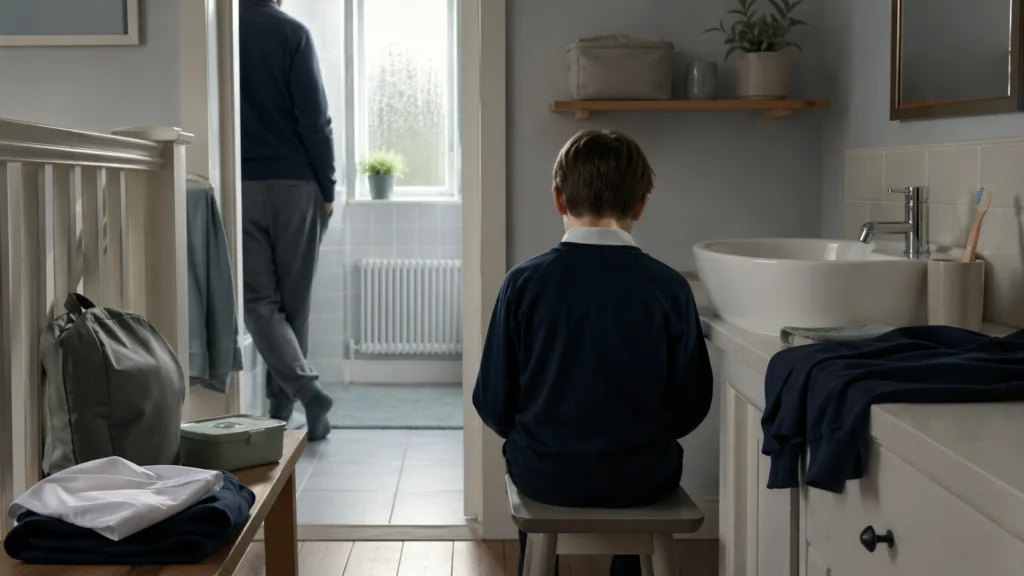
School mornings are where anxiety often shows itself.
Helpful steps for helping a child with anxiety at home during school refusal or distress:
- make mornings predictable with a simple visual routine
- prepare the night before: clothes, bag, lunch
- keep talk minimal during the hardest minutes
- use a calm script: “We are safe. One step at a time.”
- share a simple plan with school: safe person, calm space, first task
If your child is refusing school often, involve school early. It is easier to support anxiety early than once patterns are entrenched.
When to seek help in the UK
Seek extra support if:
- anxiety lasts weeks to months
- sleep is heavily affected
- school attendance is affected
- your child avoids more and more situations
- your child seems constantly distressed
Who to speak to
Start with:
- school pastoral team or SENCO
- your GP
NHS guidance notes counselling and CBT can help children with anxiety disorders, and CBT can help by changing the way they think and behave.
NICE also describes CBT as an option for children and young people for specific anxiety disorders such as social anxiety disorder.
If you are worried your child is not safe, seek urgent help immediately through emergency services.
FAQs: helping a child with anxiety at home
Most children have worries. Anxiety becomes a concern when it is persistent and affects everyday life like sleep, school, and family routines. (West Yorkshire Healthier Together)
For many children, breathing and grounding work well. NHS provides breathing exercises for stress, and NHS inform describes grounding using the senses. (nhs.uk)
Some reassurance is normal. If questions repeat constantly, try answering once, then shift to the plan and a calm tool like grounding. (Newcastle Hospitals NHS Foundation Trust)
Yes. NHS lists tummy aches and headaches as common signs of anxiety in children. (nhs.uk)
Support varies. CBT is commonly offered for anxiety disorders in children and young people. (nhs.uk)