

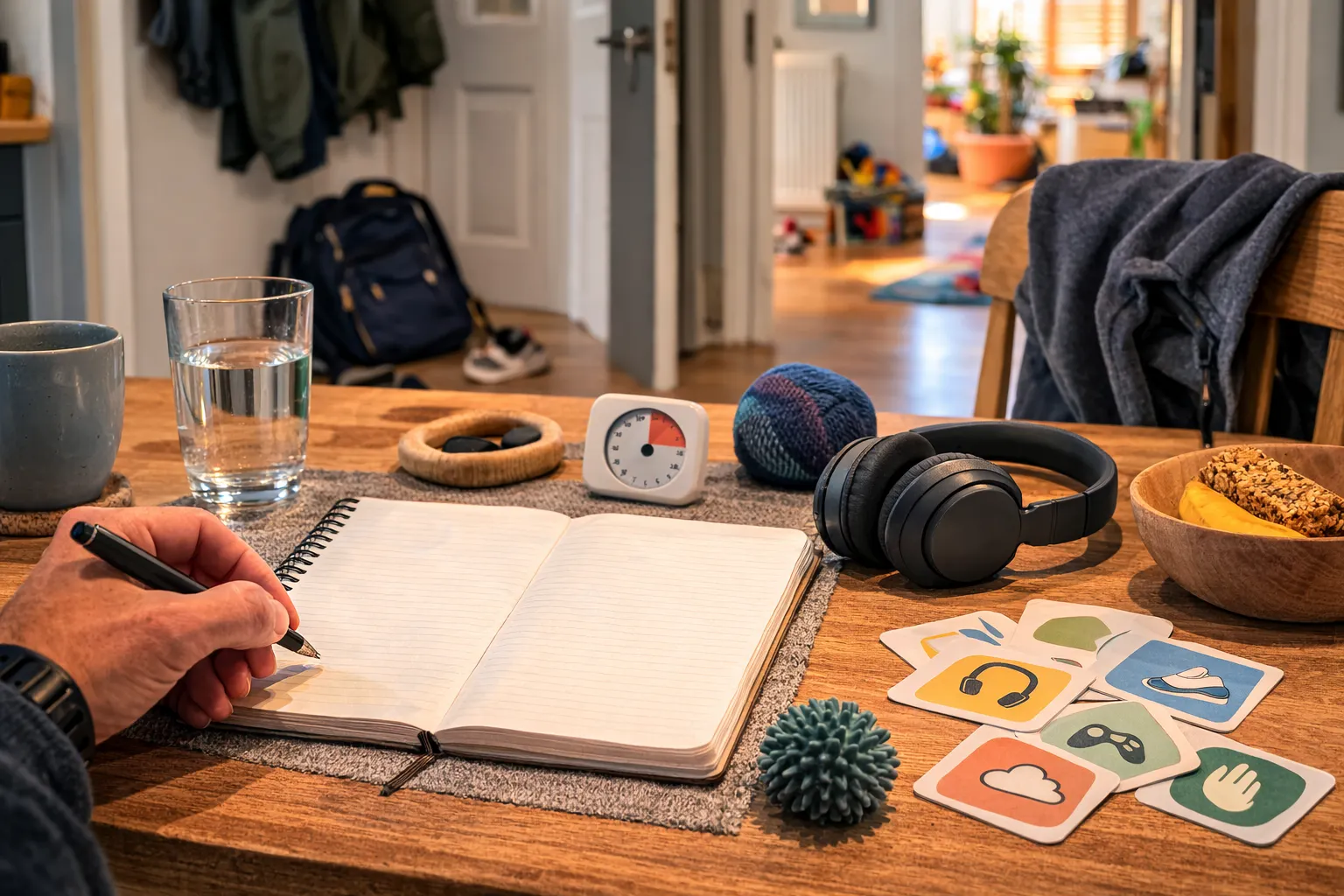
What behaviour triggers are, and why trauma changes responses
A behaviour trigger is anything that pushes a child into a stress response. For traumatised children, the brain may interpret ordinary situations as unsafe.
Trauma informed practice in the UK emphasises understanding how trauma affects neurological, biological, psychological, and social development, and responding in ways that reduce the risk of re traumatisation.
NHS England also describes trauma informed approaches as focusing on recognising trauma impact and avoiding re traumatisation through care.
This is why a child may react strongly to something that seems small, such as:
- being told “no”
- a change in plan
- a raised voice in another room
- being asked to wait
- a smell, sound, or place that reminds them of something frightening
The behaviour is often a stress response, not “badness”.
Common triggers in traumatised children

Triggers vary by child, but these patterns are common in families dealing with trauma and adversity.
A) Uncertainty and loss of control
Trauma often teaches children that the world is unpredictable. They may try to control small things to feel safe:
“bossing” siblings
Melting down when plans change
Refusing to leave the house
Arguing over tiny details
B) Transitions
Transitions can feel like loss of control, especially:
Waking up
Leaving school
Moving from play to chores
Bedtime
C) Sensory overload
Noise, crowds, smells, tight clothing, bright lights, busy spaces, and touch can trigger overwhelm.
D) “Relational” triggers
These can include:
Adult disappointment
Being corrected
Perceived rejection
Being ignored while an adult is busy
Adults arguing
A child may have learned that relationships can change suddenly. They may test closeness or push away to stay in control.
E) Shame triggers
Many traumatised children carry shame. Shame can look like:
Lying
Aggression
Blaming others
Shutting down
Storming off
A helpful reframe: shame often looks like anger on the outside.
Early warning signs: how to spot escalation sooner
Most crises have a build up, even if it feels sudden. Early signs might include:
- pacing, fidgeting, scanning the room
- rapid speech or louder voice
- repeated questions
- rigid “must be this way” thinking
- clenched fists, tense body, jaw tight
- defiance that seems out of proportion
Your job is to notice the early signs and shift the environment before full escalation.
The calm plan: what to do when you feel a trigger moment coming
This is the core of managing behaviour triggers in traumatised children.
Step 1: Regulate yourself first
Your nervous system is the anchor.
Try:
- one slow breath in and longer breath out
- lower your shoulders
- soften your voice
- slow your pace
Step 2: Reduce demands and increase predictability
If you push more, you often get more escalation.
Try:
- “We’re safe. One step at a time.”
- “First shoes, then car.”
- “Two choices. You pick.”
Step 3: Use fewer words
In threat mode, the brain struggles to process language. Use short phrases:
- “You’re safe.”
- “I’m here.”
- “We will sort this.”
- “Quiet space.”
Step 4: Offer a regulation route, not a lecture
Give the body a way to settle:
- water
- snack
- movement break
- calm corner
- headphones
- outside air
Step 5: Keep boundaries firm and calm
Therapeutic parenting is not permissive. Safety rules still stand.
Try:
- “I won’t let you hit.”
- “I’ll help you calm.”
- “We can try again when your body is ready.”
After the storm: repair, reflection, and building trust
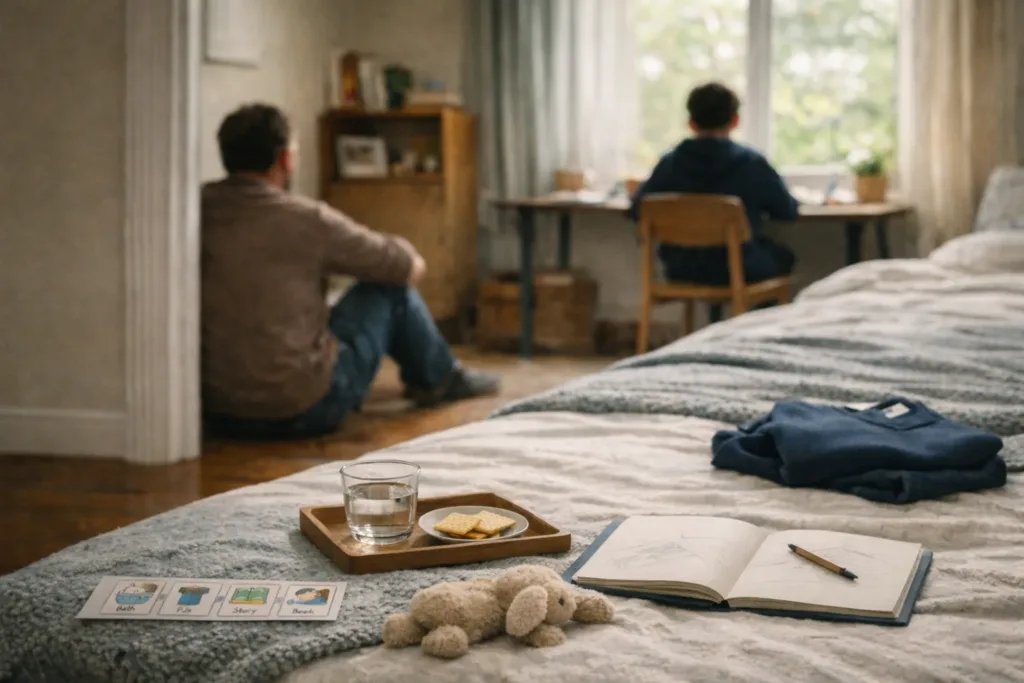
After a trigger episode, many children feel embarrassed, tired, or guarded. This is where trust is built.
Recovery first
- water, snack, calm activity
- low demand time
- gentle connection
Then a short repair
Keep it small and kind:
- “That was a big worry reaction.”
- “Next time we can use the break card.”
- “We can practise one step.”
Avoid long debriefs. One lesson is enough.
Reducing triggers over time: practical prevention strategies
A) Build predictable routines
Routines reduce uncertainty. Focus on:
Morning steps
After school decompression
Bedtime
Make them visual if helpful.
B) Create a “plan B script”
Change is a common trigger. Practise a consistent script:
“Plan changed. You’re safe.”
“Here are two options.”
C) Add “connection points” daily
Short connection reduces attention seeking and testing:
10 minutes child led play
A shared task like making a drink
Reading beside each other
D) Meet basic needs early
Many trigger episodes are worsened by:
Hunger
Thirst
Tiredness
Constipation or pain
E) Reduce shame and increase success
Children who feel “bad” often act “bad”.
Try:
Praise effort and repair
Notice strengths daily
Give micro tasks they can complete
F) Keep adult responses consistent
Trauma makes children scan for unpredictability. Calm, repeatable responses create safety.
7) A simple trigger tracker you can use this week
- What happened just before
- Where it happened
- Who was there
- Sensory factors: noise, crowd, light, touch
- Demand level: was it a transition, a “no”, a correction
- Body signs: tense, pacing, shouting, hiding
- What helped: snack, calm voice, space, movement, choices
- Recovery time: how long to settle
When to seek more help in the UK
Seek extra support if:
- behaviours are unsafe or escalating
- school attendance is affected
- sleep is severely disrupted
- your child shows persistent fear, nightmares, avoidance, or hyperarousal
- you feel burnt out and unable to cope
PTSD and trauma guidance
NICE guideline NG116 covers recognising, assessing, and treating PTSD, including for children and young people.
Trauma informed practice
UK trauma informed practice guidance emphasises safe, respectful approaches that recognise trauma impacts and avoid re traumatisation.
Start points:
- GP
- school SENCO or pastoral lead
- local children’s services and mental health support routes where available
- therapeutic family support organisations
If there is immediate risk of harm, seek urgent help through emergency services.
FAQs: managing behaviour triggers in traumatised children
No. Triggers are often stress responses. Trauma informed practice recognises behaviour can be driven by fear and survival systems.
Their nervous system may be scanning for danger. What looks small to an adult can feel unsafe to a child with trauma history.
Step back if safe, breathe, lower your voice, and keep language short. If needed, swap with another adult. Repair later. Children learn safety from your recovery too.
Often, yes. Predictability reduces uncertainty, which is a common trigger for traumatised children.
If episodes are frequent, unsafe, or impacting wellbeing and education, speak to your GP and school and ask about trauma informed support options. NICE guidance covers PTSD pathways.