

What “sensory friendly” means in real homes
A sensory friendly home is not a perfect house and it is not an expensive makeover.
It is a home that:
- reduces unnecessary sensory stress
- makes routines predictable
- gives your child safe ways to regulate
- helps the whole household feel calmer
Understanding your child’s sensory profile
Sensory needs vary. Some children are sensory sensitive. Some are sensory seeking. Many are both, depending on the situation.
Spend a week noticing:
What environments cause distress (kitchen noise, busy hallway, bath time)
What your child avoids (hair washing, certain clothes, hand dryers)
What your child seeks (spinning, jumping, deep pressure, chewing)
What helps them recover (dark room, music, movement, tight hugs, space)
This gives you a simple “sensory profile”. It helps you choose the right adjustments rather than guessing.
The sensory basics: sound, light, touch, smell, and movement
Sound
Noise can be the biggest trigger for overwhelm.
Try:
- turn off background TV
- use soft furnishings to absorb noise
- create a “quiet hour” after school
- offer ear defenders or noise reducing headphones when helpful
The National Autistic Society suggests strategies like reducing background noise and using ear defenders for noise sensitivity.
Light
Bright or flickering light can feel painful for some children.
Try:
- use lamps instead of strong overhead lights
- keep lighting warmer in the evening
- reduce glare near tables and screens
- consider blackout curtains for bedrooms
Touch and clothing
Some children struggle with:
- clothing labels and seams
- socks
- hair washing and brushing
- toothbrushing textures
Try:
- tag free clothing where possible
- let your child choose between two acceptable outfits
- use gradual exposure: one small step at a time
- keep the same products if your child tolerates them
Touch and clothing
Some children struggle with:
- clothing labels and seams
- socks
- hair washing and brushing
- toothbrushing textures
Try:
- tag free clothing where possible
- let your child choose between two acceptable outfits
- use gradual exposure: one small step at a time
- keep the same products if your child tolerates them
Smell and taste
Strong smells can trigger gagging or panic.
Try:
- use unscented laundry products
- keep cooking smells ventilated where possible
- support eating with safe foods plus tiny “learning bites” without pressure
Movement and body awareness
Many children regulate through movement. A sensory friendly home includes safe movement outlets.
Try:
- short movement breaks
- heavy work jobs like pushing a wall, carrying laundry, wiping tables
- an indoor obstacle line with tape and cushions
Room by room ideas for a sensory friendly home
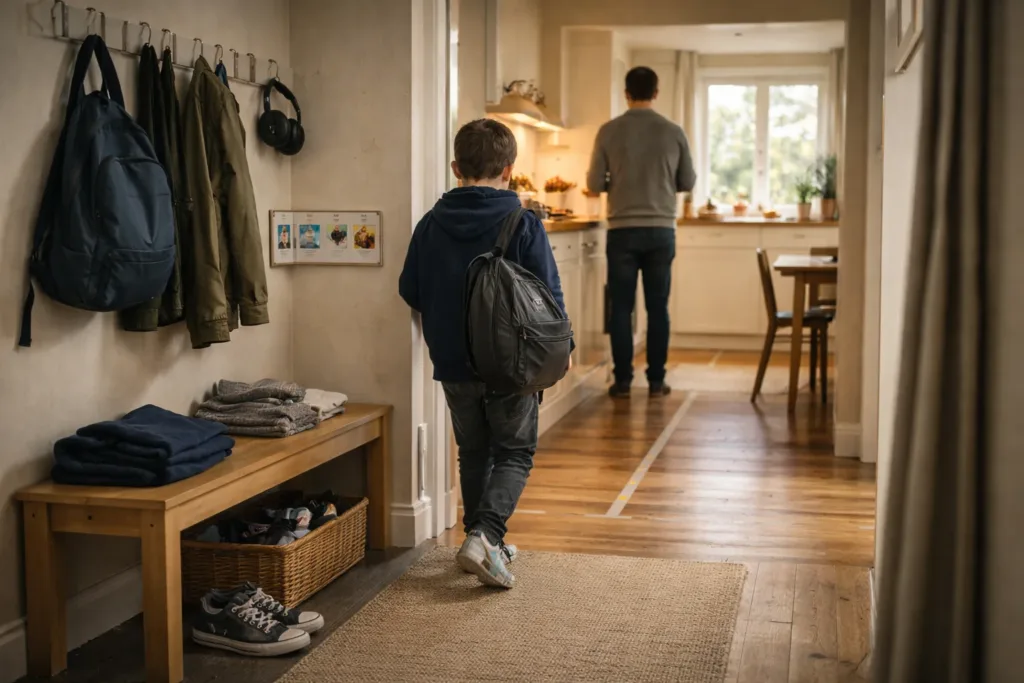
The hallway and entry point
This is where many families lose calm.
Make it predictable:
Hooks at child height
One basket for shoes
a simple picture checklist
The kitchen
Kitchens can be loud and bright.
Soften the load:
Quieter cutlery or plastic plates if noise is a trigger
A predictable snack routine after school
Reduce strong smells where possible
One calm seat choice, same place each day
The living room
Many living rooms are full of visual and noise clutter.
Try:
Reduce the number of toys on show
Keep “play toys” in one box and rotate weekly
Create a clear calm corner (see next section)
Limit background noise
Bedrooms
Sleep and sensory comfort are linked.
Try:
Reduce clutter near the bed
Dim lights and predictable bedtime routine
Blackout curtains if light wakes your child
Keep devices charging outside the bedroom if screens cause dysregulation
Bathroom
Bath time can be a sensory minefield.
Try:
A consistent bath routine with pictures
let your child hold a washcloth or choose a toy
Reduce strong scents
Warm towel ready
Gentle water flow
Creating a calm corner that actually works
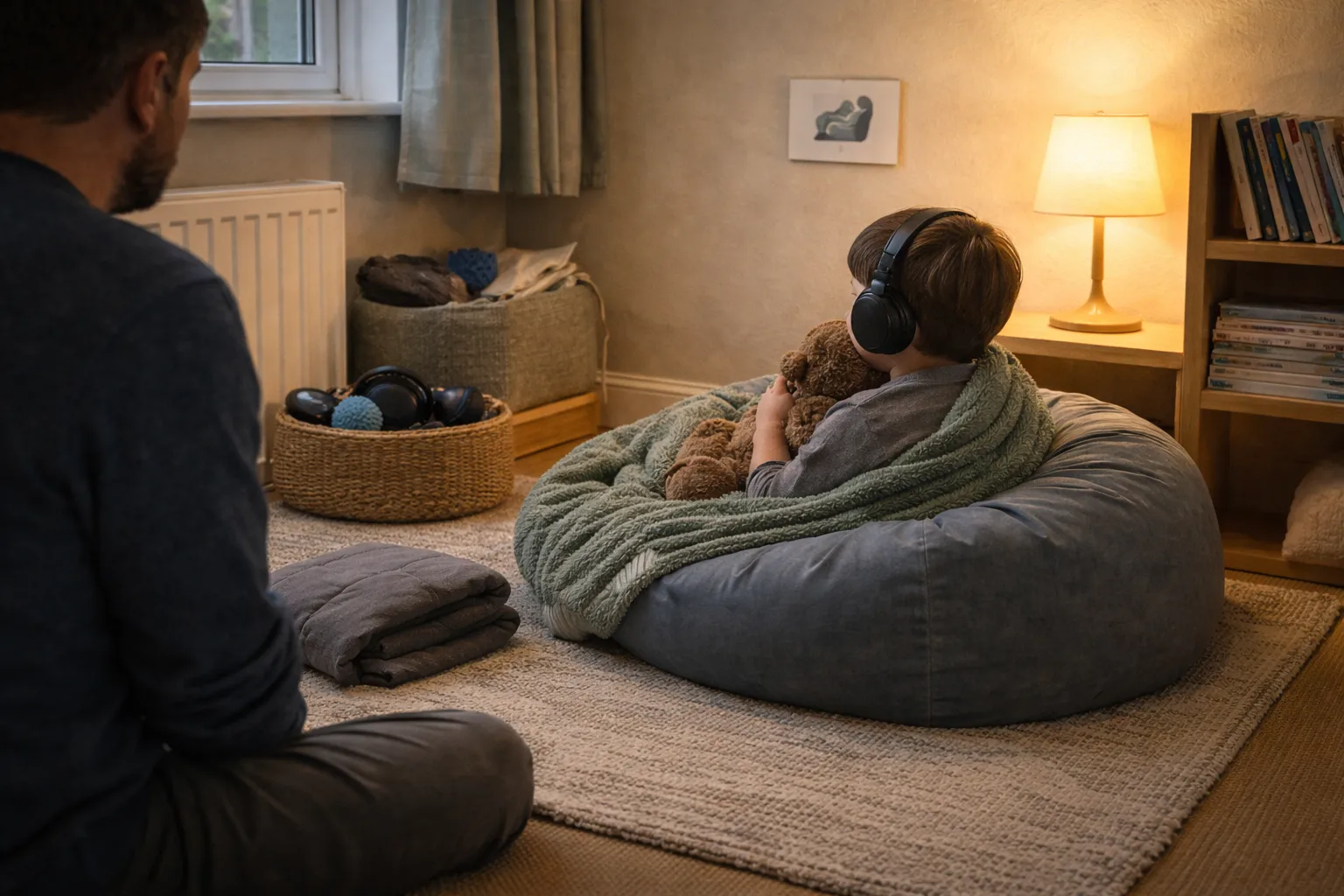
A calm corner is not a naughty step. It is a safety and reset space.

Keep it simple:
- cushions or beanbag
- low lighting
- one comfort item
- one or two sensory tools (not a whole toy shop)
- visual card: “break”
Introduce it when your child is calm:
- “This is our quiet space.”
- “We can come here when things feel too big.”
This supports self regulation and helps reduce escalation.
Sensory tools: what helps and what often backfires
Sensory tools can help, but too many can overstimulate or distract.
Tools that often help
- ear defenders or noise reducing headphones
- a small fidget
- chewable jewellery if safe and suitable
- a weighted lap pad or blanket if your child finds deep pressure calming
The National Autistic Society discusses sensory strategies and supports including managing sensory sensitivity.
Tools that often backfire
- huge sensory boxes with lots of options
- loud musical toys if sound is sensitive
- bright flashing lights
- sensory tools introduced during peak meltdown without any practice beforehand
Start with one tool at a time and review what it changes.
Daily routines that reduce overload
A sensory friendly home is also about rhythm.
The after school decompression plan
Many children cope all day then crash at home.
Try:
Snack and drink
10 minutes quiet time or calm corner option
10 minutes movement
Then homework or chores
Use visual routines for key moments
Visual routines reduce processing load.
Best routines to visualise:
Morning steps
After school steps
Bedtime steps
Build in “sensory breaks”
A sensory break is a planned reset:
Movement
Deep pressure
Quiet space
Outdoor air
Planned breaks are easier than emergency breaks.
When sensory needs cause distress: what to do in the moment
If overwhelm is building:
- reduce demands
- reduce noise and light
- move to the calm corner or outside
- use fewer words
- offer a break card or simple choice
For meltdowns, NHS guidance describes meltdowns as a loss of control caused by being totally overwhelmed, and recommends staying calm and keeping the child safe.
Once calm returns, you can reflect gently:
- “It was too loud.”
- “Next time we can use headphones or take a break.”
Getting help in the UK: school, OT, and support routes
School support
School can support sensory needs through adjustments:
Quieter spaces
Ear defenders
Predictable transitions
Visual timetables
In England, the SEND Code of Practice sets expectations for SEN support and the graduated approach.
Occupational therapy
Occupational therapists can help with sensory processing, daily living skills, and routines. Access routes vary by area. You can ask your GP, health visitor, or school about local referral pathways.
NICE guidance
NICE guidance for autism in children and young people covers support for families and coordinated approaches.
FAQs: sensory friendly home
No. Most families see improvement from routine, predictability, and reducing noise and visual clutter first.
It can be. Many children regulate through movement and deep pressure. Provide safe outlets and predictable breaks.
It can reduce escalation when introduced early, but it will not prevent every meltdown. It is one tool in a wider plan.
Often yes. Support can be based on need. Schools can use the graduated approach and make reasonable adjustments.
If sensory distress is affecting sleep, eating, safety, school attendance, or family wellbeing, speak to your GP and school and ask about OT and autism support pathways.