

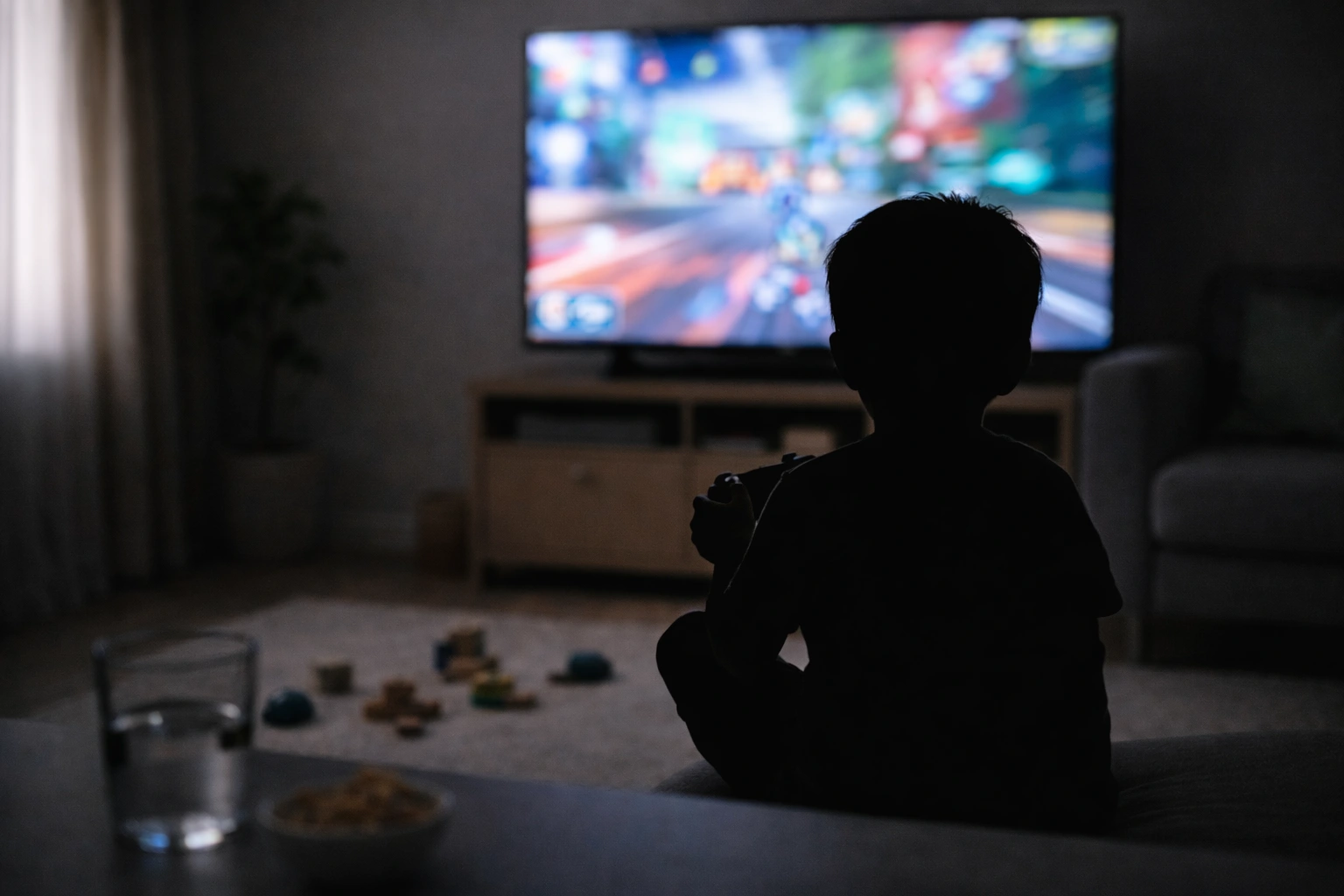
What hyperfocus is, and what it is not
With hyperfocus explained clearly, it becomes easier to respond calmly.
Hyperfocus is when a child becomes deeply absorbed in an activity. They may:
- not hear you calling their name
- lose track of time
- struggle to stop, even when they want to
- feel irritable or upset when interrupted
Research written for young people describes hyperfocus as something many people with ADHD report, and it can sometimes feel like a “superpower”. (Frontiers for Young Minds)
Hyperfocus is not:
- proof your child is being manipulative
- proof your child “can focus fine, so they are choosing not to”
- a guarantee of high performance at school
This is the key reframe: hyperfocus explained properly is not “great focus”. It is uneven focus.
Hyperfocus explained through the ADHD brain
ADHD is recognised in UK health information as a condition where the brain works differently, and children may struggle with concentrating and sitting still. (nhs.uk)
Many clinicians describe ADHD as a regulation difficulty. That includes regulating:
Attention
Impulses
Emotions
Activity level
Switching from one task to another
A helpful NHS example explains that an ADHD brain can find it harder to focus on what is necessary and easier to pay attention to what is interesting. (Whittington Health)
So with hyperfocus explained, the goal is not to “get rid of it”. The goal is to help your child use attention more flexibly, especially for schoolwork and routines.
Why games win and schoolwork loses
Parents often ask: “How can my child play for hours but not write three sentences?”
With hyperfocus explained, a simple answer is: games and homework reward the brain differently.
Games give frequent feedback
Games often provide:
- quick wins
- clear goals
- immediate rewards
- constant novelty
That makes it easier for the brain to stay engaged.
Schoolwork can feel like delayed reward
School tasks often involve:
- effort before reward
- unclear starting points
- fear of mistakes
- lots of steps held in mind
Good practice guidance from the Royal College of Psychiatrists describes difficulty sustaining attention to tasks that do not provide high stimulation or reward, and that require sustained mental effort. (www.rcpsych.ac.uk)
So when a parent says “They can do it when they want to,” what might really be happening is this: the brain can engage when the task provides enough stimulation, structure, or reward.
That is why urgency can suddenly switch focus on. It is not ideal, but it is common.
Signs your child is stuck in hyperfocus
- strong resistance to stopping
- “just one more minute” repeated again and again
- ignoring hunger, thirst, toilet needs
- anger when you interrupt
- big mood drop when the activity ends
How to help your child switch tasks without a meltdown
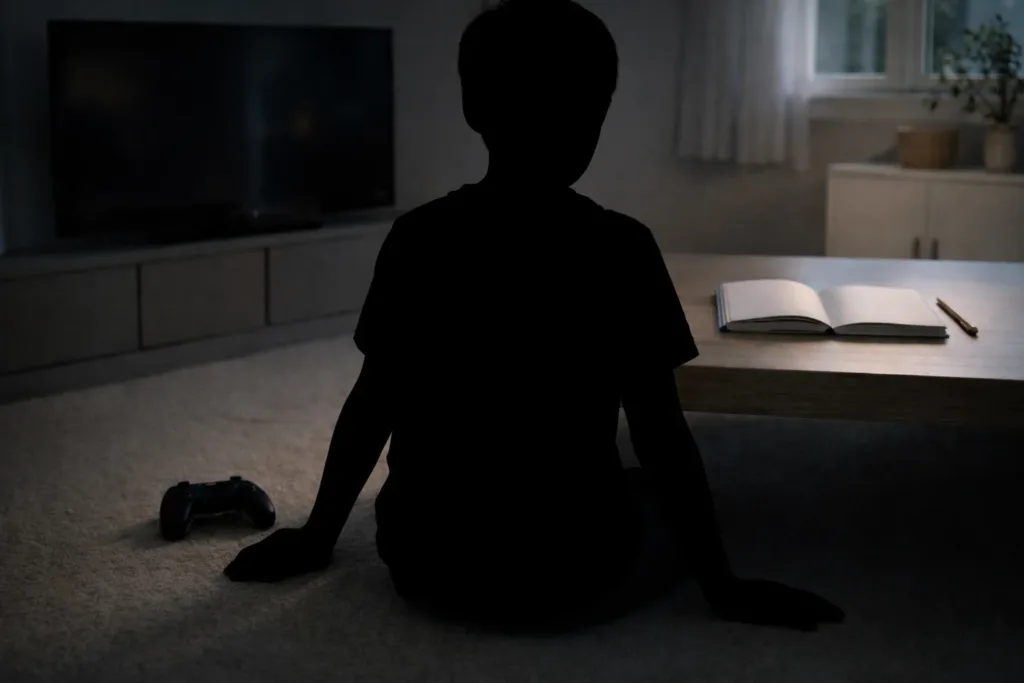
Transitions are where most families feel the pain. Here are practical ways to reduce blow ups.
A) Use predictable warnings
Try:
- 10 minutes left
- 5 minutes left
- 2 minutes left
- timer goes off, then stop
Keep your words calm and consistent.
B) Use a “bridge” between tasks
A bridge is a small step that helps the brain switch.
Examples:
- “When the timer ends, we do a drink break, then homework.”
- “When the game ends, we do five star jumps, then we start question one.”
C) Give the first school step for them
If starting is the hard part, do not begin with “Do your homework.”
Begin with a safe first step:
- “Open the book.”
- “Write the date.”
- “Highlight the first instruction.”
This reduces the “start barrier” that often triggers avoidance.
D) Offer two acceptable choices
Choices reduce power struggles:
- “Do you want to start with maths or English?”
- “Do you want to work at the table or the desk?”
Homework strategies that work with hyperfocus
If your child has hyperfocus explained moments on games, you can borrow the good parts of games for schoolwork.
A) Use time sprints, not long sessions
Try:
10 minutes work
3 minutes movement break
repeat
Keep breaks active rather than screen based so the brain can return more easily.
B) Make progress visible
Use:
A checklist
A simple tick box sheet
A “done” pile
Visible progress can help motivation.
C) Use body doubling
Sit nearby doing your own quiet task. Your presence can anchor your child without turning homework into a battle.
D) Reduce writing load where possible
If writing is the bottleneck:
ask school if typed work is allowed
consider speech to text tools
focus marking on key questions, not quantity
If you are concerned about school support, NICE NG87 is the UK clinical standard for ADHD and can be used as part of conversations about support needs. (NICE)
Healthy screen boundaries that reduce conflict
Screen boundaries work best when they are predictable, not emotional.
A) Keep screens out of the “homework zone”
Separate spaces help the brain separate modes.
B) Use a clear daily screen plan
Try:
Homework first, then screens
Screens at a set time, not all evening
Screens off at the same time daily
C) Focus on replacement, not removal
If you remove screens without replacement, the brain will fight.
Good replacements:
Movement
Music
Lego
Drawing
Outdoor play
This is not about banning fun. It is about helping attention stay flexible.
When to seek help in the UK
Consider seeking advice if:
- focus difficulties happen across home and school
- homework is regularly impossible without tears or conflict
- teachers report attention and impulsivity issues
- your child is becoming anxious, low, or withdrawn
- sleep is poor most nights
FAQs: hyperfocus explained
Hyperfocus can occur in ADHD and is reported by many people with ADHD, but it is not exclusive to ADHD. (Frontiers for Young Minds)
If you see other ADHD patterns like persistent inattention, hyperactivity, or impulsivity across settings, it is worth discussing with school and your GP. (nhs.uk)
Use warnings, a timer, and a bridge activity. Keep your words short and calm. Start the next task with one tiny step.
Not usually. Predictable boundaries plus replacement activities tend to work better than sudden bans. If gaming is affecting sleep, school, or mood significantly, speak to your GP.
Some children mask in structured environments then release stress at home. Share specific examples with school and ask for a joined up plan.