

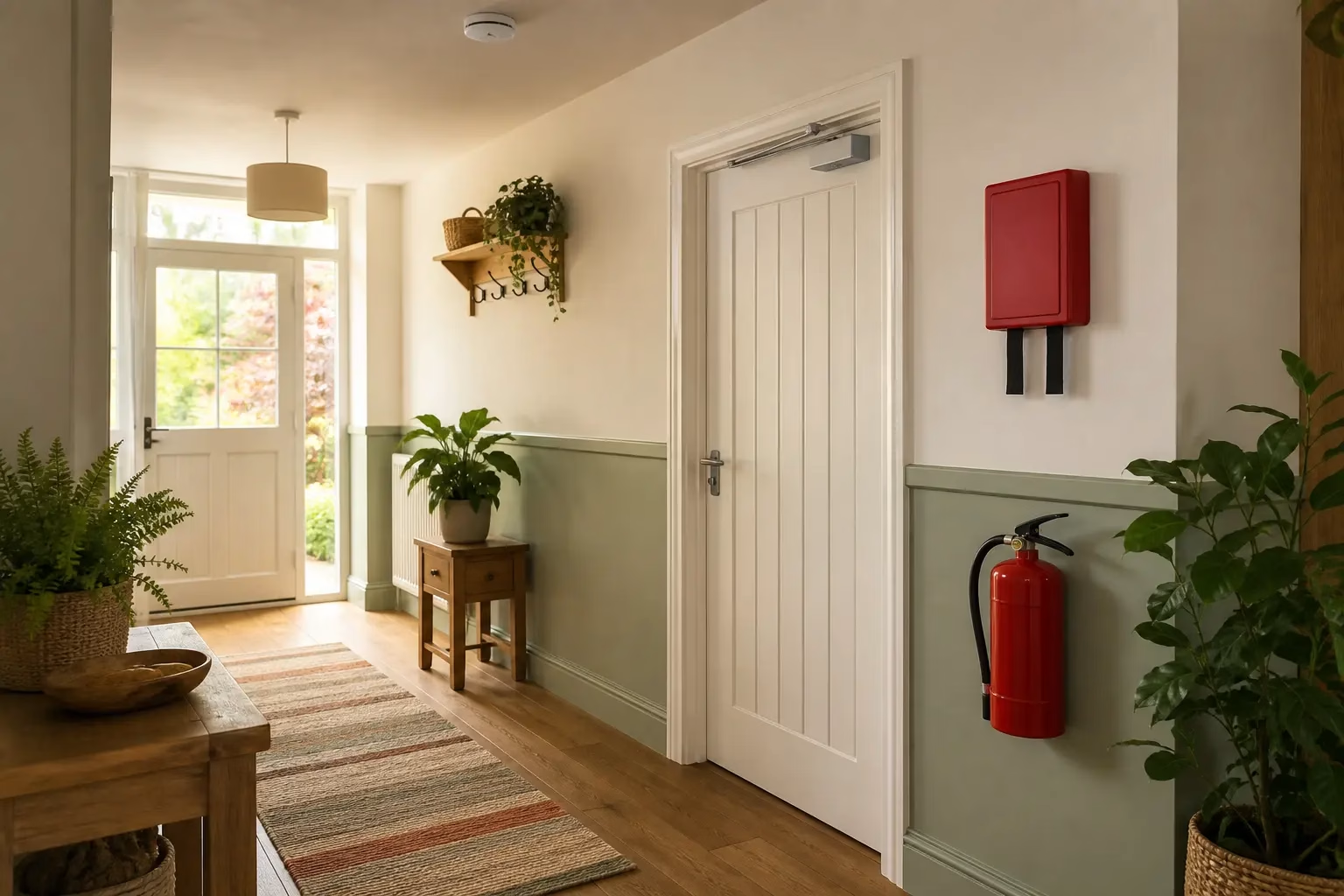
Children’s homes must have effective fire precautions that reflect both the building and the needs of the children living there. Regulation 25 links equipment, escape routes, training and drills with the wider fire-safety framework. A certificate alone does not show that children can be evacuated safely at night.
*Images in this guide are AI-generated illustrations, not photographs of Welcare premises or evidence of a particular home’s facilities.
The fire-safety images are not an approved design or a site-specific evacuation plan.
What does Regulation 25 require?
Regulation 25 of the Children’s Homes (England) Regulations 2015 addresses fire precautions.
After consultation with the fire and rescue authority, paragraph 25(1) requires the registered person to:
There is an important legal distinction. Where the Regulatory Reform (Fire Safety) Order 2005 applies, Regulation 25(1) does not apply. Regulation 25(2) instead requires the registered person to ensure compliance with the Order and regulations made under it, excluding article 23 from that particular duty. Employees still have their own duties under article 23; this is not an exemption from staff fire-safety responsibilities.
Read the full text of Regulation 25
Providers should establish which framework applies to their premises with competent fire-safety advice. The practical objective remains clear: prevent fire and enable everyone to reach safety.
Who is responsible for fire safety?
The fire-safety framework uses the concept of a responsible person. Depending on ownership, occupation and management arrangements, responsibility may involve the employer, provider, building owner or another person with control of the premises.
A children’s home should record:
Who holds overall responsibility
Who manages daily checks
Who completed the risk assessment
Who services alarms and equipment
Who reviews changes to the building or children’s needs
Who liaises with the fire and rescue authority
Who leads an evacuation when the manager is absent
Using a contractor does not remove the provider’s responsibility to understand the assessment and implement its actions.
Ofsted’s registration guidance expects applicants to explain their fire-safety arrangements and show that a suitable assessment has been completed with appropriate expertise.
The fire risk assessment
A fire risk assessment should be specific to the building, its use, staffing and occupants. It should identify:
Relevant factors may include:
- Possible ignition sources
- Combustible materials
- People at particular risk
- Routes by which fire or smoke may spread
- Detection and warning arrangements
- Emergency lighting
- Escape routes and final exits
- Fire doors and compartmentation
- Firefighting equipment
- Staff training and drills
- Maintenance and testing
- Evacuation support for individual children
- Risks during nights, reduced staffing and shift changes
- Action priorities, owners and completion dates
The assessment must be reviewed when it may no longer be valid or after significant change. Examples include refurbishment, a change of use, new sleeping arrangements, altered staffing, a serious incident or admission of a child whose needs affect evacuation.
A generic assessment copied from another property cannot account for the home’s layout or children.
Individual needs and evacuation planning
Some children may need additional help to recognise an alarm, leave their room or follow instructions.
Relevant factors may include:
- Mobility or physical disability
- Hearing or visual impairment
- Sensory processing differences
- Learning disability
- Medication that affects alertness
- Distress triggered by alarms
- Trauma associated with emergency services or confinement
- A tendency to hide, freeze or run when frightened
- Communication needs
- night-time routines and sleep patterns
The home should translate these needs into an individual evacuation plan where needed. Staff must know the plan and have the equipment, numbers and competence to carry it out.
The plan should support safety without using unnecessarily restrictive arrangements.
Means of escape
Escape routes need to remain available and usable at all times.
Daily practice should include:
keeping corridors and exits clear
ensuring final exits open as intended
controlling storage on routes
maintaining emergency lighting
considering how visitors and agency staff will respond
displaying clear information where appropriate
Checking that security measures do not prevent escape
Ensuring doors and compartmentation are not compromised
A locked door may be intended to safeguard a child from leaving unsafely, but it must not create an unmanageable fire risk. Security and fire safety should be assessed together.
Staff should know alternative routes in case the usual route is blocked.
Detection, alarms and equipment
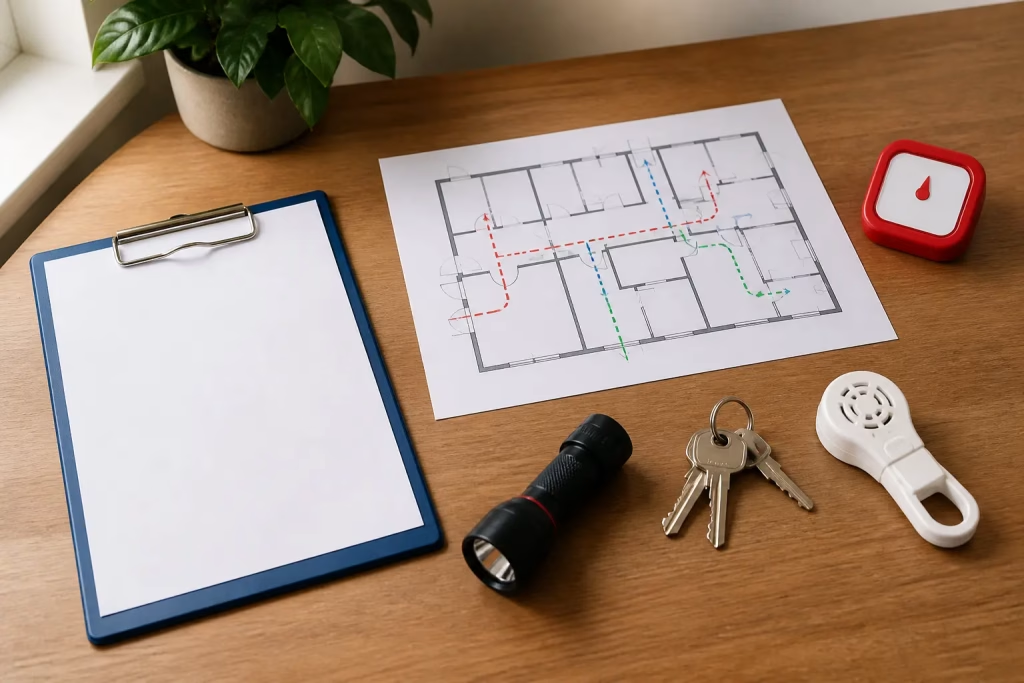
The type and coverage of fire detection, alarm and firefighting equipment should follow the risk assessment and competent advice.
Controls may include:
- Smoke and heat detection
- Alarm call points
- Alarm systems audible or visible to everyone who needs warning
- Emergency lighting
- Suitable extinguishers and fire blankets
- Protected escape routes
- Fire doors
- Clearly marked isolation points
- Equipment for individual evacuation needs
The presence of equipment is not enough. It needs inspection, testing and maintenance at appropriate intervals, with defects acted on promptly.
Staff should use firefighting equipment only when trained and when it is safe. Evacuation and calling the fire and rescue service remain the priority.
Staff training
Fire-safety induction should take place before a worker is expected to respond independently.
Training should cover:
- Preventing fires
- Common hazards in the specific home
- Raising the alarm
- Calling emergency services
- Evacuation routes and assembly arrangements
- Individual support plans
- Reporting anyone unaccounted for to the fire and rescue service without re-entering or delaying evacuation
- Use of equipment where expected
- Headcounts and missing-person information
- What to do if an exit is blocked
- Re-entry prohibition
- Reporting and learning after an alarm or drill
Night staff, managers, bank workers, agency workers and staff employed by external services all need enough local information to act safely.
Records should identify the training completed, date, trainer and any follow-up needed.
Fire drills and practices
Regulation 25 refers to drills and practices at suitable intervals. The appropriate frequency should reflect the legal framework, risk assessment, staff turnover, children’s needs and any advice from the fire authority or competent assessor.
Drills should test different realistic conditions, such as:
Children should be involved as far as reasonably practicable. Preparation can reduce fear, especially where alarms or emergency scenarios may be distressing.
A drill record should capture more than the evacuation time. It should note what happened, who participated, any difficulty, the child’s response and the action taken afterwards.
Common fire risks in a children’s home
The risk assessment should consider the way the home is actually used.
Potential issues include:
- Damaged chargers or overloaded sockets
- Lithium batteries in phones, e-bikes or scooters
- Cooking and unattended appliances
- Candles, incense or smoking materials
- Vaping devices
- Emollient products on clothing or bedding
- Deliberate fire-setting risk
- Wedged fire doors
- Laundry equipment
- Portable heaters
- Contractor work
- Unsafe storage
- Clutter on escape routes
Risk control should be proportionate and child-centred. Blanket bans may be unnecessary, while ignoring a known individual risk is unsafe. The home should explain controls and involve children in safer choices.
Admission and matching
Fire-safety information belongs in placement planning. Before admission, the home should understand any need that could affect prevention or evacuation.
Questions may include:
Does the child need support to recognise or respond to an alarm?
Does medication affect waking?
Is there a history of fire-setting or unsafe use of electrical items?
Will mobility equipment be used?
Are adaptations or additional equipment required before arrival?
Is an upstairs bedroom suitable?
Can current staffing carry out the evacuation plan?
For an emergency referral, clarify evacuation needs before accepting the placement and obtain competent advice where needed. Urgency does not make an unsafe evacuation arrangement acceptable. Any interim measures must be assessed as adequate for the child and premises, rather than left to staff to improvise after arrival.
See Welcare’s guide to Regulation 17 placement plans for the wider information-sharing duties.
Records and assurance
Useful fire-safety records include:
- The current risk assessment
- Action plan and evidence of completion
- Alarm and emergency-lighting tests
- Equipment and fire-door servicing
- Drill and practice records
- Training and induction
- Individual evacuation plans
- Consultation or professional advice
- Defects and repairs
- False alarms and incidents
- Review following changes
Records should be accessible and intelligible. A manager should be able to explain how the evidence shows that arrangements work, not only that checks were ticked.
Regulations 36 to 38 cover wider requirements for keeping and accessing children’s-home records.
What happens after a fire or serious alarm?
After protecting people and contacting emergency services
the home should :
- Account for every child, staff member and visitor
- Share relevant information with the fire and rescue service
- Obtain any required medical support
- Preserve factual records
- notify relevant people and authorities where required
- Support children who are distressed
- Assess whether the building can be used safely
- Investigate causes with competent input
- Update risk controls and plans
- Communicate learning to staff and children
A serious fire may meet the threshold for a Regulation 40 notification. The registered person should use the current notification framework rather than assuming every alarm or minor incident is reportable.
What will Ofsted look for?
Ofsted may examine fire safety during registration, inspection or enforcement work.
Inspectors can consider:
- Whether the premises are suitable
- Whether actions from the fire risk assessment are complete
- Staff understanding
- Individual needs and evacuation plans
- Testing, maintenance, training and drills
- The interaction between security and escape
- How children are informed and reassured
- Whether learning follows incidents or defects
Unresolved fire-safety concerns can affect the home’s ability to protect children and may require action beyond routine inspection.
Manager’s fire-safety check
Managers should be able to answer:
1- Which legal fire-safety framework applies to this home?
2- Who is the responsible person and who provides competent assistance?
3- Is the risk assessment specific and current?
4- Are all actions completed or controlled?
5- Can every child be evacuated safely with the staffing available?
6- Do night and agency staff know the procedure?
7- Are escape routes, doors, alarms and equipment maintained?
8- Have drills tested realistic scenarios?
9- Are new admissions and changes reflected promptly?
10- Can records demonstrate oversight and learning?
Frequently Asked Questions (FAQs)
No. Regulation 25 states that where the Regulatory Reform (Fire Safety) Order 2005 applies, paragraph 25(1) does not. The provider must instead ensure compliance with the Order and relevant regulations as specified by Regulation 25.
Regulation 25 uses the phrase “suitable intervals.” The schedule should be based on the applicable fire-safety law, risk assessment, competent advice, changes in staff or children and whether previous drills identified concerns.
Regulation 25 says children should understand the procedure so far as reasonably practicable. Their age, understanding, communication and emotional needs should shape how drills are explained and carried out.
A fire-safety assessment is not authority to restrict a child's liberty. Any proposed lock must satisfy the applicable care, privacy and liberty requirements as well as permit safe escape. The home needs competent fire-safety advice and, where restrictions may amount to a deprivation of liberty, specialist legal advice about the required authority.
No. The assessment must be suitable and sufficient, actions must be completed and arrangements must work in practice. Staff competence, maintenance, drills and individual needs matter.
Where a child’s needs affect their ability to respond or evacuate, an individual plan is a sensible way to record the support, equipment and staffing required.

Official sources
This guide is general information for England. Fire safety is site-specific, and providers should use competent advice to apply the current law to their premises.