

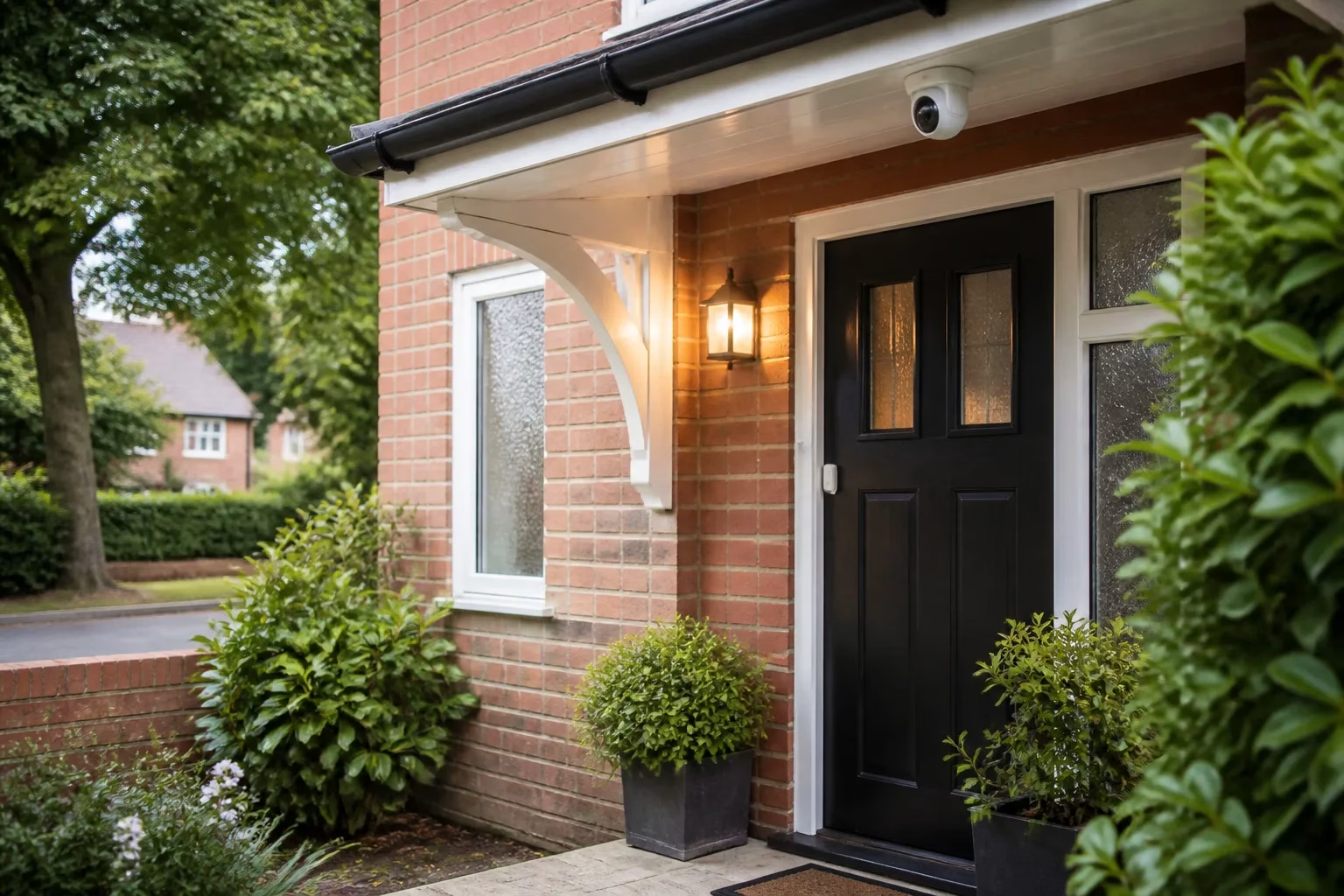
Regulation 24 permits monitoring or surveillance only for safeguarding and welfare, with written placing-authority consent, advance information for the child where practicable and the least intrusive approach necessary. A camera, sensor or listening device should never become a substitute for relationships, staffing or thoughtful risk management.
Images in this guide are AI-generated illustrations, not photographs of Welcare premises or evidence of a particular home’s facilities.
What does Regulation 24 require?
Regulation 24 of the Children’s Homes (England) Regulations 2015 sets four conditions for monitoring or surveillance of children. The registered person may use a device only when:
The regulation is subject to any monitoring or surveillance requirement imposed by a court.
Read the full text of Regulation 24.
These tests are cumulative. A home should not rely on one condition while ignoring the others. Written consent does not make disproportionate surveillance acceptable, and a safeguarding purpose does not remove the need to inform the child where reasonably practicable.
The DfE guide also says a home using monitoring equipment should have a written policy explaining its safeguarding and welfare purpose. Individual consent and risk assessments should sit alongside that policy, not replace it.
What counts as monitoring or surveillance?
The regulation can apply to technology used to observe, listen to, detect or record a child.
Examples may include:
CCTV in or around premises
video doorbells
audio recording
bedroom or door sensors
movement sensors
baby monitors used for a child with particular needs
wearable or location-tracking devices
vehicle cameras
systems that alert staff when a door or window open
live monitoring that does not create a recording
The level of intrusion varies. A simple external door alert is different from continuous video or audio recording in a private space. Each proposal needs its own assessment.
Ordinary safety systems that do not monitor an identifiable child may engage different considerations, but providers should avoid assuming that a device falls outside Regulation 24 simply because it has no recording function.
Start with the safeguarding question
The first question is not “Can we install a camera?” It is “What specific risk are we trying to reduce?”
A written proposal should identify:
- the child or children at risk
- the nature and seriousness of the risk
- what has already been tried
- why less intrusive options are not sufficient
- what the device is expected to achieve
- where and when it will operate
- who will see or hear the information
- whether a recording will be made
- how success will be measured
- when the arrangement will end or be reviewed
Vague statements such as “general safety” or “staff reassurance” are unlikely to demonstrate a properly individualised safeguarding purpose.Monitoring should not be used simply to make staffing cheaper, check whether children follow house rules or collect information that might be useful later.
Necessity and proportionality
Necessity asks whether the measure is genuinely needed for the identified purpose. Proportionality asks whether the intrusion is justified by the benefit and whether the same goal could be achieved in a less intrusive way.
Possible alternatives include:
- changing staffing or observation arrangements
- repairing a boundary or improving lighting
- agreeing a safety plan with the child
- using a door alert instead of video
- limiting monitoring to particular times
- adjusting the location or field of view
- providing communication support
- addressing the cause of repeated incidents
- improving relationships and direct work
A device may be proportionate in one situation and disproportionate in another. The decision should be based on current evidence, not a standard rule applied to every child.
Privacy in bedrooms, bathrooms and personal spaces
Children living in a children’s home are entitled to dignity and a private life. Bedrooms and personal-care areas carry a particularly high expectation of privacy.
Monitoring in a highly private space requires an exceptionally careful assessment. The home should explore every less intrusive option, obtain specialist advice where needed and record why the measure is necessary for the individual child. The field of view, audio function, recording, access and operating times should be strictly limited.
A placing authority’s written consent does not by itself resolve privacy, human-rights or data-protection concerns.
Do not treat this guide as permission to monitor toileting, changing or personal care. Such surveillance raises particularly serious privacy and safeguarding concerns. Any proposal needs specialist legal, safeguarding and data-protection assessment before a decision, not simply a camera installation assessment or a consent form.
Written consent from the placing authority
Regulation 24 requires written consent from the child’s placing authority as defined in Regulation 2. For a looked-after child this is not replaced by a parent’s consent. In some non-looked-after arrangements, the parent is the placing authority under that definition. Establish the child’s legal status and the correct consenting person or body first.
A good consent record should specify:
- the device and its purpose
- the child or children concerned
- the location and operating times
- whether audio or video is captured
- whether information is recorded
- who may access it
- how long information is retained
- the review date
- circumstances that will end the monitoring
Consent should be informed. The authority needs enough detail to understand the proposed intrusion and safeguards.
If monitoring affects several children, obtain the required written consent for each child from their own placing authority. Consultation alone is not consent. A generic placement-contract clause should not replace a specific, informed decision about the proposed monitoring.
Informing and involving the child
The child should be told in advance so far as reasonably practicable in light of their age and understanding.
Information should be accessible and cover:
What the device does
Why it is being used
Whether it records
Where and when it operates
Who can see the information
How the child can ask questions or object
When the arrangement will be reviewed
The child’s views should be recorded and considered. A child may not have a legal veto under Regulation 24, but their objection can reveal fear, trauma, misunderstanding or a better alternative.
Visual explanations, social stories, communication aids or support from an advocate may be needed. Staff should check understanding rather than merely handing over a privacy notice.
Data protection duties
Where a system captures identifiable information, the UK GDPR and Data Protection Act 2018 are likely to apply. Regulation 24 does not replace those duties.
The placing authority’s written consent under Regulation 24 is not automatically the provider’s UK GDPR lawful basis. These are separate legal questions. The provider must identify and document an appropriate basis for processing and, where relevant, an additional condition for special-category data. The ICO’s surveillance and data-protection principles guidance explains the assessment. Do not assume that a signed placement document resolves it.
The provider should consider:
- the lawful basis for processing
- whether special-category data is involved
- whether a data protection impact assessment is required
- transparency and child-friendly privacy information
- data minimisation
- retention and secure deletion
- requests by children for access to their information
- sharing with police, local authorities or others
- contracts with any technology supplier
- audit logs showing who accessed recordings
The ICO advises organisations to assess surveillance systems across their full lifecycle. The more intrusive the system, the stronger the justification and controls need to be.
Recording or live-only monitoring
A live alert with no stored footage may be less intrusive than continuous recording, but it can still affect privacy and behaviour.
If recording is unnecessary, do not enable it. If it is necessary:
record only the relevant area and time
disable unneeded audio
set a defined retention period
restrict export and copying
document any viewing or disclosure
delete information securely when no longer needed
Keeping footage “just in case” conflicts with data-minimisation and storage-limitation principles.
Accessing and sharing recordings
The home should have a clear process for deciding who may access monitoring information. Access may be necessary for an incident review, safeguarding enquiry, police request or data-rights request.
The process should cover:
Staff should not view recordings out of curiosity or share clips through personal devices or informal messaging.
When footage includes several children, responding to an access request may require redaction or specialist advice.
Review and stopping criteria
Every monitoring arrangement should have a review date. It should also be reviewed sooner when:
- the identified risk changes
- the child moves room or placement
- the child or social worker raises concern
- the device fails to achieve its purpose
- a less intrusive option becomes available
- there is a data breach or misuse
- the court or placing authority changes its decision
A review should ask whether the measure remains necessary and proportionate. Monitoring should stop when the justification no longer exists.
The review record should include the child’s experience. A device that reduces one risk but makes the child feel constantly watched may create other harms.
Monitoring staff and communal areas
Regulation 24 concerns monitoring or surveillance of children. A system intended to monitor staff may also capture children and engage employment, privacy and data-protection law.
Communal-area CCTV should not be treated as automatically acceptable. Children live in the home; the lounge, dining room and garden are part of their domestic environment. Continuous observation may undermine belonging and normal family-style life.
The provider should identify why each camera is needed, minimise coverage and avoid turning the home into an institutional setting.
What will Ofsted look for?
Inspectors may explore:
- the specific safeguarding purpose
- the written placing-authority consent
- how the child was informed and involved
- whether less intrusive measures were considered
- how privacy is protected
- the review and stopping arrangements
- access, retention and security
- whether staff understand the policy
- the effect on the child’s experience of home
Evidence should show professional reasoning, not only installation documents.
Regulation 21 also requires appropriate protection of privacy and says any limitation must be necessary, proportionate and kept under review. The children’s views, wishes and feelings standard remains central.
Monitoring decision checklist
Before authorising a device, the registered person should be able to answer:
A “no” or uncertain answer should pause implementation.
Frequently Asked Questions (FAQs)
Only where the Regulation 24 conditions and all other legal duties are met. A communal area is still part of the children’s home environment, so a specific safeguarding purpose and proportionate assessment are required.
Not automatically. For a looked-after child, a parent's consent does not replace the placing authority's written consent. For some children who are not looked after, the parent is the placing authority under Regulation 2. In either case, all Regulation 24 conditions and the other applicable privacy and data-protection duties must still be met.
The regulation requires the child to be informed in advance so far as reasonably practicable, considering age and understanding. Their views should be taken seriously. Other legal or care-planning considerations may also apply.
Audio is often more intrusive than video. It requires a particularly strong necessity and proportionality assessment, plus appropriate data-protection controls.
No. A provider should define and justify a retention period, then securely delete information when it is no longer needed.
Regulation 24 is subject to court-imposed requirements, but providers still need to understand the order, comply with data-protection law and protect the child’s dignity as far as the order allows.

This guide provides general information about England. Providers should obtain specialist safeguarding, data-protection or legal advice for intrusive or complex monitoring proposals.