

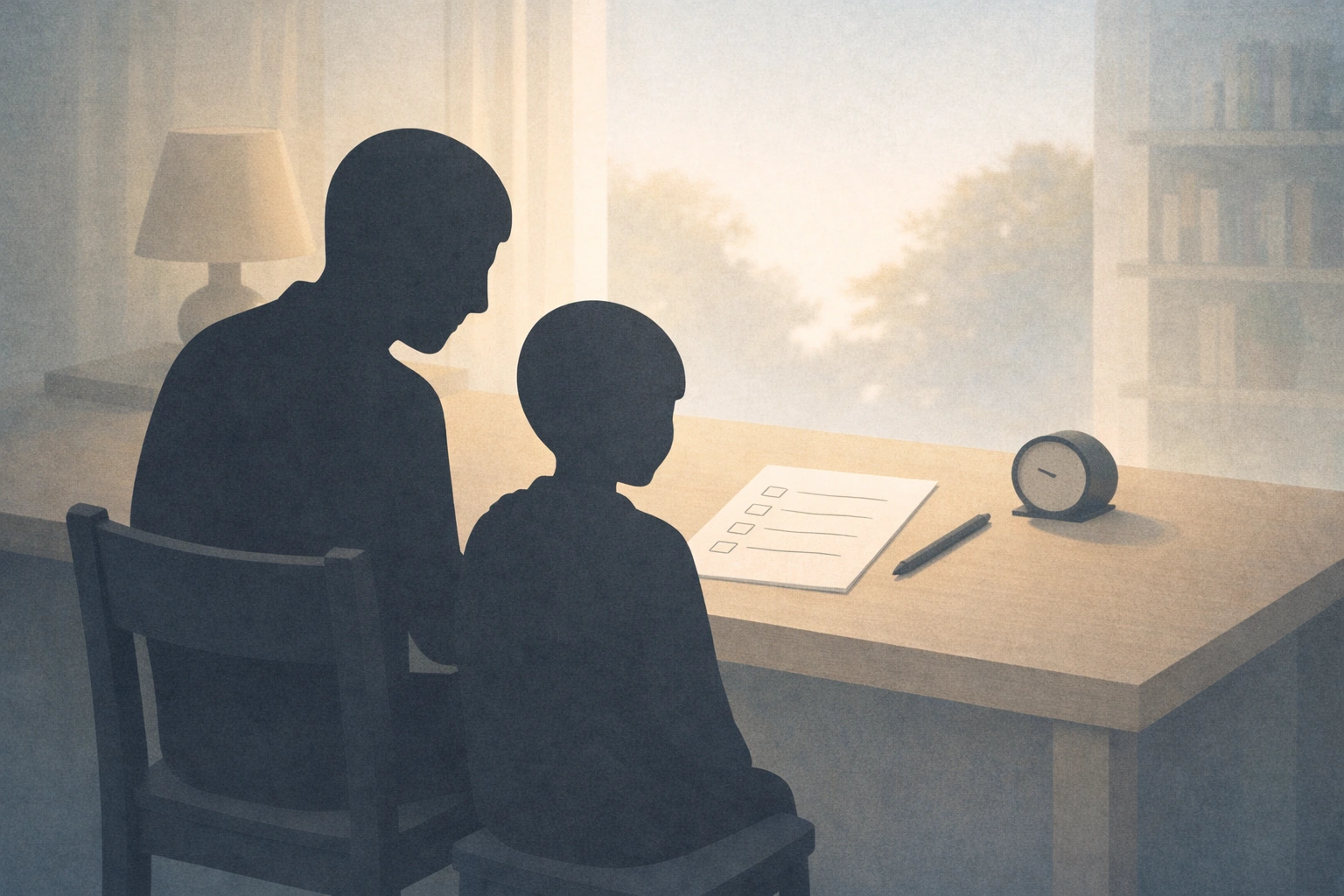
What dopamine does in everyday parenting terms
Dopamine is often described as a “pleasure chemical”, but for families it is usually more helpful to think of dopamine as a get going and keep going chemical.
Dopamine helps the brain:
- start a task
- stay with a task
- feel the reward of effort
- switch between tasks without melting down
When you are learning about dopamine and the ADHD brain, the most important takeaway is this: many behaviours that look like refusal are often the brain struggling to generate enough “start signal”.
Dopamine and the ADHD brain: why motivation feels different
ADHD is a neurodevelopmental condition where the brain works differently, and it can involve difficulty concentrating, hyperactivity, and impulsivity. (nhs.uk)
Research over time has linked ADHD with differences in dopamine signalling, including dopamine transporter findings in the striatum. A meta analysis found dopamine transporter density was higher on average in ADHD, but also noted large differences between studies and a link with medication exposure. (PubMed)
A balanced way to explain dopamine and the ADHD brain is:
It helps explain why urgency, novelty, or interest can switch a child “on” fast.
It is often dysregulated dopamine systems, alongside other brain systems.
It is not “no dopamine”
If you want a parent friendly phrase: the brain’s motivation system is less reliable on demand.
Why chores, homework, and “simple tasks” can feel impossible
- boring tasks often have delayed rewards
- delayed rewards feel weak
- the start signal stays low, so the task does not begin
A simple home reframe that reduces conflict
Instead of asking: “Why won’t you?”
Try asking: “What would make starting easier for your brain?”
Then build support that makes starting feel smaller.
Why screens can hijack attention, and how to reduce battles
Many children with ADHD are drawn to screens because screens provide quick rewards, constant feedback, and novelty. That matches what the dopamine system craves when baseline motivation feels low.
This does not mean your child is “addicted” in a moral sense. It means you are dealing with a powerful reward loop.
Practical steps that help
For families working on dopamine and the ADHD brain, these changes often reduce blow ups:
Keep devices out of bedrooms
reduce late night dopamine spikes
Predictable stop points
use a timer and a clear end time
Avoid screen removal as a shock
give warnings at 10 and 5 minutes
Transition routine
screens off, snack or movement, then next task
Tip that helps many households: give the brain a replacement dopamine source, such as movement, music, or a short sensory activity, before asking for chores.
Emotional storms: when feelings spike fast

- Explosive frustration over small problems
- Intense reactions to being corrected
- “All or nothing” thinking
A calm response script
- “I can see this feels huge.”
- “I am here. We are safe.”
- “We will solve it when your body is calm.”
Support that helps: home scaffolding that builds skills
When you understand dopamine and the ADHD brain, you can stop trying to “push harder” and start building external scaffolding.
A) Make starting tiny
Use a two minute start:
open the book
write the date
read the first line only
Starting is the hardest part for many children. Once started, momentum often builds.
B) Use immediate feedback
ADHD brains often do best with feedback that is:
quick
clear
specific
Instead of “good job”, try:
“You started straight away. That was brilliant effort.”
NHS leaflets for ADHD often highlight the value of praising positives quickly, and that waiting too long for rewards can be hard for children with ADHD.
C) Use body doubling
Sit nearby doing your own calm task. Presence can anchor attention without nagging.
D) Use time sprints
Try 10 to 15 minutes of work, then a 3 minute movement break.
E) Create a “dopamine menu” at home
This is a simple planning tool:
Starters
quick boosts like a glass of water, music, 10 star jumps
Mains
longer healthy boosts like sport, drawing, cooking, Lego
Sides
add ons like a fidget or audiobook while tidying
Desserts
high dopamine treats like gaming, saved for later
This helps children learn healthier ways to regulate stimulation.
Health, lifestyle, and nutrition: what the evidence says in the UK
Families often hear strong claims online. It helps to stick to UK evidence based guidance.
Diet and supplements
NICE recommends asking about foods or drinks that appear to influence hyperactive behaviour, using a diary where relevant, and referring to a dietitian if a clear link is supported.
NICE also advises not to offer dietary fatty acid supplementation to treat ADHD in children and young people.
So, a practical approach is:
regular meals and protein snacks
talk to a clinician before supplements
consider a food and behaviour diary if you notice a pattern
If you want a parent friendly phrase: the brain’s motivation system is less reliable on demand.
UK support systems: school, EHCP, reasonable adjustments, and DLA
School support can start without a diagnosis
If your child needs extra support, schools can put help in place based on need.
Reasonable adjustments
The Equality and Human Rights Commission provides guidance for schools on reasonable adjustments for disabled pupils and explains the Equality Act disability definition. (Equality and Human Rights Commission)
Examples that often help ADHD needs include:
- movement breaks
- reduced distraction seating
- chunked instructions
- extra time or separate room for exams where appropriate
FAQs: dopamine and the ADHD brain
It is more accurate to say dopamine systems can be dysregulated in ADHD, and research includes findings related to dopamine transporter activity. (PubMed)
Games provide frequent rewards and rapid feedback, which can make motivation easier. Homework is often delayed reward and higher effort.
NICE advises not to offer dietary fatty acid supplementation for treating ADHD in children and young people. (NICE)
There can be overlap between ADHD symptoms and adversity related difficulties. This is one reason full assessments should consider the wider picture. (PMC)
Use home scaffolding strategies, ask school for SEN support, and keep a short behaviour log showing impact across settings.