

TL;DR:
A children’s home provides both care and accommodation to children. Supported accommodation provides a regulated setting for certain looked-after children and care leavers aged 16 or 17 who are ready to live with greater independence. The services have different purposes, standards and registration arrangements. Supported accommodation should never be chosen simply because it is available or less intensive. The placement must meet the individual young person’s assessed needs.
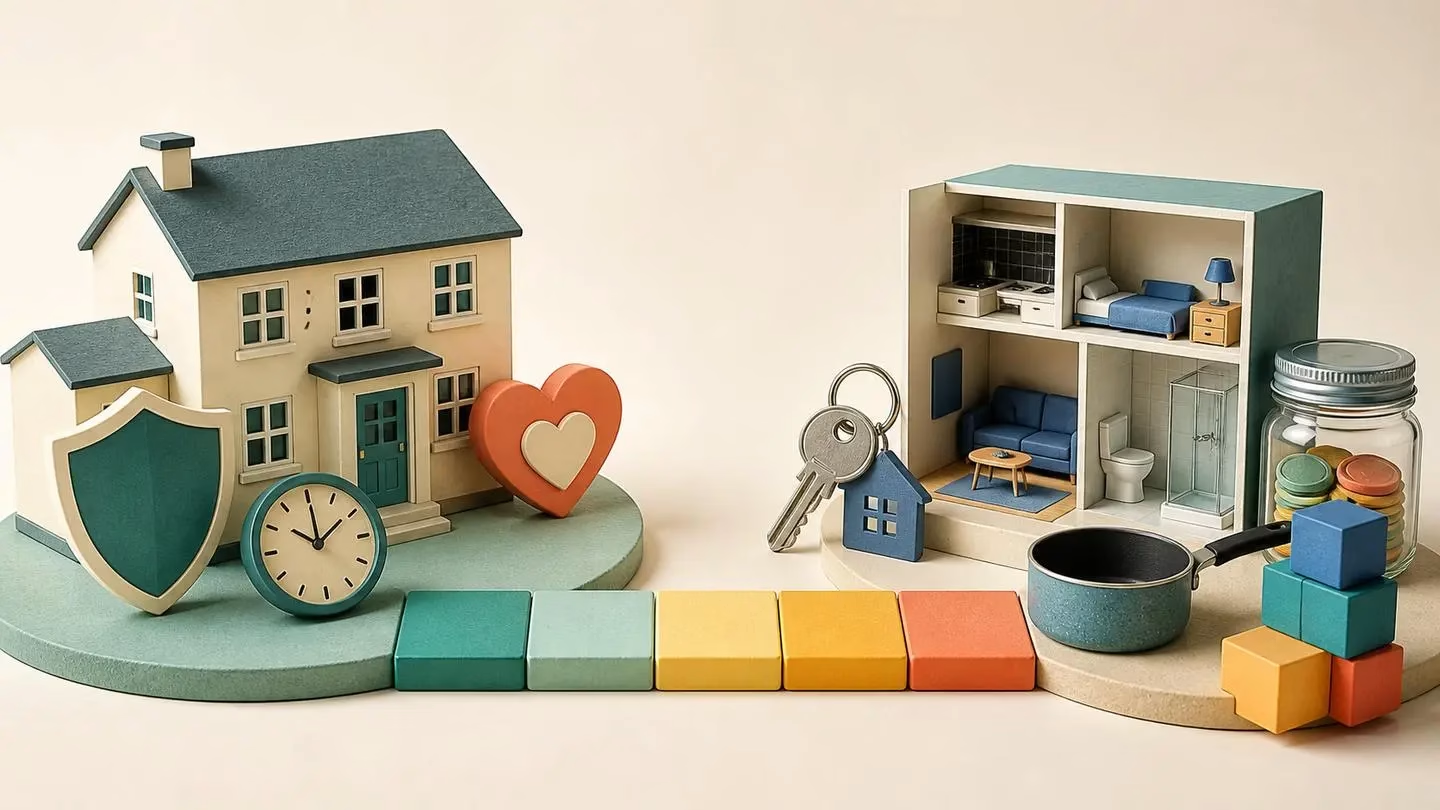
Images in this guide are AI-generated illustrations, not photographs of Welcare premises or evidence of a particular home’s facilities.
Introduction
Children’s homes and supported accommodation can both provide somewhere for a young person to live, but they are not interchangeable. The central difference is the level and nature of care. A children’s home provides care as well as accommodation. Supported accommodation helps an older young person live more independently and does not provide the same model of day-to-day care.
Confusion can lead to poor placement decisions and unrealistic expectations for young people, families and professionals. This guide explains the current position in England, where supported accommodation for eligible 16 and 17 year olds has had its own Ofsted registration and standards framework since 2023.
What Is a Children's Home?
A children’s home is an establishment that provides care and accommodation wholly or mainly for children. Each home is registered with Ofsted and operates under the Children’s Homes (England) Regulations 2015 and the associated quality standards.
Children’s homes vary in size and purpose. Some provide general residential care, while others support children with particular needs or operate as secure children’s homes. The home’s statement of purpose explains the children it is intended to support, its model of care, staffing and facilities.
Care is active and relational. Staff are responsible for children’s day-to-day welfare, routines, safeguarding and progress. They should know the children well, provide supervision suited to individual risk and work closely with families and professionals.
Ownership is a separate question from the type of care provided. A privately operated children’s home still has to meet the children’s-home requirements; being privately owned does not turn it into supported accommodation.
What Is Supported Accommodation?

Supported accommodation is a regulated form of provision for looked-after children and care leavers aged 16 or 17 who are ready for semi-independent living. It is intended to help young people develop skills, confidence and autonomy as they move towards adulthood.
The provider offers accommodation and support, but not the same kind of care delivered by a children’s home. Support may include help with budgeting, cooking, education, employment, appointments, tenancy skills, relationships and access to community services.
Ofsted describes care and support as a continuum. Occasional sensitive help can remain within supported accommodation’s purpose; it does not remove the need to assess whether the overall service meets the child’s needs.
Providers register their supported accommodation service with Ofsted under the Supported Accommodation (England) Regulations 2023. A service can operate across more than one premises, and the regulatory model differs from the registration of each individual children’s home.
The Main Differences:
Age and eligibility
Children's homes can care for children under 18 within the conditions of their registration. Supported accommodation under this framework is specifically for eligible looked-after children and care leavers aged 16 or 17.Turning 16 does not make supported accommodation suitable. Age is only one part of the assessment. A young person's development, safety, wishes, relationships and ability to manage greater independence all matter.
Care and support
A children's home provides care and accommodation. Staff exercise active day-to-day responsibility, supervision and guidance based on the child's needs.Supported accommodation provides accommodation with support for semi-independent living. The young person is expected to manage more of daily life, with planned assistance. If they need high levels of ongoing care, close supervision, personal care or restrictions on their liberty, supported accommodation is unlikely to be appropriate.
Regulatory standards
Children's homes follow the nine quality standards in the 2015 regulations, including standards for care, children's wishes and feelings, education, health, relationships, protection, leadership and care planning.Supported accommodation follows four standards covering leadership and management, protection, accommodation and support. Both types are regulated by Ofsted, but one framework should not be treated as a lighter version of the other. They are designed for different purposes.
Staffing and presence
Children's homes have a staff team arranged to provide the care and supervision children require at all times. Staffing levels and skills should reflect the home's statement of purpose and the children living there.Supported accommodation models vary. Some have staff on site, some provide visiting support and some use shared or individual accommodation with on-call arrangements. The model must be explained clearly and be sufficient for the young people placed there.
Registration and inspection
Each children's home and its registered manager are subject to the applicable Ofsted registration process. Inspections consider children's experiences, progress, protection and the impact of leaders and managers.Supported accommodation providers register a service that may include several premises or categories of accommodation. Ofsted regulates the provider against the supported accommodation standards. A local authority should still assess the suitability of the specific setting for the individual young person.
Purpose and outcomes
A children's home aims to provide nurturing care, stability, protection and progress from the child's current starting point. Independence may be one goal, especially for older teenagers, but it sits within a broader care plan.Supported accommodation places preparation for adulthood at the centre. The young person should receive help to build practical and emotional skills while retaining access to their social worker, personal adviser and wider corporate parenting support.
How Is the Right Placement Decided?
The placing authority must make an individual, evidence-based decision.
Useful questions include:
- What does the young person want, and how have their views been explored?
- Do they need care, supervision or personal care that the proposed service cannot provide?
- How do they respond when distressed, isolated or under pressure?
- Are there risks involving exploitation, missing episodes, self-harm or unsafe adults?
- Can the setting provide reliable support at the times it is most needed?
- Is the location safe and connected to education, health, family and community?
- What would happen in a crisis or if the placement began to struggle?
- Is there a realistic transition plan rather than an abrupt move?
The decision should not rest on a short independence checklist. A young person may cook and travel confidently while still needing close emotional support or protection. Equally, needing help with a practical skill does not automatically mean residential care is required.
An independence checklist is not a placement decision
Consider an illustrative 17-year-old who cooks, shops and travels independently but becomes very distressed after family contact and needs a trusted adult to help them stay safe at night. A list of practical skills would miss the most important question: what help is needed, when, and can the proposed service actually provide it?
The assessment should explore the pattern with the young person, check the proposed staffing and response arrangements, and agree what happens if needs increase. Neither the child’s age nor a completed life-skills checklist settles whether supported accommodation is suitable. This example is not a placement recommendation for an individual child.
When Supported Accommodation May Be Unsuitable
Ofsted’s registration policy identifies high or complex needs, restricted liberty, high levels of ongoing care and supervision, and personal-care needs as warning signs of unsuitability. Its concern about restrictions is not limited to formal deprivation of liberty. Suitability must be assessed at referral.
This does not mean young people with complex histories can never live semi-independently. It means the actual service must be able to meet their current needs safely. A placement label cannot substitute for enough skilled support.
If the young person’s needs change, the local authority and provider should review the placement promptly. The answer may be additional support, a revised plan or a move to a different setting. Stability matters, but keeping an unsuitable placement unchanged is not genuine stability.
Questions Young People and Families Can Ask
Before a move, it is reasonable to ask:
- Who will be present during the day and night?
- How quickly can someone attend in an emergency?
- What support is planned each week?
- Who else lives at the premises?
- How are visitors, safety and missing episodes managed?
- What help is available with money, food, education and health?
- How can the young person complain or speak to an advocate?
- What happens after the young person turns 18?
Clear answers reduce uncertainty and help everyone test whether the written plan matches real life.
Can a Children's Home Prepare a Young Person for Independence?
Yes. Good children’s homes support age-appropriate independence without withdrawing care too soon. Children can learn budgeting, cooking, travel, self-advocacy and household skills while continuing to receive dependable relationships and supervision.
Preparation should be paced around the individual. Independence is not the absence of support. It is the growing ability to make decisions, manage responsibilities and seek help when needed.

Final Thoughts
The right question is not which type of provision sounds more independent or more protective. It is which setting can meet this young person’s needs now and help them move forward safely. A clear understanding of care, support and regulation makes that decision more honest and more child-centred.
Frequently Asked Questions (FAQs)
No. A children's home provides care and accommodation. Supported accommodation provides accommodation and support for eligible 16 and 17 year olds who are ready for semi-independent living.
Yes. Providers of supported accommodation for eligible looked-after children and care leavers aged 16 or 17 in England must register with Ofsted and meet the 2023 supported accommodation regulations and standards.
Yes. A 16 or 17 year old may live in a children's home when residential care best meets their needs and the placement fits the home's registration and statement of purpose.
Not always. Models vary, including staffed group settings, shared accommodation, individual accommodation and supported lodgings. The staffing and emergency arrangements should match each young person's assessed needs.
The placing local authority is responsible for care planning and placement decisions, working with the young person and relevant people. The provider must also decide whether it can meet the young person's needs safely.