A Health and Safety Policy is the backbone of safe, stable children’s homes. This guide explains what it includes, why it matters, and how it protects children in care across the UK.

TL;DR
A Health and Safety Policy in a children’s home sets out how risks are identified, reduced, and managed to keep children safe. It covers fire safety, safeguarding, staff training, medical needs, risk assessments, and emergency procedures. In the UK, it must align with Ofsted regulations and national legislation. When done well, it creates calm, predictable, and secure environments where children in care can thrive emotionally and physically.
Understanding a Health and Safety Policy in Children’s Homes
A strong Health and Safety Policy is the foundation of every safe, stable children’s home. It is not simply a legal document stored in an office folder. It is a living framework that shapes daily routines, staff decisions, and the overall culture of care. In residential childcare across the UK, a Health and Safety Policy protects children from harm, promotes wellbeing, and reassures families and local authorities that their child is living in a secure environment.
Children who move into care often arrive after experiencing instability, trauma, or neglect. For them, safety is not just about fire alarms and locked medicine cabinets. It is about predictability, structure, and knowing that adults are in control of their surroundings. A well designed Health and Safety Policy supports this sense of security in practical and emotional ways.
This section explains what a Health and Safety Policy means in the context of children’s homes, why it matters, and how it connects to legal frameworks in England and Wales.
What Is a Health and Safety Policy?
A Health and Safety Policy is a formal document that sets out how a children’s home identifies, manages, and reduces risks to protect everyone who lives and works there. It explains:
- How hazards are identified
- How risks are assessed
- What preventative measures are in place
- Who is responsible for monitoring safety
- How incidents are recorded and reviewed
In the UK, employers must have a written Health and Safety Policy if they employ five or more people. Children’s homes fall within this requirement under the Health and Safety at Work etc. Act 1974. However, in residential childcare, the expectations go far beyond minimum workplace compliance.
In a children’s home, the Health and Safety Policy must reflect:
- The Children’s Homes Regulations 2015
- The Quality Standards set by the Department for Education
- Ofsted inspection requirements
- Safeguarding legislation
It must also align with local authority commissioning expectations and good practice guidance from national bodies.
Put simply, a Health and Safety Policy in a children’s home answers one central question:
How do we make sure every child here is safe, every single day?
Why a Health and Safety Policy Matters in Children’s Care
For most families, safety at home is assumed. Fire alarms are fitted. Kitchens are supervised. Medicines are stored correctly. But for children in care, past experiences may have included unsafe environments, inconsistent boundaries, or exposure to harm.
A clear and consistent Health and Safety Policy helps to restore trust.
It does this in several ways:
- It creates predictable routines.
- It ensures staff respond consistently to risk.
- It prevents avoidable accidents and incidents.
- It demonstrates professional accountability.
Children who have experienced trauma often feel hyper alert to danger. They may struggle to relax or settle. When a home operates with visible safety measures and calm, confident adults, children begin to internalise a new message: this place is different. This place is safe.
Safety, therefore, is not only physical. It is emotional.
A Health and Safety Policy underpins both.
Legal Framework Governing Health and Safety Policy in the UK
Every Health and Safety Policy in a children’s home must sit within a clear legal structure. Providers cannot create safety systems in isolation. They must follow statutory requirements.
Key legislation and regulatory frameworks include:
Health and Safety at Work etc. Act 1974
This law places a duty on employers to ensure, so far as reasonably practicable, the health, safety, and welfare of employees and others affected by their activities. In children’s homes, that includes the children themselves.
Children’s Homes Regulations 2015
These regulations require providers to ensure that premises are safe, secure, and suitable. Regulation 12 specifically addresses the protection of children, which links closely with risk management and safety procedures.
Ofsted
Ofsted inspects children’s homes and evaluates how effectively they keep children safe. Inspectors review documentation, observe practice, and speak to young people and staff to assess whether the Health and Safety Policy is implemented in reality, not just on paper.
Health and Safety Executive
The Health and Safety Executive provides national guidance on workplace health and safety standards. While children’s homes are primarily regulated by Ofsted, HSE expectations still apply.
A Registered Manager holds operational responsibility for ensuring the Health and Safety Policy is implemented daily. The Responsible Individual and provider hold oversight accountability.
Strong governance ensures safety systems are reviewed, monitored, and improved continuously.
Core Components of a Health and Safety Policy
A comprehensive Health and Safety Policy in a children’s home should clearly outline the systems that protect children and staff. While each home may adapt its policy to reflect its size and needs, core components typically include:
- Fire safety procedures and evacuation plans
- Risk assessment processes
- First aid arrangements
- Medication storage and administration guidance
- Infection prevention and hygiene standards
- Food safety protocols
- Lone working procedures
- Incident and accident reporting systems
- Staff training requirements
- Maintenance and premises safety checks
These elements are not separate documents working in isolation. They form one connected safety framework.
For example, a fire safety procedure is supported by regular alarm testing, staff training, evacuation drills, and documented maintenance checks. A medication policy links to locked storage, clear administration records, and staff competency training.
When these systems work together, the home operates smoothly. When gaps appear, risk increases.
Consistency is the key.
Visible Safety in the Home Environment
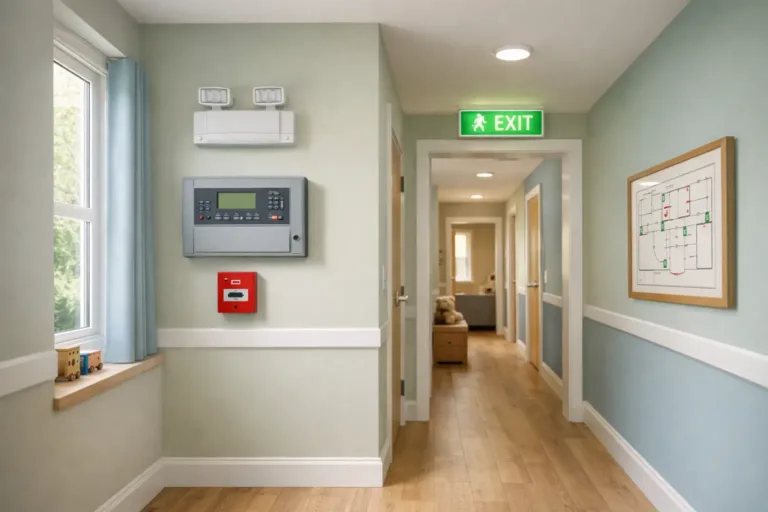
Safety should be both structured and visible. Children need to see that their environment is managed well. Clear signage, tidy communal areas, and organised systems reinforce a sense of order.
The Psychological Impact of Strong Safety Systems
A well implemented Health and Safety Policy does more than prevent accidents. It supports emotional regulation and attachment.
Children who know what to expect each day are less likely to feel overwhelmed. Predictable routines such as regular safety checks, clear house rules, and consistent adult responses reduce uncertainty.
When a child sees staff testing fire alarms calmly or conducting safety checks routinely, they learn that adults are attentive and prepared. This reduces anxiety.
Safety also supports positive behaviour. Many incidents in residential settings arise from dysregulation. A stable environment, free from unnecessary hazards and confusion, lowers stress levels.
Trauma informed practice recognises that safety is the first building block of recovery. Before children can engage in education, relationships, or therapy, they must feel safe.
A strong Health and Safety Policy creates that foundation.
Health and Safety Policy and Wider Child Protection
While safeguarding and health and safety are distinct concepts, they overlap significantly.
Safeguarding focuses on protecting children from abuse, exploitation, and neglect. A Health and Safety Policy focuses on preventing physical harm and environmental risks.
However, both aim to achieve the same outcome: protection.
For example:
- Secure entry systems prevent unauthorised access.
- Staff supervision ratios reduce the risk of peer harm.
- Safe storage prevents access to harmful substances.
- Incident reporting systems identify patterns of concern.
Together, safeguarding procedures and a Health and Safety Policy create a protective framework around the child.
For further insight into inspection expectations and regulatory oversight, see the related Welcare resource on the role of Ofsted in children’s homes.
Risk Management and Everyday Safety in Practice
A well written Health and Safety Policy only becomes meaningful when it is lived out in daily practice. In children’s homes, safety is not static. It evolves with each child, each new placement, and each stage of development. Effective risk management protects children without restricting their growth. It supports independence while preventing avoidable harm.
In this section, we explore how a Health and Safety Policy works in real life. From individual risk assessments to staff training and hygiene standards, these systems form the protective structure around every child in care.
Risk Assessments in a Health and Safety Policy
At the heart of every Health and Safety Policy is the risk assessment process.
A risk assessment identifies:
- What could cause harm
- Who might be affected
- How likely the risk is
- What measures reduce or remove that risk
In children’s homes, risk assessments fall into two main categories:
- Environmental risk assessments
- Individual risk assessments
Both are essential.
Environmental Risk Assessments
These assess the physical building and surrounding environment. For example:
- Fire exits must be clear and accessible
- Smoke alarms must function correctly
- Windows may require restrictors
- Kitchens must have safe storage for sharp utensils
- Cleaning chemicals must be locked away
- Garden areas must be secure
Environmental checks are usually carried out weekly or monthly, with clear documentation. Maintenance issues must be reported promptly and repaired quickly.
Children notice when repairs are delayed. Broken fixtures, faulty locks, or neglected spaces can create anxiety. A strong Health and Safety Policy ensures maintenance is proactive, not reactive.
Individual Risk Assessments
Each child placed in a home has unique needs. Some may have medical conditions. Others may engage in risk taking behaviour. Some may have a history of going missing. Others may struggle with emotional regulation.
An individual risk assessment considers:
- Known triggers
- Health conditions
- Medication needs
- Behavioural risks
- Vulnerabilities
- Strengths and protective factors
These assessments are not about limiting a child. They are about understanding them.
Importantly, risk assessments should be dynamic. That means they are reviewed regularly and updated when circumstances change. A static document does not protect children. An evolving plan does.
Balancing Safety and Independence
One of the most important principles in a Health and Safety Policy is balance.
Children in care must not feel over controlled. They need opportunities to learn life skills, take safe risks, and build confidence.
For example:
- A teenager learning to cook may use kitchen appliances under supervision.
- A young person may practise travelling independently with agreed boundaries.
- Older children may manage pocket money with guidance.
Risk enablement means allowing growth while keeping safety measures in place. Staff must assess what is developmentally appropriate and what safeguards are required.
Over protection can delay independence. Under supervision can create danger. A thoughtful Health and Safety Policy supports the middle ground.
Environmental Safety in Practice
The physical environment of a children’s home should feel warm and homely while remaining secure.
Key areas of environmental safety include:
Fire Safety
- Weekly alarm testing
- Regular fire drills
- Clear evacuation routes
- Emergency lighting checks
- Fire doors functioning properly
Kitchen Safety
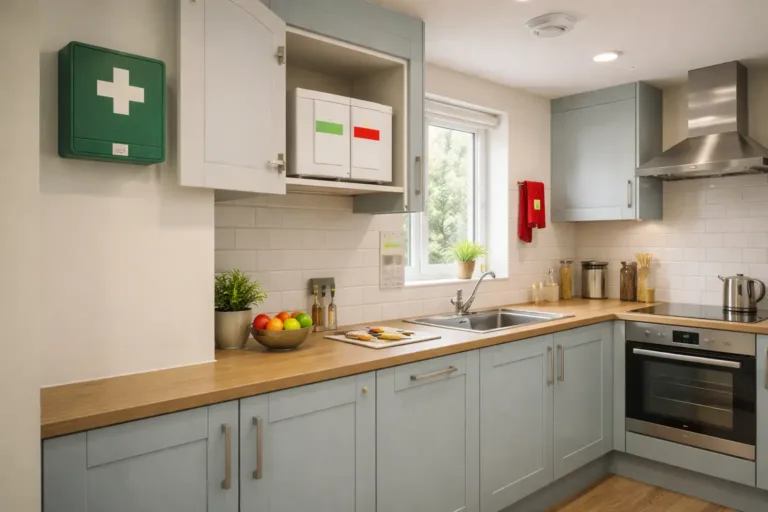
- Locked storage for sharp items
- Fire blankets and extinguishers
- Supervised cooking sessions
- Safe food storage temperatures
Bedroom Safety
- Furniture secured where necessary
- Safe window fittings
- Electrical appliances tested
Garden and Outdoor Areas
- Secure fencing
- Regular checks for hazards
- Safe storage of tools
Managing Health Risks
A Health and Safety Policy must address health risks clearly and consistently.
Medication Management
Medication must be:
- Stored securely
- Administered by trained staff
- Recorded accurately
- Reviewed regularly
Controlled drugs require additional security and documentation. Clear protocols prevent errors and protect children.
First Aid
At least one trained first aider should be on shift at all times. First aid kits must be stocked and checked regularly. Accident forms should be completed promptly and shared with relevant professionals.
Medical Appointments and GP Registration
Children should be registered with a local GP, dentist, and optician. Health appointments must be tracked and attended. A safe environment includes proactive healthcare.
Mental Health and Emotional Safety Planning
Some children may have self harm histories or mental health diagnoses. Risk management must include safety planning that is compassionate and trauma informed.
This is where a Health and Safety Policy connects closely with emotional wellbeing. Physical safety cannot be separated from mental health support.
Infection Control and Hygiene Standards
Recent years have highlighted the importance of infection control across all residential settings.
A robust Health and Safety Policy includes:
- Cleaning schedules
- Hand hygiene guidance
- Food hygiene training
- Safe laundry procedures
- Waste disposal processes
Communal areas should be cleaned daily. Bathrooms require particular attention. Food must be stored and prepared according to hygiene standards.
Children benefit from learning hygiene routines as part of daily life. Staff model positive habits rather than enforcing rigid rules.
Clean environments support both health and dignity.
Staff Training and Competency
Even the best written Health and Safety Policy will fail without trained staff.
Mandatory training typically includes:
- First Aid
- Safeguarding
- Fire safety
- Food hygiene
- Behaviour management
- Health and safety awareness
Training must not be a one off event. Refresher courses are essential. New staff require induction training before working unsupervised.
Ongoing professional development ensures staff feel confident and capable. Confidence reduces hesitation during emergencies.
A calm, trained adult responding to a situation communicates safety to children.
For more insight into regulatory oversight and inspection expectations, see Welcare’s guide on the role of Ofsted in children’s homes.
Incident Reporting and Continuous Improvement
No system is perfect. What matters is how a home responds when something goes wrong.
A strong Health and Safety Policy requires:
- Accurate accident logs
- Near miss reporting
- Timely notification to relevant authorities
- Review meetings after serious incidents
Near misses are especially important. They highlight potential hazards before harm occurs.
For example:
- A child nearly slipping on a wet floor
- A faulty electrical appliance identified before use
- A door lock malfunction detected early
When staff feel safe to report concerns without blame, safety improves.
Continuous improvement is a sign of a healthy culture. Homes should regularly review trends in incidents to identify patterns and preventative actions.
Everyday Safety Builds Long Term Stability
Risk management is not about control. It is about care.
When a Health and Safety Policy is implemented thoughtfully:
- Children experience fewer accidents
- Staff feel confident and supported
- Families trust the placement
- Inspectors see consistency in practice
Most importantly, children feel secure enough to focus on learning, relationships, and personal growth.
Safety is the quiet framework that allows everything else to happen.
Safeguarding, Emotional Safety and Trauma Informed Practice
A strong Health and Safety Policy does not operate in isolation. In children’s homes, safety is layered. Physical protection, safeguarding systems, and emotional wellbeing must work together. When these elements align, children begin to experience stability. When they are disconnected, risk increases.
Children who enter care often bring complex histories. Some have experienced neglect. Some have experienced abuse. Others may have lived in unpredictable or unsafe homes. For these young people, safety is not only about locked cabinets or fire drills. It is about trust.
This section explores how a Health and Safety Policy connects with safeguarding, emotional safety, and trauma informed practice to create genuinely protective environments.
Aligning Health and Safety Policy with Safeguarding
Safeguarding and health and safety are closely related but distinct.
Safeguarding focuses on protecting children from abuse, neglect, exploitation, and harm caused by others. A Health and Safety Policy focuses on preventing physical harm, environmental hazards, and operational risks.
In practice, the two must overlap.
For example:
- Secure entry systems protect against unauthorised visitors.
- Clear supervision ratios reduce peer on peer harm.
- Safe recruitment processes prevent unsuitable adults working in the home.
- Incident reporting systems identify patterns of concern.
A children’s home must have a Designated Safeguarding Lead who works closely with the Registered Manager. Together, they ensure that safeguarding procedures and the Health and Safety Policy reinforce one another.
Whistleblowing procedures must also be clear. Staff should feel confident raising concerns without fear. Psychological safety among adults leads to better protection for children.
National safeguarding guidance from organisations such as the NSPCC emphasises early reporting, professional curiosity, and clear documentation. These principles should be embedded within the Health and Safety Policy framework.
When safeguarding and safety procedures operate seamlessly, children are surrounded by a consistent protective system.
Creating Emotionally Safe Environments
Physical safety is visible. Emotional safety is felt.
Children who have experienced trauma may live in a constant state of alert. Loud noises, sudden changes, or inconsistent responses can trigger anxiety. A Health and Safety Policy that recognises emotional wellbeing becomes more than compliance. It becomes therapeutic.
Emotionally safe homes often include:
- Calm, uncluttered communal spaces
- Clear daily routines
- Predictable boundaries
- Staff trained in de escalation
- Quiet areas for self regulation
Consistency matters. If one staff member responds calmly to behaviour and another reacts sharply, the child receives mixed messages. A stable Health and Safety Policy supports consistent responses across shifts.
Emotional safety also includes privacy and dignity. Bedrooms should be personal spaces. Confidential information must be handled respectfully. Children should be listened to when they express concerns about their environment.
Safety is relational. When children trust adults, incidents reduce.
Trauma Informed Risk Planning
Many children in residential care have experienced adverse childhood experiences, often referred to as ACEs. These experiences may include abuse, domestic violence, parental substance misuse, or instability.
A trauma informed approach understands that behaviour often communicates unmet need.
For example:
- A child who hoards food may have experienced neglect.
- A young person who resists fire drills may associate alarms with past chaos.
- A teenager who challenges rules may fear losing control again.
A thoughtful Health and Safety Policy should allow for personalised responses.
Trauma informed risk planning includes:
- Identifying triggers
- Creating calm response plans
- Avoiding unnecessary confrontation
- Reducing reliance on physical intervention
- Reviewing strategies regularly
This approach protects both children and staff. It lowers escalation and reduces the likelihood of incidents that could otherwise compromise safety.
For deeper understanding of trauma responsive environments, refer to Welcare’s guide on trauma informed care in children’s homes.
Safe Spaces Within the Home
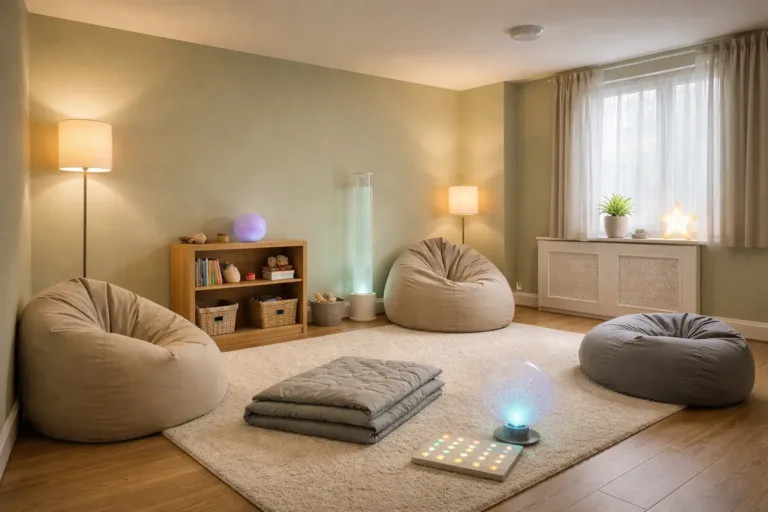
Some children require access to spaces that support emotional regulation. These areas are not isolation rooms. They are calming environments designed to reduce stress.
A quiet sensory space may include:
- Soft lighting
- Comfortable seating
- Weighted blankets
- Minimal noise
- Neutral colours
The aim is to provide a safe retreat during moments of overwhelm. When children are supported to regulate, risk reduces.
Behaviour Management and Safety
Effective behaviour management is central to a Health and Safety Policy.
Children must understand expectations clearly. Boundaries should be firm but fair. When rules are predictable, children feel safer.
Staff training should include:
- De escalation techniques
- Conflict resolution
- Restorative approaches
- Understanding attachment styles
Physical intervention should always be a last resort and follow strict guidelines. Every incident must be recorded, reviewed, and reflected upon.
Reducing restraint protects children’s dignity and staff wellbeing. A culture that prioritises early intervention and calm communication reduces risk significantly.
Balancing Protection with Growth
A common concern in residential care is how to protect children without limiting their independence.
Safety should never prevent growth.
For example:
- A young person learning to cook should be supervised but not excluded from the kitchen.
- A teenager preparing for adulthood should practise budgeting and travel planning.
- Children should participate in activities within the community with clear safety plans.
Risk enablement recognises that children learn through experience. A Health and Safety Policy must allow age appropriate development while maintaining protective boundaries.
Over restrictive environments can feel institutional. Supportive but structured environments feel nurturing.
Listening to Children’s Voices
Children should have a say in how safe they feel.
Regular house meetings, key work sessions, and informal conversations give young people opportunities to express concerns.
Questions might include:
- Do you feel safe here?
- Is there anything that worries you about the house?
- Are there areas where you would like more privacy?
Listening builds trust. Trust strengthens safety.
A Health and Safety Policy that includes participation demonstrates respect. It shows that children are not passive recipients of care. They are active contributors to their environment.
Emotional Safety Supports Physical Safety
When children feel emotionally secure:
- Incidents decrease
- Conflict reduces
- Trust improves
- Stability grows
A strong Health and Safety Policy therefore does more than manage hazards. It nurtures recovery.
Safety is the foundation upon which education, therapy, and healthy relationships are built. Without it, progress stalls. With it, children begin to thrive.
Monitoring, Review and Continuous Improvement of a Health and Safety Policy
A strong Health and Safety Policy does not stand still. In children’s homes, safety must evolve. Children grow. Risks change. Regulations update. New learning emerges. For a Health and Safety Policy to remain effective, it must be reviewed, monitored, and strengthened regularly.
Safety is not a one time achievement. It is an ongoing commitment.
This final section explores how children’s homes maintain high standards through structured review, leadership oversight, inspection readiness, and a culture that prioritises protection over paperwork.
Reviewing and Updating a Health and Safety Policy
Every children’s home must review its Health and Safety Policy at least annually. However, review should also take place when:
- A serious incident occurs
- New legislation is introduced
- Ofsted makes recommendations
- A significant change to the building takes place
- A child with new or complex needs is placed
An annual review should include:
- Evaluating accident and incident data
- Reviewing risk assessments
- Assessing staff training records
- Checking maintenance logs
- Gathering feedback from children and staff
Review meetings should be documented clearly. Updates must be communicated to all staff. A policy that is updated but not shared is ineffective.
Children’s homes that embed reflective practice into their Health and Safety Policy demonstrate maturity and accountability. Learning from experience prevents repetition of mistakes.
The Role of Leadership and Governance
Strong leadership is central to effective safety management.
The Registered Manager holds day to day responsibility for implementing the Health and Safety Policy. This includes:
- Ensuring staff understand procedures
- Monitoring risk assessments
- Reviewing incident reports
- Arranging training
- Maintaining safe premises
The Responsible Individual provides oversight and ensures regulatory compliance. Providers and directors carry strategic accountability.
Governance should not feel distant from daily practice. Effective leaders walk through the home regularly, observe routines, speak with children, and review documentation firsthand.
Leadership visibility reassures staff. It also reassures young people.
When managers demonstrate commitment to safety, staff follow that example.
Documentation and Organised Systems
Clear documentation is essential within a Health and Safety Policy framework.
Children’s homes should maintain:
- A master health and safety file
- Fire drill records
- Risk assessment logs
- Maintenance records
- Accident and incident reports
- Staff training certificates
- Policy review records
Documentation should be organised, accessible, and up to date.
However, paperwork must reflect real practice. Inspectors quickly identify when documentation is polished but lived experience tells a different story.

Preparing for Ofsted Inspections
Ofsted inspectors assess more than compliance. They assess culture.
During inspection, they may:
- Review the Health and Safety Policy document
- Check maintenance records
- Examine risk assessments
- Observe staff practice
- Speak to children about how safe they feel
- Assess staff understanding of procedures
Homes that treat inspection as an opportunity to demonstrate strong safeguarding culture, rather than as a threat, tend to perform more confidently.
Children should be able to say they feel safe. Staff should explain procedures clearly. Documentation should match what inspectors observe.
A well embedded Health and Safety Policy is visible in daily life. Fire doors close properly. Staff know evacuation routes. Risk assessments reflect real children.
For further understanding of regulatory oversight, Welcare provides guidance on the role of Ofsted in children’s homes.
Building a Culture of Safety, Not Just Compliance
The difference between average and excellent children’s homes lies in culture.
Compliance answers the question: Are we meeting minimum standards?
Culture answers the question: Are we truly protecting children?
A culture of safety includes:
- Open communication
- No blame reporting systems
- Continuous learning
- Staff supervision focused on reflection
- Child participation in safety discussions
When staff feel supported, they are more likely to report concerns early. When children feel listened to, they are more likely to speak up if something feels wrong.
Psychological safety among adults protects physical safety for children.
Leaders must model calm responses during incidents. They must show that mistakes are opportunities to learn. They must invest in training, supervision, and wellbeing.
A Health and Safety Policy becomes powerful when it shapes attitudes, not just procedures.
Continuous Improvement Through Reflection
After any significant event, homes should conduct a structured review.
This may involve:
- Analysing what happened
- Identifying contributing factors
- Updating risk assessments
- Providing additional staff training
- Adjusting supervision levels
Learning culture prevents complacency.
Safety systems that are reviewed regularly become stronger over time. Homes that ignore minor warning signs may face more serious consequences later.
Continuous improvement demonstrates professionalism and respect for children’s lives.
Reassuring Families and Professionals
Parents, social workers, and local authorities need confidence that a placement is safe.
A clear, robust Health and Safety Policy provides reassurance that:
- Risks are identified and managed
- Staff are trained and competent
- Incidents are recorded and reviewed
- Children’s voices are heard
- Leadership takes accountability seriously
Transparency builds trust.
When families visit a home and see calm environments, organised systems, and confident staff, they recognise that safety is embedded.
More Resources:
- What Is the Role of Ofsted in Children’s Homes?
- How Are Children Kept Safe in a Children’s Home?
- What Is Trauma-Informed Care in Children’s Homes? A Guide for Professionals
- Children’s Homes Regulations 2015 – Legislation.gov.uk
- Health and Safety at Work etc. Act 1974 – Legislation.gov.uk
- NSPCC Safeguarding and Child Protection Guidance
- https://learning.nspcc.org.uk/safeguarding-child-protection
Got a question?
Frequently Asked Questions

What is a Health and Safety Policy in a children’s home?
A Health and Safety Policy in a children’s home is a formal document that explains how risks are identified, managed, and reduced to protect children and staff. It covers fire safety, risk assessments, first aid, infection control, medication storage, staff training, and incident reporting. In the UK, it must follow legal requirements under the Children’s Homes Regulations 2015 and health and safety law.
Is a Health and Safety Policy legally required for children’s homes in the UK?
Yes. A written Health and Safety Policy is legally required if an organisation employs five or more people. Children’s homes must comply with the Health and Safety at Work etc. Act 1974, as well as the Children’s Homes Regulations 2015. Ofsted inspectors review health and safety arrangements during inspections to ensure children are protected.
What should be included in a Health and Safety Policy for residential childcare?
A Health and Safety Policy for residential childcare should include fire procedures, risk assessments, first aid arrangements, medication management, food hygiene standards, infection control measures, supervision levels, maintenance checks, and clear reporting systems for accidents or incidents. It should also outline staff responsibilities and review procedures.
How often should a Health and Safety Policy be reviewed in a children’s home?
A Health and Safety Policy should be reviewed at least once a year. However, it should also be updated after serious incidents, regulatory changes, building alterations, or when a child with new or complex needs moves into the home. Regular review ensures the policy reflects real practice and current risks.
How does Ofsted check health and safety in children’s homes?
The Registered Manager is responsible for the day to day implementation of the Health and Safety Policy. The Responsible Individual and provider hold overall accountability. All staff members also share responsibility for following safety procedures and reporting concerns promptly.
How can Safety Organized Practice improve consistency across different staff and shifts?
Ofsted checks health and safety by reviewing documentation, inspecting the premises, examining risk assessments, checking staff training records, and speaking with children about whether they feel safe. Inspectors assess whether the Health and Safety Policy is embedded in daily practice, not just written on paper.