

What positive parenting means on the autism spectrum
Positive parenting for children on the autism spectrum is not about being permissive. It is about being warm, consistent, and practical, while adapting the environment and your expectations to fit your child’s needs.
Autistic children may find everyday life harder because of:
- social communication differences
- sensory overload
- anxiety around uncertainty and change
- fatigue from coping in busy settings
NHS guidance for autism and everyday life focuses on practical support for communication, anxiety, eating, sleeping, staying healthy, and friendships.
A helpful reframe: behaviour is communication
A lot of parenting stress comes from one question: “Why are they doing this?”
A more useful question is: “What is this telling me?”
Common messages behind behaviour include:
“This is too loud.”
“This changed too fast.”
“My body feels unsafe.”
“I do not understand what you want.”
“I am tired, hungry, or overwhelmed.”
This reframe is at the heart of positive parenting for children on the autism spectrum. It turns daily conflict into problem solving.
Connection: building safety and trust
Connection does not need to be big or time consuming. It needs to be consistent.
Try:
- 10 minutes of child led play daily
- noticing and naming what they are doing: “You’re lining them up. You like them in order.”
- joining their interest without taking over
- predictable affection if they enjoy touch, and respectful space if they do not
Connection helps because children cope better with demands when they feel safe with you.
Communication: fewer words, more clarity

Many autistic children process language differently, especially when stressed.
Use short, clear phrases
Instead of explaining and repeating, try one sentence and a pause.
Examples:
“Shoes on.”
“First toilet, then snack.”
“Quiet voice.”
Say what you want, not only what you do not want
“Walking feet” instead of “Don’t run”
“Hands down” instead of “Stop that”
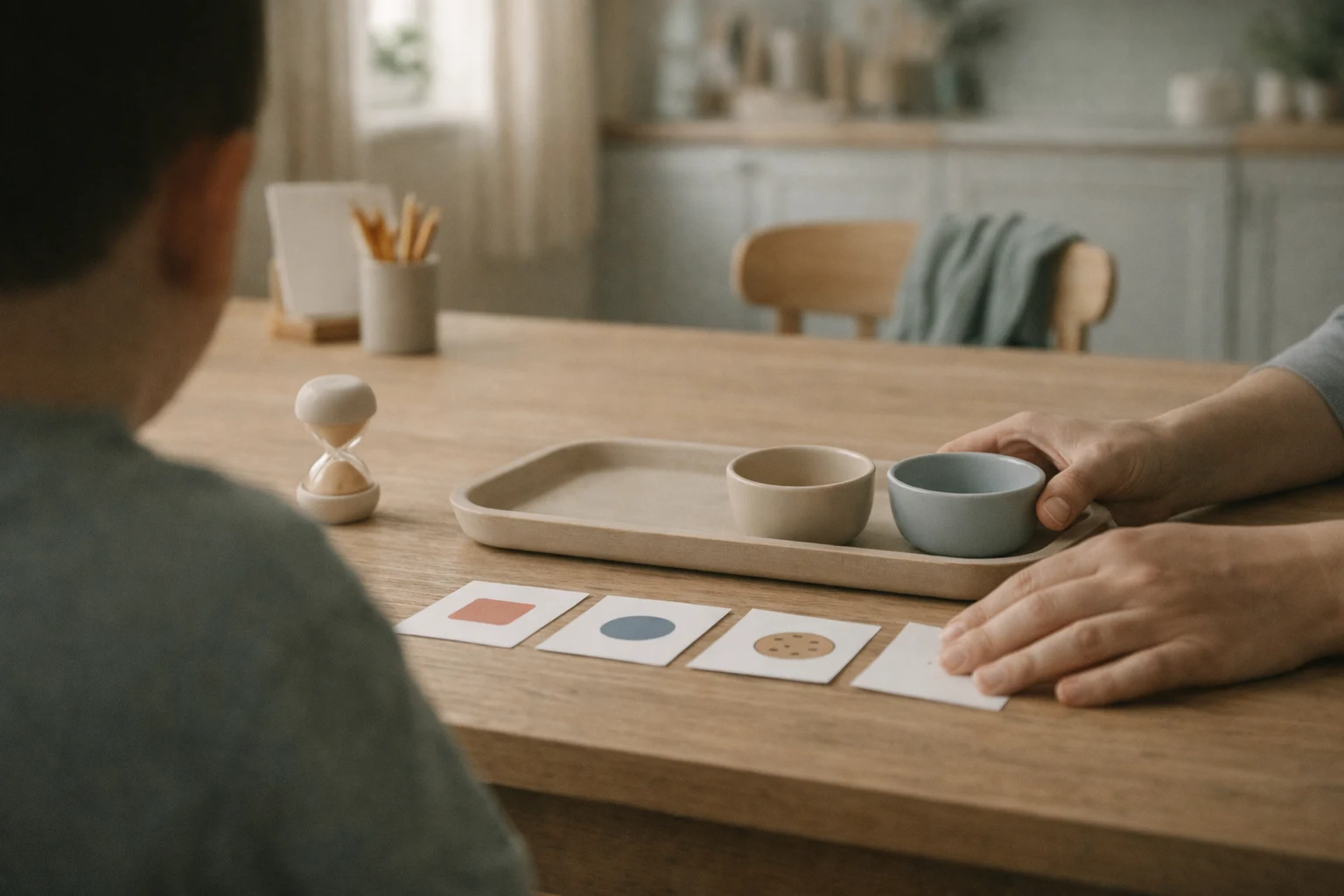
Use visuals alongside speech
NHS advice highlights practical ways to help autistic children day to day, including communication support. Visual tools often reduce misunderstandings.
Simple visuals that work well:
First then card
Choice board with two options
Picture routine for mornings and bedtime
Routines and predictability: your biggest tool
Predictability reduces anxiety. It also reduces the number of instructions you need to give.
Build one routine at a time
Start with the hardest part of the day:
- mornings
- after school
- bedtime
Keep it short, 4 to 6 steps, in the same order every day.
Prepare for change
If plans change:
- warn early if possible
- show the change visually
- offer one small choice within the change
Sensory needs: making home feel easier
Many autistic children experience sensory differences. That can include noise, light, clothing textures, smells, and food textures.
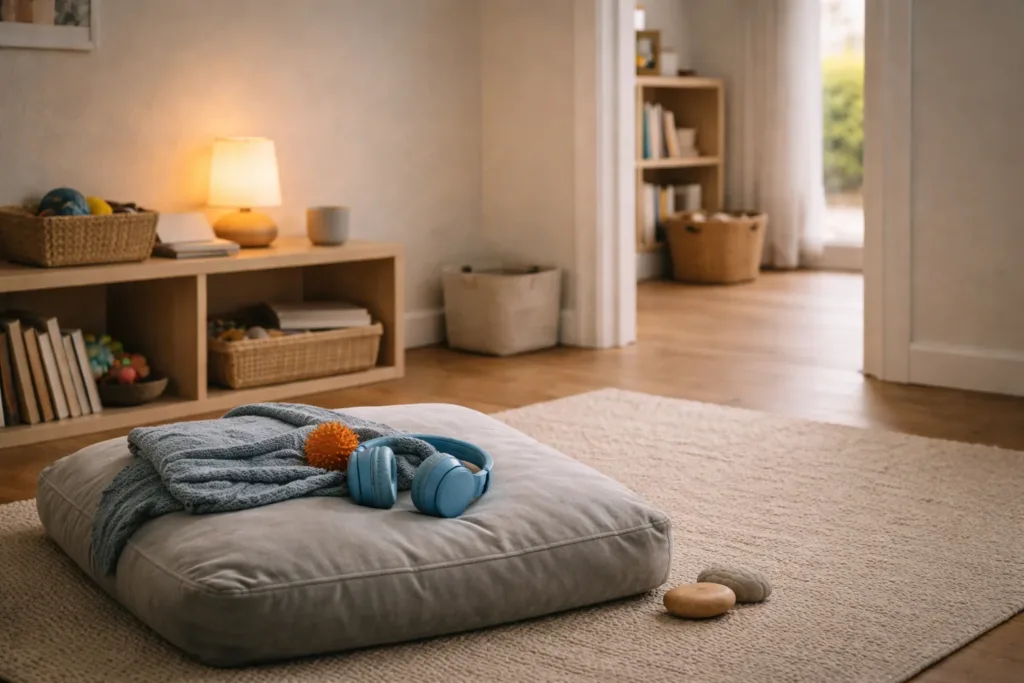
A calm corner helps
A calm corner is not a naughty step. It is a reset space.
Include:
- cushions or a beanbag
- dim lighting
- headphones or ear defenders if helpful
- one or two sensory items (not a whole box that becomes overwhelming)
The National Autistic Society describes Positive Behaviour Support approaches and emphasises support that helps people be safe and fulfil their potential.
Reduce background stressors
Try:
- turning off the TV that is on “in the background”
- choosing quieter shopping times
- keeping lighting softer in the evening
- offering comfortable clothing options where possible
Meltdowns and shutdowns: what to do in the moment
A sensory friendly home is also about rhythm.
Meltdowns are a loss of control caused by being totally overwhelmed. (nhs.uk)
In the moment, your job is safety and calm
NHS guidance says the most important thing during a meltdown is to try to stay calm and keep your child safe. (nhsk)
Helpful steps:
Lower your voice
Use fewer words
Reduce demands
remove triggers if possible
Move to a quieter space if you can
The National Autistic Society also suggests staying calm, removing triggers where possible, and helping the person use calming strategies.
After the meltdown, keep the repair short
When calm returns:
Validate the feeling
Agree one support for next time
Name what happened simply
Example: “It got too noisy. Next time we can use headphones or take a break.”
Teaching skills without battles
Positive parenting works best when teaching happens during calm moments.
Use tiny steps and immediate praise
Instead of “Tidy your room,” use:
- Put clothes in basket.
- Put books on shelf.
- Toys in the box.
Praise effort quickly:
- “You did the first step. Well done.”
- “You asked for help. Good choice.”
Reduce demand when your child is overloaded
Sometimes the positive parenting move is lowering the demand temporarily. This is not giving in. It is choosing the right moment to teach.
Working with nursery and school in the UK
You can ask for support based on need, even if assessment is ongoing.
The graduated approach
In England, SEND guidance describes a graduated approach to SEN support. Many settings use the assess, plan, do, review cycle. (GOV.UK)
Ask for a meeting with the SENCO or key person and share:
- what triggers overwhelm
- what helps at home
- the hardest transitions
- what your child needs to feel safe
Possible supports include:
- visual timetables
- predictable transitions
- reduced sensory load where possible
- social communication support
- calm spaces and safe breaks
FAQs: positive parenting for children on the autism spectrum
No. Positive parenting for children on the autism spectrum is both warm and firm. It uses clear boundaries and predictable routines, which many autistic children find reassuring.
Meltdowns are commonly described as overwhelm and loss of control. NHS guidance describes meltdowns as a complete loss of control caused by being totally overwhelmed. (nhs.uk)
Safety first. Use short phrases, block harm where you can, remove dangerous objects, and return to teaching when calm.
Often yes. SEN support is based on need, and the graduated approach can be used without waiting for a specialist assessment. (Lancashire.gov.uk)
The NHS autism pages and the National Autistic Society have practical guidance for families. (nhs.uk)