

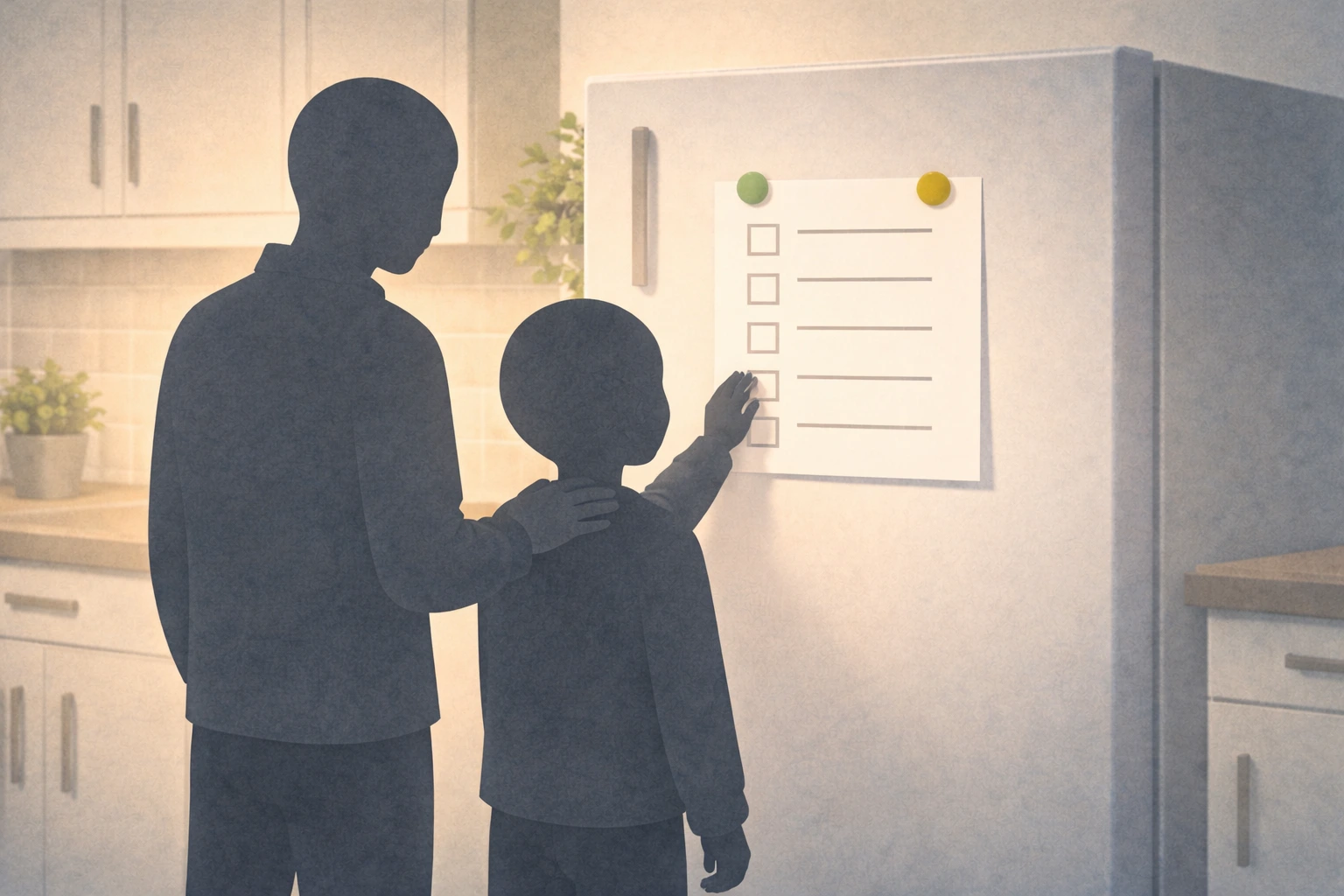
Why daily routines for children with ADHD matter
Daily routines for children with ADHD are not about being strict. They are about making life easier.
Many children with ADHD struggle with skills that help daily life run smoothly, like planning, organising, remembering steps, and switching between tasks. A routine acts like an “outside brain”. It reduces the number of decisions your child has to make, and it makes the day feel safer and more predictable.
How daily routines for children with ADHD help day to day
- Structure and predictability: clear expectations reduce overwhelm and missed steps.
- Focus and self regulation: repeating the same sequence lowers overstimulation and impulsive reactions.
- Executive function skills: routines build planning, organisation, and time management over time.
- Sleep and wellbeing: consistent wake and bed times stabilise the body clock and reduce stress.
- Confidence: knowing what is next helps children feel more in control. Small wins build independence.
Why routines can be hard with ADHD (and why it is not your fault)
If daily routines for children with ADHD feel harder than they “should”, you are not imagining it.
Common reasons include:
Forgetfulness and distractibility
multi step tasks can fall apart halfway through.
Family stress
work patterns, siblings, and tiredness make consistency harder, especially at mornings and bedtime.
Changes feel bigger
unexpected events can knock the day off track and lead to anxiety or meltdowns.
Transitions are tough
stopping a preferred activity can trigger big feelings fast.
This is why daily routines for children with ADHD work best when they are simple, visual, and supported with calm repetition.
The core idea: Anchor points + flexible space
A helpful way to think about daily routines for children with ADHD is:
Anchor points
the times that stay steady most days (wake up, meals, bedtime).
Flexible space
the parts of the day that can move around a bit (which snack, what play happens first, whether homework is before or after tea).
Anchors give security. Flexibility prevents the routine from snapping when life happens.
Daily routines for children with ADHD: The routines that matter most
Below are the routines that usually bring the biggest change at home. You do not need to do them all at once. Daily routines for children with ADHD are built one calm step at a time.
Morning routine (get out the door with less stress)
A simple morning routine example:
- Wake up
- Toilet
- Wash face
- Teeth
- Get dressed
- Breakfast
- Shoes and coat
- Bag by the door
Make mornings easier with these tweaks:
- Prepare the night before: clothes out, bag packed, lunchbox ready.
- Gentle wake up: soft light or a gentle alarm can reduce shock and resistance.
- Use a visual checklist: put it where your child stands (bedroom door or bathroom mirror).
- Use time prompts: one timer for “start getting dressed” and one for “shoes on”.
If mornings are consistently explosive, make the routine even smaller for a week. Daily routines for children with ADHD often need an “easy mode” first.
After school routine (reduce the crash and the battles)

Many children with ADHD hold it together all day at school, then fall apart at home. Daily routines for children with ADHD should include decompression.
A steady after school routine example:
- Snack and drink
- Movement break (outside, trampoline, short walk)
- Quick check in (one question only)
- Homework slot (short blocks)
- Free time
- Tea
- Calm evening wind down
A short decompression period after school can reduce “homework wars” later.
Homework routine (short bursts, clear starts)
Daily routines for children with ADHD work best when homework is broken into small pieces.
Set up the space first:
A clutter free area
Supplies ready
Minimal background noise
A clear start time
Use the “short block” method:
15 to 20 minutes work
5 minutes break
Repeat
Timers make this far easier than constant reminding.
Make homework steps visible:
- “Maths: 10 questions”
- Tick it off
- Then break
Checklists give an immediate sense of progress, which can boost motivation.
Meals and snacks routine (protect mood and energy)
Daily routines for children with ADHD are more likely to stick when blood sugar swings are reduced.
- Keep meal times regular where possible.
- Offer a balanced snack after school to reduce irritability.
- The NHS highlights the value of regular sleep, healthy diet, and physical activity for children with ADHD. (nhs.uk)
You do not need a perfect diet. You just need fewer long gaps without food and fewer surprise hunger crashes.
Bedtime routine (the biggest win for many families)
If you are choosing where to start, bedtime is often the best place. Better sleep can improve focus, mood, and resilience the next day.
Daily routines for children with ADHD often work best at bedtime when they are calm, repeated, and screen free.
A calm bedtime routine example:
- Screen off
- Bath or wash
- Pyjamas
- Teeth
- Story
- Lights out
A wind down period and turning screens off about an hour before bed can help many children settle.
Keep the bedroom low stimulation where you can. Dim light, fewer distractions, and the same steps each night help the brain learn what “bedtime” feels like.
Transitions (the hidden key to daily routines for children with ADHD)
Transitions are where many routines break.
The fix is not more talking. It is clearer signals.
Try this transition pattern:
- 10 minute warning
- 5 minute warning
- 2 minute warning
- Timer goes off, then action
Countdowns and visual timers make time feel more real.
If your child finds transitions very hard, allow a small support item during the change, like a fidget or comfort object.
The tools that make daily routines for children with ADHD easier
1) Visual schedules (pictures beat reminders)
Visual schedules help children remember steps without you repeating yourself.
- Put a morning chart by the bedroom door
- Put a bedtime chart near the bathroom
- Use pictures for younger children and simple words for older children
2) Checklists (tick boxes create momentum)
A checklist turns a routine into a series of small wins.
Ticking boxes gives immediate feedback and can boost motivation.
3) Timers and alarms (reduce arguments)
Timers support:
- Starting a task
- Keeping a task short
- Ending a task
- Moving to the next step
A “bedtime alarm” can also reduce the sense that bedtime is a power struggle.
4) Reward charts (make routine effort worth it)
Daily routines for children with ADHD often stick better when effort is noticed.
- Stars, points, tokens
- A small reward after a set number
- Focus on effort, not perfection
Step by step: How to build daily routines for children with ADHD that actually stick
Step 1: Start small (smaller than you think)
Choose one routine only, then choose one part of that routine.
Example: “Brush teeth and pyjamas” before doing the full bedtime routine.
Step 2: Co design it with your child
Even a small choice can create buy in:
- “Do you want the chart with words or pictures?”
- “Do you want story first or teeth first?”
Involving your child makes the routine feel fairer and less forced.
Step 3: Make the steps visible
Daily routines for children with ADHD are much harder when they only exist in your head.
Write it down. Put it up. Point to it.
Visual reminders support memory and reduce conflict.
Step 4: Use one instruction at a time
Long instructions tend to vanish.
Try:
- “Shoes on.”
- Then wait.
- Then: “Bag by the door.”
Step 5: Add praise early and often
Praise works best when it is:
- Immediate
- Specific
- About effort
Example: “You started getting dressed when the timer went off. Nice job.”
Positive reinforcement supports motivation better than criticism.
Step 6: Keep consistency, even on weekends where possible
Daily routines for children with ADHD become habits through repetition.
If weekends are wildly different, Mondays become harder. Aim for similar wake and bed times most of the time.
Step 7: Review and adjust
If something is not working, tweak it:
- Make it shorter
- Move it earlier
- Add a break
- Add a timer
- Reduce the number of steps
Do not throw the whole routine away. Adjust it.
Common pitfalls (and how to avoid them)
Daily routines for children with ADHD can fail for predictable reasons. Here is what to watch for.
Over scheduling
If every minute is planned, your child will resist. ADHD brains often need downtime.
Build free time into the day.
Too much talking
Long explanations can turn into background noise fast.
Use short phrases and visuals instead.
A negative loop
If routines become mostly nagging and scolding, children stop trying.
Praise effort, then correct calmly.
Rigid perfection
If your child must follow daily routines for children with ADHD perfectly, everyone loses.
Aim for “better than last week”, not perfect.
A gentle sample day plan (use as inspiration, not a rule book)
This example shows how daily routines for children with ADHD can look with anchor points and breathing space.
Morning: wake, wash, dress, breakfast, out the door
After school: snack, movement, short check in, homework blocks
Evening: tea, free time, calm wind down
Bedtime: screens off, wash, pyjamas, teeth, story, sleep
Your version can be completely different. The goal is predictability, not strictness.
When to seek extra support in the UK
- Sleep is consistently very poor
- School attendance is slipping
- Anxiety is high most days
- Behaviour feels unsafe
- You feel burnt out or overwhelmed
- Your GP (health concerns, referrals)
- School SENCO (reasonable adjustments, routines that match school supports)
- Local Family Hubs for parenting support and courses (GOV.UK)
- NHS guidance for practical ADHD advice, including sleep, diet and activity (nhs.uk)
- NICE guidance which highlights the importance of structure and consistent management for children with ADHD (NICE)
FAQs: Daily routines for children with ADHD
For many families, bedtime is the best first win because better sleep helps the next day feel calmer. Keep it simple and repeat the same steps nightly.
It varies, but routines usually need repeated practice over weeks, not days. Start small, praise effort, and adjust gently rather than restarting.
Make the routine smaller, add choice, add a timer, and add a quick reward for effort. Also check whether the routine is too long or happening when your child is already overwhelmed.
Yes. Many children with ADHD do better with visible prompts than spoken reminders, especially for multi step routines.
Use countdowns and timers, give warnings, and keep your language short. A small comfort item can also help some children manage the shift.
Daily routines for children with ADHD often work best when wake and bed times stay similar. You can loosen the middle of the day, but keep anchor points steady.
Keep the same approach, but expect to go slower and rely more on visuals and sensory supports. If you are unsure, speak to your SENCO, GP, or relevant support services.
No. NICE is clear that parent training and education is about meeting the above average parenting needs that can come with ADHD. It is not a judgement on your parenting. (NICE)